
Gene therapy is moving from an experimental concept toward a growing clinical and commercial reality, and the manufacturing infrastructure behind these therapies is becoming just as important as the therapies themselves.
The U.S. viral vectors and plasmid DNA manufacturing sector was valued at USD 2.84 billion in 2025 and is projected to reach approximately USD 11.69 billion by 2035, expanding at a CAGR of 15.20% from 2026 to 2035.
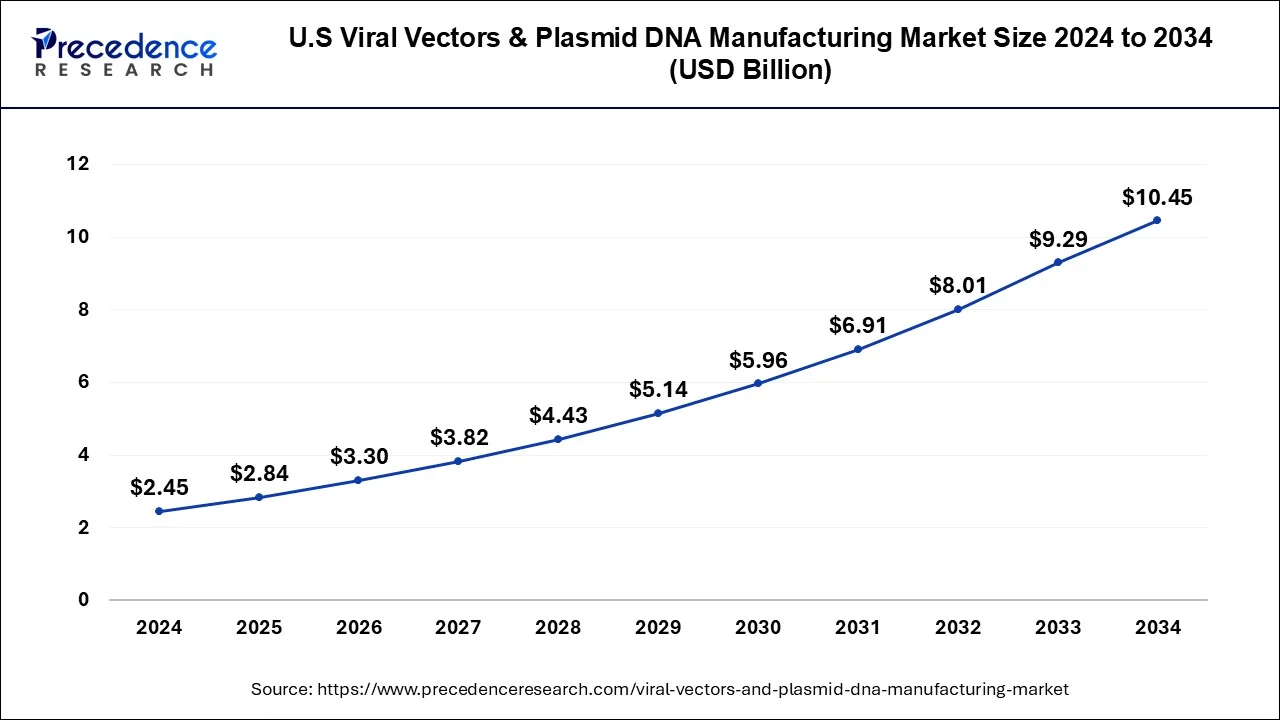
Viral vectors and plasmid DNA are critical raw materials for many advanced therapies because they help deliver or introduce genetic material into target cells. As gene and cell therapy pipelines expand, manufacturers are under increasing pressure to deliver consistent, high-quality, GMP-compliant materials at larger scales.
Download a Sample Report: https://www.precedenceresearch.com/sample/8442
Why Viral Vector and Plasmid DNA Manufacturing Matters
The development of gene therapies requires specialized manufacturing processes that are very different from traditional pharmaceutical production.
Adeno-associated viruses, lentiviral vectors, adenoviruses, and plasmid DNA are used across gene therapy, cell therapy, vaccine development, and other advanced biological applications.
The manufacturing process involves several interconnected stages, including cell expansion, transfection, vector production, harvesting, purification, analytical testing, and fill-finish.
The challenge is maintaining product quality while increasing yield and moving smoothly from small clinical batches to commercial-scale production.
This is why specialized manufacturers and CDMOs are becoming increasingly important to pharmaceutical and biotechnology companies.
AI Is Making Gene Therapy Manufacturing More Efficient
Artificial intelligence is beginning to influence viral vector and plasmid DNA production by helping manufacturers optimize complex processes.
AI and machine learning can analyze large volumes of manufacturing data to identify patterns affecting yield, quality, and process consistency. These tools can help optimize cell culture conditions, transfection parameters, purification processes, and production timelines.
Predictive analytics can also identify potential equipment or process failures before they affect a batch.
As manufacturing becomes more data-intensive, the combination of AI, automation, process analytics, and digital manufacturing is expected to become increasingly important.
Key Trends Shaping the U.S. Sector
Commercialization of Gene Therapies
The increasing number of approved cell and gene therapies is creating sustained demand for reliable manufacturing capacity.
More therapies moving into late-stage clinical trials also means manufacturers need flexible facilities capable of supporting both development and commercial production.
Growing Demand for Lentiviral Vectors
Lentiviral vectors are becoming increasingly important for engineered cell therapies, including CAR-T programs and hematopoietic stem cell applications.
The segment is expected to grow at the fastest rate as more cell-based therapies progress through clinical and commercial development.
Expansion of Upstream Processing
Downstream processing currently holds the leading position, but upstream processing is expected to expand rapidly.
Improving cell expansion, transfection efficiency, media optimization, and bioreactor performance can directly increase vector yields and help manufacturers improve overall production economics.
Increasing Need for Specialized Infrastructure
Advanced therapies require specialized facilities, quality systems, analytical capabilities, and highly trained personnel.
This is encouraging pharmaceutical companies and emerging biotechnology firms to increasingly work with specialized manufacturing partners rather than developing every capability internally.
How Leading Companies Are Positioning
The U.S. ecosystem includes global manufacturers, specialized CDMOs, biotechnology companies, and technology providers.
Thermo Fisher Scientific is expanding advanced bioprocessing capabilities and supporting viral vector and cell therapy manufacturing through integrated technologies and services.
Lonza provides large-scale viral vector manufacturing and development services, with capabilities spanning process development through commercial production.
Catalent offers specialized cell and gene therapy manufacturing capabilities and supports viral vector production for clinical and commercial programs.
Charles River Laboratories provides viral vector manufacturing, analytical testing, and development support for advanced therapies.
FUJIFILM Diosynth Biotechnologies is investing in advanced manufacturing infrastructure and integrated services for cell and gene therapies.
Aldevron specializes in plasmid DNA and related nucleic acid manufacturing, supporting developers of gene therapies, vaccines, and other advanced biological products.
Oxford Biomedica brings expertise in lentiviral vector development and manufacturing, particularly for cell and gene therapy applications.
These companies are increasingly competing through manufacturing capacity, regulatory expertise, process technology, analytical capabilities, and their ability to support customers across multiple development stages.
Segment Highlights
Adenovirus Leads Vector Types
Adenovirus held the largest share among vector types in 2025, supported by its use in vaccine development and gene-based applications.
However, lentivirus is expected to grow at the fastest rate, driven by increasing demand for engineered cell therapies and ex vivo gene modification.
Vaccinology Currently Leads Applications
Vaccinology accounted for the largest application share in 2025, reflecting the continued use of plasmid DNA and viral vector technologies in advanced vaccine development.
Cell therapy is expected to gain momentum as CAR-T and other engineered cell therapies continue progressing through clinical development.
Downstream Processing Remains Critical
Downstream processing currently leads the workflow segment because purification, recovery, characterization, and quality testing are essential for producing safe and consistent vector products.
At the same time, upstream processing is becoming a major area for innovation as manufacturers seek higher yields and more efficient production.
Genetic Disorders Lead Disease Applications
Genetic disorders represented the leading disease category in 2025, supported by the development of gene therapies designed to address inherited conditions.
Cancer is expected to expand rapidly as cell therapies, oncolytic viral therapies, and gene-based oncology programs continue to advance.
Massachusetts and California Remain Key Innovation Hubs
The U.S. ecosystem is concentrated around major biotechnology clusters.
Massachusetts benefits from leading academic institutions, biotechnology companies, clinical research capabilities, and a strong presence of advanced therapy developers.
California is another major hub, supported by significant venture capital activity, biotechnology innovation, pharmaceutical research, and companies working across gene editing, cell therapy, and genetic medicines.
These regional clusters continue to attract talent, investment, manufacturing infrastructure, and strategic collaborations.
Challenges Facing Manufacturing Expansion
Scaling viral vector and plasmid DNA production remains technically demanding.
Manufacturers must manage complex biological processes while maintaining consistency from batch to batch. Manufacturing yields can also vary considerably, increasing production costs.
Regulatory requirements, specialized facility needs, supply chain constraints, and shortages of skilled personnel can further slow expansion.
Another challenge is the transition from clinical manufacturing to commercial-scale production. A process that performs well at a small scale may require substantial optimization before it can achieve reliable commercial output.
What Should Healthcare Companies Watch?
Companies operating in gene and cell therapy should closely monitor:
- Lentiviral vector manufacturing
- AAV and adenoviral production
- High-yield upstream processes
- Advanced purification technologies
- Plasmid DNA innovation
- GMP manufacturing capacity
- AI-enabled process optimization
- Automated analytical testing
- Manufacturing partnerships and CDMO expansion
- Commercial-scale gene therapy production
What Comes Next?
The U.S. viral vector and plasmid DNA manufacturing landscape is moving into a more industrialized phase as advanced therapies progress from clinical development toward commercialization.
The next wave of growth will depend on the ability to increase manufacturing yields, improve process consistency, reduce costs, and expand GMP capacity without compromising quality.
AI, automation, advanced bioprocessing, and specialized manufacturing platforms will play an increasingly important role in achieving these goals.
The bigger opportunity is not simply producing more viral vectors or plasmid DNA. It is building a manufacturing ecosystem capable of supporting the growing number of gene and cell therapies from early development through commercial supply.
Buy this report: https://www.precedenceresearch.com/checkout/8442
About Us
Healthcare Prism is a dedicated healthcare insights and outreach platform, operating as an extension of Precedence Research. We share relevant perspectives, industry developments, emerging trends, and research-driven insights across the global healthcare sector. Our content is built on the knowledge, research standards, and expertise of Precedence Research, with a focus on making healthcare information clear, accessible, and useful for industry professionals, businesses, researchers, and healthcare stakeholders. Healthcare Prism serves as a focused platform to extend the reach of Precedence Research’s healthcare insights and connect them with a broader professional audience.
You can place an order or ask any questions, please feel free to contact us at [email protected]
Quick Contact:
Europe Region: +44 778 256 0738
North America Region: +1 8044 4193 44
APAC Region: +91 9356 9282 04 and +65 31065601
Visit Our Website: Precedence Research – Advisory, Research & Reports