
Neuroinflammation is becoming an increasingly important area of neurological research as scientists continue to understand its role in Alzheimer’s disease, Parkinson’s disease, multiple sclerosis, stroke, traumatic brain injury, and other disorders affecting the central nervous system.
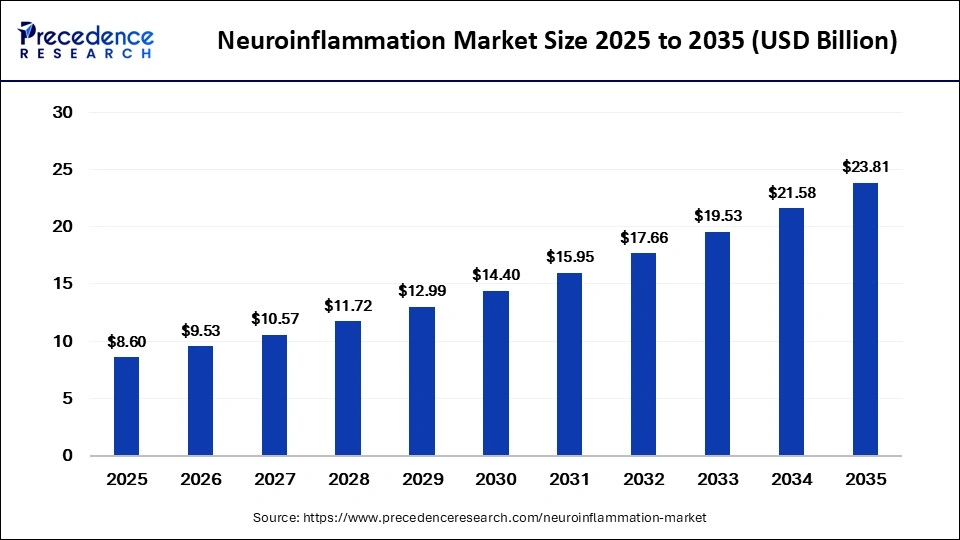
The global neuroinflammation therapeutics sector was valued at USD 8.60 billion in 2025 and is projected to reach approximately USD 23.81 billion by 2035, expanding at a CAGR of 10.90% from 2026 to 2035.
What is changing most rapidly is the approach to treatment. Research is moving beyond broad anti-inflammatory therapies toward more targeted strategies that can regulate specific immune pathways, protect neurons, and potentially modify disease progression.
Download a Sample Report: https://www.precedenceresearch.com/sample/8435
What Is Neuroinflammation?
Neuroinflammation refers to an inflammatory response within the brain or spinal cord. It can occur following infection, injury, toxins, autoimmune activity, or neurodegenerative processes.
Microglia, which act as immune cells within the central nervous system, play an important role in this response. While short-term inflammation can help protect neural tissue, prolonged or poorly regulated inflammation may contribute to neuronal damage and disease progression.
This dual role makes neuroinflammation particularly challenging to treat. Completely suppressing inflammation is not necessarily the ideal approach. Instead, researchers are increasingly looking at ways to control harmful inflammatory activity while preserving protective immune responses.
Why Neuroinflammation Is Receiving More Attention
The growing burden of neurological disorders is one of the major reasons for increasing research activity. An aging population is contributing to higher demand for therapies targeting neurodegenerative diseases, while conditions such as diabetes, vascular disorders, and other chronic diseases may further influence neurological health.
Pharmaceutical companies and biotechnology firms are investing in biomarker discovery, targeted therapies, biologics, and advanced delivery approaches.
The growing number of clinical studies is also improving understanding of inflammatory pathways and creating opportunities for therapies that could address previously difficult-to-treat neurological conditions.
AI Is Changing Neuroinflammation Research
Artificial intelligence is becoming a useful tool across neuroinflammation research and drug development.
AI and machine learning can analyze large datasets containing imaging results, molecular information, biomarkers, clinical records, and disease progression patterns. This can help researchers identify new therapeutic targets and potential biomarkers.
AI-based models can also support drug discovery by screening compounds and predicting how specific molecules may interact with inflammatory pathways.
Another important application is precision medicine. By analyzing patient-specific data, AI may help researchers and clinicians better understand disease heterogeneity and identify treatment approaches suited to particular patient populations.
Key Trends Shaping Neuroinflammation Therapies
Greater Focus on Microglial Modulation
Microglia are becoming a major focus of therapeutic development because they are central regulators of inflammation in the brain.
The microglial modulation segment accounted for approximately 30% in 2025 and is projected to grow at a 14.5% CAGR through 2035.
Instead of broadly suppressing inflammation, researchers are exploring ways to modify microglial activity and shift these cells toward states that may be less damaging to neural tissue.
Rise of Monoclonal Antibodies
Monoclonal antibodies are gaining attention because of their ability to target specific biological pathways.
The segment represented 28% in 2025 and is projected to grow at a 16.5% CAGR. Increasing interest in disease-modifying neurological treatments and biologics is supporting this expansion.
Cell and Gene Therapies Are Emerging
Cell and gene therapies represent one of the most innovative areas in neuroinflammation research.
The segment is projected to grow at a 20.8% CAGR, the fastest among therapy categories. Researchers are investigating whether gene editing, regenerative cell approaches, and targeted genetic interventions can help regulate inflammatory responses and provide neuroprotective effects.
Although many of these approaches remain in development, their potential is attracting substantial scientific and investment interest.
Greater Attention to Blood-Brain Barrier Protection
The blood-brain barrier presents one of the biggest challenges in neurological drug development because many therapeutic compounds have limited ability to reach the central nervous system.
As a result, researchers are developing approaches designed to improve barrier integrity and enable more effective delivery of therapies into the brain.
The blood-brain barrier protection segment is projected to grow at a 13.2% CAGR, highlighting increasing attention toward neurovascular health and targeted CNS delivery.
Disease Areas Driving Innovation
Alzheimer’s Disease
Alzheimer’s disease accounted for 28% in 2025, making it the leading indication in the neuroinflammation therapeutics sector.
Research increasingly links immune activation and inflammatory pathways with Alzheimer’s disease progression. This has encouraged pharmaceutical companies to investigate therapies that target neuroimmune mechanisms alongside other disease pathways.
Parkinson’s Disease
Parkinson’s disease represented approximately 18% in 2025. Ongoing research is examining the relationship between neuroinflammation, alpha-synuclein accumulation, neuronal dysfunction, and dopaminergic neuron loss.
The development of inflammatory biomarkers and targeted treatments could improve understanding of disease progression and support more personalized therapies.
Multiple Sclerosis
Multiple sclerosis accounted for around 20%, reflecting the central role of immune-mediated inflammation in the disease.
Advancements in immunomodulators, monoclonal antibodies, and other disease-modifying therapies continue to strengthen treatment options.
Progressive Neurological Conditions
Conditions such as ALS, traumatic brain injury, and autism spectrum disorders are also receiving greater research attention.
The autism spectrum disorder segment is projected to grow at a 15% CAGR, while traumatic brain injury is expected to expand at a 14.5% CAGR, reflecting growing interest in inflammatory pathways beyond traditional neurodegenerative diseases.
Oral Therapies Still Lead, but Advanced Delivery Is Growing
Oral therapies accounted for 42% of administration routes in 2025, supported by convenience and the growing use of chronic neurological treatments.
However, advanced delivery methods are developing rapidly.
The intravenous segment is projected to grow at a 13.5% CAGR, supported by biologics and monoclonal antibody therapies.
Subcutaneous delivery is expected to grow even faster at 15%, reflecting increasing interest in self-administered biologic therapies.
The intrathecal segment is projected to grow at 16.2%, the highest rate among administration routes. Direct delivery into the cerebrospinal fluid may provide opportunities for therapies that need improved access to the central nervous system.
How Leading Companies Are Positioning
Leading pharmaceutical and biotechnology companies are strengthening their neurological portfolios through biologics, small molecules, immune-targeting therapies, and strategic research collaborations.
Roche continues to focus on neurological disease research and antibody-based treatment strategies.
Biogen has extensive experience in neurodegenerative and neurological therapies and continues to invest in approaches addressing disease progression and biological mechanisms.
Novartis is active across neurological therapeutics, including immune-mediated disorders such as multiple sclerosis.
Eli Lilly and Company is expanding its inflammation-focused portfolio. In January 2026, Lilly announced an agreement to acquire Ventyx Biosciences, whose pipeline includes NLRP3 inhibitors designed to target inflammatory pathways. This transaction highlights growing interest in highly selective inflammation-related drug targets.
AbbVie, Sanofi, Johnson & Johnson, and Bristol Myers Squibb are also strengthening their positions through neurological research, immunology, targeted therapeutics, and advanced drug development platforms.
At the biotechnology level, companies such as AC Immune, Annovis Bio, and Alector are contributing to research focused on neurodegeneration, inflammation, biomarkers, and novel therapeutic mechanisms.
North America Leads the Global Landscape
North America accounted for 40% in 2025, supported by strong pharmaceutical and biotechnology capabilities, advanced neurological research, high healthcare spending, and extensive clinical trial activity.
The U.S. remains a major center for neuroinflammation research due to the presence of leading universities, biotechnology companies, research organizations, and neurological care networks.
Government-supported research programs, nonprofit initiatives, and collaborations between academic institutions and pharmaceutical companies continue to strengthen innovation.
Asia Pacific Is the Fastest-Growing Region
Asia Pacific is projected to grow at the fastest rate, with an estimated 14.8% CAGR from 2026 to 2035.
China, Japan, and South Korea are expanding neurological research capabilities while improving specialty healthcare infrastructure. An aging population is also increasing demand for therapies targeting neurodegenerative disorders.
Growing biotechnology activity, clinical research, healthcare spending, and awareness of neurological diseases are contributing to the region’s increasing importance.
Europe Continues to Strengthen Neuroinflammation Research
Europe held approximately 30% in 2025 and continues to benefit from strong academic research, public funding, advanced healthcare systems, and pharmaceutical expertise.
Germany, in particular, is developing stronger capabilities in neurological research and personalized treatment approaches.
European research institutions are increasingly focusing on biomarkers, immunology, neurovascular pathways, and precision medicine, supporting continued therapeutic innovation.
What Are the Biggest Challenges?
Despite strong progress, neuroinflammation remains difficult to treat.
One major challenge is the complex role of inflammation itself. The same immune response can be protective in one situation and damaging when it becomes chronic.
Drug delivery is another major obstacle. Many promising therapies struggle to cross the blood-brain barrier effectively.
High development costs, long clinical timelines, limited biomarkers, and the complexity of neurological diseases can also make therapeutic development difficult.
What Should Healthcare Companies Watch?
Healthcare companies, pharmaceutical developers, researchers, and investors should closely monitor:
- Microglial-targeted therapies
- NLRP3 and other inflammatory pathways
- Monoclonal antibodies
- Cell and gene therapies
- Blood-brain barrier protection
- Biomarker discovery
- AI-assisted drug development
- Precision neurology
- Intrathecal drug delivery
- Neuroinflammation-focused clinical trials
What Comes Next?
The future of neuroinflammation treatment is moving toward targeted, disease-modifying, and personalized therapeutic strategies.
Broad anti-inflammatory treatment will remain important, but the next generation of therapies is increasingly focused on understanding which immune pathways are active, which patients are most likely to benefit, and how treatment can reach the right location within the nervous system.
AI, advanced biologics, gene therapies, biomarkers, and precision medicine are bringing these approaches together.
The biggest opportunity is not simply suppressing inflammation. It is learning how to control harmful neuroinflammation while preserving the protective functions of the immune system.
As scientific understanding improves, neuroinflammation could become an increasingly important therapeutic target across Alzheimer’s disease, Parkinson’s disease, multiple sclerosis, traumatic brain injury, and other neurological conditions.
Buy this report: https://www.precedenceresearch.com/checkout/8435
About Us
Healthcare Prism is a dedicated healthcare insights and outreach platform, operating as an extension of Precedence Research. We share relevant perspectives, industry developments, emerging trends, and research-driven insights across the global healthcare sector. Our content is built on the knowledge, research standards, and expertise of Precedence Research, with a focus on making healthcare information clear, accessible, and useful for industry professionals, businesses, researchers, and healthcare stakeholders. Healthcare Prism serves as a focused platform to extend the reach of Precedence Research’s healthcare insights and connect them with a broader professional audience.
You can place an order or ask any questions, please feel free to contact us at [email protected]
Quick Contact:
Europe Region: +44 778 256 0738
North America Region: +1 8044 4193 44
APAC Region: +91 9356 9282 04 and +65 31065601
Visit Our Website: Precedence Research – Advisory, Research & Reports