
The neurofeedback systems sector size was valued at USD 1.45 billion in 2025 and is projected to increase from USD 1.56 billion in 2026 to approximately USD 2.95 billion by 2035, expanding at a CAGR of 7.35% from 2026 to 2035.
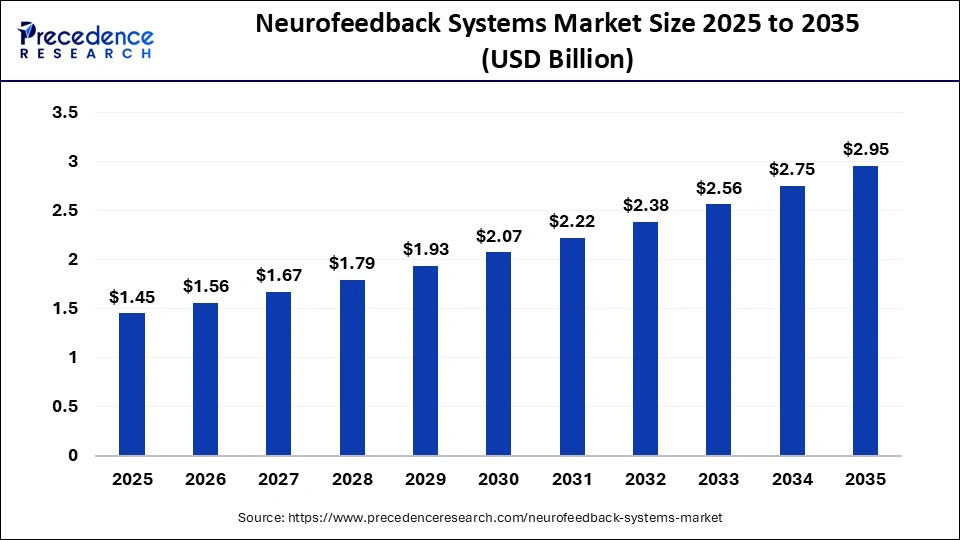
Growth is being supported by increasing clinical attention toward ADHD, anxiety, epilepsy, sleep disorders, and cognitive performance, alongside rapid advances in EEG analytics, wearable devices, and software-driven neurotherapy.
Download a Sample Report: https://www.precedenceresearch.com/sample/7877
Neurofeedback Systems Transforming Brain Health and Therapy
Neurofeedback systems use real-time monitoring of brainwave activity to help individuals develop greater control over specific patterns of neural activity. EEG sensors collect brain signals, while software interprets the data and provides immediate feedback through visual, auditory, or interactive interfaces.
The technology is increasingly moving beyond traditional clinical environments. Portable headsets, mobile applications, cloud platforms, and remote monitoring capabilities are making neurofeedback more accessible for patients, clinicians, researchers, and wellness users. These developments are also helping expand the role of neurofeedback in personalized brain training and long-term neurological care.
North America accounted for the leading 40% share in 2025, while Asia Pacific is expected to record the fastest growth through 2035.
AI Unlocking Smarter Neurofeedback Systems
Artificial intelligence is becoming a powerful force in the development of next-generation neurofeedback systems. AI and machine learning can process large EEG datasets, remove signal artifacts, recognize complex neural patterns, and identify meaningful changes in brain activity more efficiently.
One of the most important applications is adaptive neurofeedback. Instead of following the same training protocol for every user, AI-powered systems can adjust training intensity and feedback according to individual responses. This can support more personalized therapy and improve engagement.
AI can also strengthen remote care by enabling predictive analytics, progress tracking, automated session analysis, and clinician dashboards. As these capabilities improve, neurofeedback systems are becoming increasingly data-driven and connected with broader digital healthcare ecosystems.
Powerful Trends Accelerating Neurofeedback Adoption
AI-Powered Personalization: Intelligent algorithms are improving signal interpretation and allowing training protocols to respond to individual brain activity in real time.
Portable and Wearable EEG Devices: Lightweight wireless headsets are making neurofeedback easier to use outside traditional clinics, supporting home-based therapy, wellness programs, and performance training.
Tele-Neurofeedback: Cloud-connected platforms allow clinicians to supervise sessions remotely, review progress, and adjust protocols without requiring frequent in-person visits.
Multi-Modal Brain Training: Neurofeedback is increasingly being combined with biofeedback, cognitive exercises, virtual reality, and other digital tools to create more engaging training experiences.
Consumer Brain Wellness: Growing interest in focus, stress reduction, sleep quality, and cognitive performance is expanding neurofeedback applications beyond conventional clinical care.
Key Growth Drivers
The rising prevalence and diagnosis of neurological and mental health conditions remain major contributors to demand for neurofeedback systems. ADHD, anxiety, depression, epilepsy, and sleep disorders are creating a broader need for non-invasive approaches that complement conventional treatment.
Another important factor is the growing interest in personalized care. Neurofeedback can generate individualized brain activity data, allowing clinicians and users to monitor changes over time rather than relying solely on periodic assessments.
Technological advances are also improving usability. Modern devices can offer wireless connectivity, improved signal quality, compact designs, and integration with mobile applications, lowering practical barriers to adoption.
Challenges Limiting Broader Adoption
High equipment costs remain a challenge, especially for smaller clinics, independent practitioners, and users in regions with limited healthcare resources. Advanced EEG systems, software platforms, and continuous technical support can require significant investment.
Another concern is the need for standardized protocols and strong clinical validation across different applications. Variability in devices, training methods, patient responses, and clinical practices can make it difficult to compare outcomes consistently.
Data privacy and cybersecurity are also becoming increasingly important as neurofeedback platforms collect and transmit sensitive neurological information through connected devices and cloud systems.
Devices Continue to Lead
The devices segment held the largest share in 2025, supported by demand for EEG headsets, amplifiers, sensors, and other hardware required to capture brain activity accurately. Continued improvements in sensor technology, portability, wireless connectivity, and AI integration are strengthening hardware adoption.
The software and services segment is expected to grow at the fastest pace through 2035. Increasing demand for cloud-based analytics, adaptive training protocols, remote monitoring, subscription-based platforms, practitioner training, and software upgrades is creating new opportunities for recurring digital revenue.
ADHD Leads While Cognitive Performance Gains Momentum
The ADHD segment accounted for 32% of the total share in 2025, making it the leading application. Neurofeedback is increasingly considered as a complementary approach for attention regulation and behavioral support, particularly among children and adolescents.
Meanwhile, cognitive performance enhancement is emerging as an important growth area. Demand from wellness users, athletes, professionals, and organizations seeking improved focus, memory, and mental performance is expanding the application base beyond clinical treatment.
Portable Systems Reshape Accessibility
The portable and wearable systems segment dominated in 2025 with a 48% share. Lightweight EEG devices provide greater flexibility and can be used in homes, wellness environments, and mobile settings. Their convenience also supports more consistent participation.
The tele-neurofeedback platforms segment is expected to experience strong growth as telehealth becomes more integrated into neurological and mental healthcare. Remote access can reduce travel requirements while allowing specialists to support users across geographically dispersed locations.
Hospitals and Specialty Clinics Remain Important
Hospitals and specialty clinics represented the leading end-user group in 2025 because they provide specialist expertise, structured treatment environments, and access to neurological and mental health professionals.
At the same time, mental health centers are expected to experience the fastest growth as awareness of non-pharmacological approaches increases. These facilities are increasingly exploring personalized neurotherapy solutions for anxiety, ADHD, stress management, and related conditions.
North America Leads as Asia Pacific Accelerates
North America maintained a 40% share in 2025, supported by strong clinical research infrastructure, high diagnosis rates for ADHD and anxiety, advanced healthcare systems, and early adoption of AI-enhanced EEG technologies. The U.S. remains the region’s primary contributor, with growing use of wearable systems, remote neurotherapy, virtual reality integration, and cloud-based analytics.
Asia Pacific is projected to grow at the fastest rate through 2035. Expanding mental health infrastructure, greater awareness of non-invasive therapies, digital healthcare adoption, and growing investments in neuroscience and brain-computer interface technologies are supporting regional expansion. China is emerging as an important contributor through advances in wearable EEG, BCI research, and intelligent neurological technologies.
Europe is also experiencing steady development due to increasing neurological disease awareness, healthcare digitization, research initiatives, and investments in advanced medical technologies.
Future Outlook
The future of neurofeedback systems is increasingly connected to AI, wearable technology, remote care, and personalized therapy. As hardware becomes smaller and software becomes more intelligent, neurofeedback is positioned to reach a wider range of clinical and consumer applications.
The combination of real-time brain monitoring, adaptive algorithms, cloud connectivity, and multimodal digital therapy could make neurofeedback more accessible, personalized, and scalable. With the global value projected to reach USD 2.95 billion by 2035, the sector is moving toward a more connected and technology-driven era of brain health management.
Buy this report: https://www.precedenceresearch.com/checkout/7877
About Us
Healthcare Prism is a dedicated healthcare insights and outreach platform, operating as an extension of Precedence Research. We share relevant perspectives, industry developments, emerging trends, and research-driven insights across the global healthcare sector. Our content is built on the knowledge, research standards, and expertise of Precedence Research, with a focus on making healthcare information clear, accessible, and useful for industry professionals, businesses, researchers, and healthcare stakeholders. Healthcare Prism serves as a focused platform to extend the reach of Precedence Research’s healthcare insights and connect them with a broader professional audience.
You can place an order or ask any questions, please feel free to contact us at [email protected]
Quick Contact:
Europe Region: +44 778 256 0738
North America Region: +1 8044 4193 44
APAC Region: +91 9356 9282 04 and +65 31065601
Visit Our Website: Precedence Research – Advisory, Research & Reports