
Injectable Peptides Drugs are becoming increasingly important in modern healthcare as pharmaceutical companies develop targeted therapies for diabetes, obesity, cancer, cardiovascular disorders, and endocrine conditions. The global Injectable Peptides Drugs market size was valued at USD 48.60 billion in 2025 and is projected to increase from USD 53.07 billion in 2026 to approximately USD 117.18 billion by 2035, expanding at a CAGR of 9.20% from 2026 to 2035.
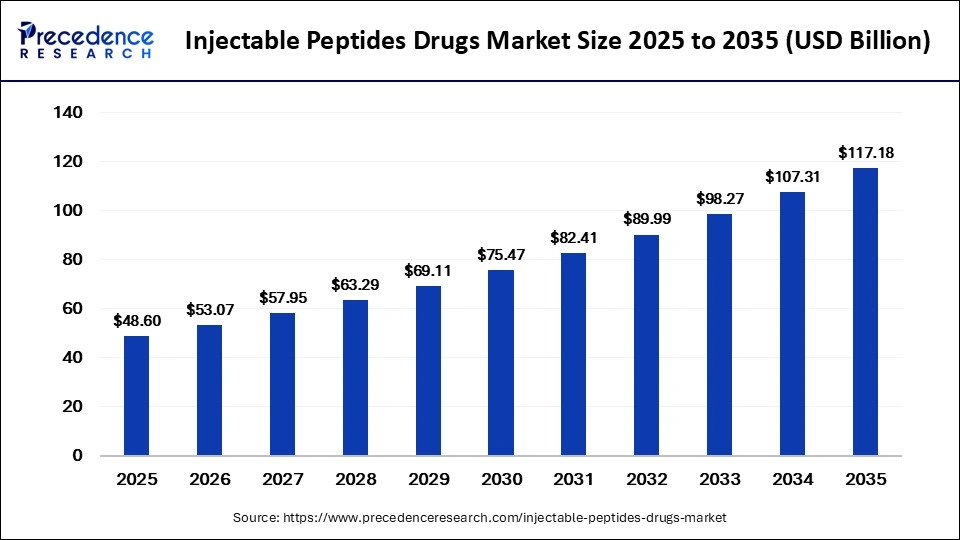
Rising chronic disease prevalence, growing demand for targeted treatments, advances in peptide engineering, and improved drug delivery technologies are strengthening the long-term outlook.
Download a Sample Report: https://www.precedenceresearch.com/sample/8384
What Are Injectable Peptides Drugs
Injectable Peptides Drugs are therapies made from short chains of amino acids that can interact with specific biological targets. Their selectivity and potency make them valuable for managing several chronic and complex conditions.
These therapies are widely used in diabetes management, obesity treatment, hormone-related disorders, oncology, and cardiometabolic care. Injectable administration is particularly important because peptides can have limited stability and absorption when taken orally. Subcutaneous, intravenous, and intramuscular delivery methods help achieve effective therapeutic exposure while supporting controlled drug administration.
The growing shift toward precision medicine is further increasing interest in peptide-based therapies. Pharmaceutical companies are developing modified and conjugated peptides to improve stability, extend therapeutic action, and reduce dosing frequency.
Powerful Impact of Artificial Intelligence on Injectable Peptides Drugs
Artificial intelligence is creating new opportunities across the development of Injectable Peptides Drugs. AI-powered platforms can analyze large biological datasets to identify promising peptide candidates and predict properties such as molecular structure, binding affinity, stability, and potential toxicity.
During drug discovery, machine learning can help researchers screen peptide sequences more efficiently and prioritize candidates with better therapeutic potential. This can reduce repetitive laboratory experimentation and shorten development timelines.
AI is also becoming useful in manufacturing and clinical development. Predictive analytics can support process optimization, quality control, equipment monitoring, patient selection, and treatment response analysis. As peptide development becomes more data-driven, AI is expected to strengthen efficiency and innovation throughout the development lifecycle.
Major Trends Strengthening Injectable Peptides Drugs
One of the strongest trends is the rapid growth of GLP-1 receptor agonists. These therapies are increasingly used for diabetes and obesity management and are expanding into broader cardiometabolic applications.
Another important development is the advancement of long-acting peptide formulations. Pharmaceutical companies are working on technologies that extend drug activity and reduce injection frequency, improving convenience and treatment adherence.
There is also growing innovation in modified and conjugated peptides. Chemical modifications can improve resistance to enzymatic degradation, while conjugation technologies can enhance stability and targeted delivery.
Peptide therapies are also gaining momentum in oncology and endocrine medicine, where their ability to target specific receptors and pathways creates opportunities for more selective treatment approaches.
Key Growth Drivers
The growing burden of diabetes, obesity, cancer, cardiovascular disorders, and endocrine diseases is one of the biggest factors supporting Injectable Peptides Drugs. These therapies are increasingly used to manage long-term conditions that require effective and targeted treatment.
The rapid adoption of GLP-1 receptor agonists is another major growth factor. Demand for therapies that support blood glucose control and weight management is expanding, creating substantial opportunities for peptide-based drug developers.
Advancements in biotechnology and peptide synthesis are also improving the development of complex molecules. Better purification methods, formulation technologies, and delivery systems are helping manufacturers improve product stability and scalability.
The growing emphasis on personalized medicine further supports adoption. Peptide drugs can be designed to target specific biological pathways, making them attractive for patients requiring tailored therapeutic strategies.
Key Challenges Facing Injectable Peptides Drugs
Despite strong growth potential, Injectable Peptides Drugs face several challenges. Peptide synthesis can be complex and expensive, particularly for larger or highly modified molecules. Manufacturing often requires sophisticated equipment, specialized expertise, and stringent purification processes.
Peptide stability is another concern. Temperature, pH, enzymes, and storage conditions can influence peptide quality. Many injectable peptide therapies also require controlled cold-chain transportation, increasing distribution complexity and costs.
High treatment expenses can create additional accessibility challenges, particularly in healthcare systems with limited reimbursement coverage. Regulatory requirements for biologic and peptide-based treatments can also extend development timelines.
Strong Opportunities Ahead
The development of long-acting injectable formulations represents a major opportunity. Sustained-release technologies can reduce dosing frequency and improve treatment convenience for chronic conditions.
Another major opportunity comes from the growing transition toward home-based treatment. Auto-injectors, prefilled syringes, and patient-friendly delivery systems are allowing more therapies to be administered outside traditional healthcare facilities.
The expansion of Injectable Peptides Drugs into oncology, cardiovascular medicine, metabolic diseases, and endocrine disorders is also creating new avenues for pharmaceutical innovation. Continued investment in peptide engineering and precision medicine could significantly increase the number of therapeutic applications.
Segment Insights
Insulin and Insulin Analogs Maintain a Strong Position
The insulin and insulin analogs segment accounted for approximately 35% of the share in 2025, supported by the widespread use of insulin in type 1 and type 2 diabetes management.
However, GLP-1 receptor agonists are expected to grow much faster, recording a projected CAGR of 14.5% between 2026 and 2035. Rising obesity rates, diabetes prevalence, and growing interest in cardiometabolic therapies are major factors supporting this expansion.
Diabetes and Obesity Management Leads Applications
The diabetes and obesity management segment dominated applications with a 45% share in 2025. The increasing prevalence of metabolic disorders and demand for effective long-term therapies continue to strengthen this segment.
The oncology segment represented approximately 15% and is projected to grow at a CAGR of 8%. Peptide-based therapies are gaining importance in hormone-sensitive cancers and targeted treatment strategies.
Subcutaneous Administration Remains Dominant
The subcutaneous injection segment accounted for approximately 70% of the share in 2025. Its convenience, gradual absorption, and suitability for home administration make it highly valuable for chronic conditions such as diabetes and obesity.
The intravenous injection segment held around 20% and remains important for hospital-based treatments, advanced therapies, and conditions requiring rapid therapeutic action.
Homecare Settings Gain Momentum
Hospitals and clinics held the largest end-use share at 50% in 2025, reflecting their role in diagnosis, treatment initiation, and management of complex diseases.
Meanwhile, homecare settings are expected to grow at a CAGR of 11.5%, supported by self-administration, auto-injectors, prefilled syringes, and the increasing preference for convenient chronic disease management.
Modified and Conjugated Peptides Show Strong Growth
Long-chain peptides held the largest share of 40% in 2025, supported by their sustained activity and broad application in chronic disease treatment.
The modified and conjugated peptides segment held 35% and is expected to grow at the fastest CAGR of 12.5%. Improvements in peptide modification can enhance stability, prolong therapeutic action, and improve targeted delivery, making these technologies attractive for advanced therapies.
Regional Growth Outlook
North America Leads Global Adoption
North America dominated Injectable Peptides Drugs with a 40% share in 2025. Strong pharmaceutical capabilities, high healthcare expenditure, increasing chronic disease prevalence, and rapid adoption of GLP-1 therapies contribute to the region’s leadership.
The U.S. Injectable Peptides Drugs market was valued at approximately USD 14.58 billion in 2025 and is projected to reach nearly USD 35.83 billion by 2035, growing at a CAGR of 9.41%.
Asia Pacific Shows Powerful Growth Potential
Asia Pacific is expected to expand at the fastest CAGR of 11.5% during the forecast period. A large patient population, increasing healthcare expenditure, expanding pharmaceutical infrastructure, and rising diabetes and obesity prevalence are strengthening demand.
Japan remains an important contributor due to its advanced healthcare infrastructure, aging population, and strong pharmaceutical research ecosystem. China and India are also becoming increasingly important as healthcare investment and biotechnology capabilities expand.
Europe Maintains a Strong Position
Europe accounted for approximately 28% of the share in 2025 and is projected to grow at a CAGR of around 8%. An aging population, rising chronic disease burden, strong public healthcare systems, and continued investment in pharmaceutical research support the region.
The UK remains an important center for biotechnology and pharmaceutical development, supported by advanced healthcare infrastructure and strong clinical research capabilities.
Competitive Landscape
The competitive environment is shaped by major pharmaceutical companies, peptide specialists, and contract development and manufacturing organizations. Leading participants include Novo Nordisk, Eli Lilly, Amgen, Sanofi, Pfizer, Roche, AstraZeneca, Takeda Pharmaceutical, Teva Pharmaceutical, Ipsen, Bachem, Lonza, CordenPharma, PolyPeptide Group, and Zealand Pharma.
Companies are focusing on improving peptide stability, extending drug duration, developing patient-friendly delivery systems, and expanding therapeutic indications. Strategic partnerships and manufacturing investments are also becoming increasingly important.
In February 2026, Eli Lilly signed a global R&D agreement with Zonsen PepLib Biotech to identify and develop new peptide drug candidates using proprietary peptide libraries. In December 2025, Eli Lilly also invested in a new Alabama manufacturing facility for peptide and small-molecule active pharmaceutical ingredients, highlighting the growing importance of production capacity.
Future Outlook
The future of Injectable Peptides Drugs remains highly promising as peptide science, AI-assisted discovery, precision medicine, and advanced delivery technologies continue to evolve. The global value is expected to rise from USD 53.07 billion in 2026 to approximately USD 117.18 billion by 2035.
GLP-1 therapies, long-acting formulations, modified peptides, and patient-friendly delivery systems are expected to remain major forces shaping the sector. As pharmaceutical companies expand peptide applications beyond traditional metabolic care into oncology, cardiovascular medicine, endocrine disorders, and other complex conditions, Injectable Peptides Drugs are positioned to become an increasingly powerful component of modern targeted healthcare.
Buy this report: https://www.precedenceresearch.com/checkout/8384
About Us
Healthcare Prism is a dedicated healthcare insights and outreach platform, operating as an extension of Precedence Research. We share relevant perspectives, industry developments, emerging trends, and research-driven insights across the global healthcare sector. Our content is built on the knowledge, research standards, and expertise of Precedence Research, with a focus on making healthcare information clear, accessible, and useful for industry professionals, businesses, researchers, and healthcare stakeholders. Healthcare Prism serves as a focused platform to extend the reach of Precedence Research’s healthcare insights and connect them with a broader professional audience.
You can place an order or ask any questions, please feel free to contact us at [email protected]
Quick Contact:
Europe Region: +44 778 256 0738
North America Region: +1 8044 4193 44
APAC Region: +91 9356 9282 04 and +65 31065601
Visit Our Website: Precedence Research – Advisory, Research & Reports