
The global healthcare and fitness club sector is entering a strong growth phase as consumers place greater importance on preventive healthcare, physical activity, wellness, and healthier lifestyles. Rising awareness of lifestyle-related diseases, growing disposable incomes, and increasing interest in structured fitness programs are encouraging more people to invest in gyms, personal training, wellness programs, and digital fitness services.
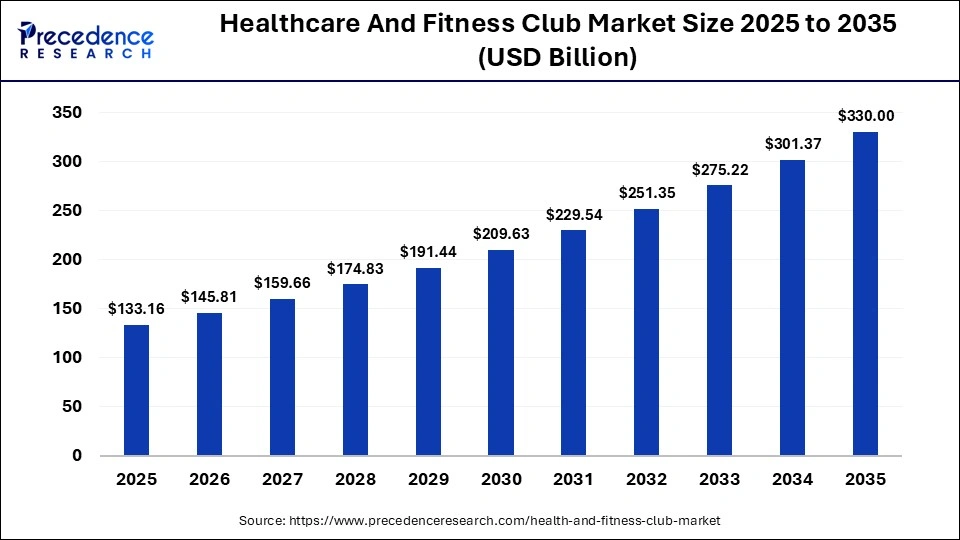
The global healthcare and fitness club sector was valued at USD 133.16 billion in 2025 and is projected to increase from USD 145.81 billion in 2026 to approximately USD 330 billion by 2035, expanding at a CAGR of 9.5% from 2026 to 2035.
Technology is also changing how people participate in fitness. Wearable devices, artificial intelligence, mobile applications, virtual coaching, connected equipment, and digital booking platforms are making fitness services more personalized and accessible.
Download a Sample Report: https://www.precedenceresearch.com/sample/7385
Compact Scope Table of Healthcare and Fitness Club
| Report Coverage | Details |
|---|---|
| Sector Size in 2025 | USD 133.16 Billion |
| Sector Size in 2026 | USD 145.81 Billion |
| Sector Size by 2035 | USD 330.00 Billion |
| Growth Rate from 2026 to 2035 | CAGR of 9.5% |
| Leading Region | North America |
| Fastest-Growing Region | Asia Pacific |
| Leading Type Segment | Personal Training |
| Fastest-Growing Type | Self-Training |
| Leading Age Group | 20–40 Years |
| Fastest-Growing Age Group | 40–55 Years |
| Base Year | 2025 |
| Forecast Period | 2026–2035 |
| Segments Covered | Type, Age Group, Region |
Why Healthcare and Fitness Clubs Are Growing Rapidly
Fitness is increasingly being viewed as part of long-term health management rather than simply a recreational activity.
The rising prevalence of lifestyle-related conditions is encouraging consumers to pay closer attention to exercise, nutrition, weight management, and preventive wellness. This is strengthening demand for gym memberships, structured training programs, wellness subscriptions, and personalized coaching.
Higher disposable incomes are also supporting greater spending on premium fitness services. Consumers are increasingly willing to pay for personalized experiences, specialized classes, digital coaching, and technology-enabled fitness programs.
At the same time, boutique fitness studios are attracting customers with specialized offerings such as yoga, Pilates, HIIT, functional training, strength conditioning, and recovery-focused programs.
The expansion of hybrid fitness models is another important development. Members can combine traditional club visits with mobile applications, virtual classes, wearable tracking, and remote coaching.
What Makes the Sector Resilient
Healthcare and fitness clubs benefit from long-term consumer interest in physical health and well-being.
Even during periods of economic uncertainty, many consumers continue to prioritize essential health and wellness activities. Recurring subscription models also provide fitness operators with relatively predictable revenue streams.
Operators are increasingly reducing reliance on physical attendance alone by combining in-person services with digital offerings.
This hybrid structure allows fitness organizations to maintain member engagement beyond club premises while creating additional service opportunities.
Corporate wellness programs are also contributing to resilience. Employers are increasingly investing in employee fitness and wellness programs because healthier employees can contribute to improved productivity, engagement, and overall workplace well-being.
AI Is Transforming Fitness Experiences
Artificial intelligence is becoming one of the most important technologies influencing fitness services.
AI-powered platforms can analyze information from wearable devices, workout history, fitness assessments, and user preferences to create personalized exercise recommendations.
Instead of providing the same workout for every member, digital fitness platforms can adjust routines based on individual performance and goals.
AI is also supporting nutrition and recovery recommendations. Fitness applications can use collected information to help users understand activity levels, rest patterns, and training progress.
For club operators, artificial intelligence can provide benefits beyond workouts. Predictive analytics can help identify members who may be at risk of cancellation and support retention strategies.
AI can also assist with pricing optimization, scheduling, resource allocation, and personalized communication.
Virtual coaching is another growing application. AI-based digital coaches can provide exercise instructions and feedback while extending club services beyond physical locations.
Key Trends Shaping Healthcare and Fitness Clubs
Personalized Training Is Becoming More Important
Consumers increasingly want fitness programs tailored to their individual goals, physical condition, experience level, and lifestyle.
Personal training remains a major service category because one-on-one coaching provides individualized guidance, motivation, and accountability.
Beginners and consumers managing specific physical goals may particularly value expert support.
Digital and Virtual Fitness Is Expanding
Smartphones, wearable devices, online classes, connected equipment, and virtual coaching are reshaping fitness participation.
Consumers can now follow workouts at home, track performance remotely, and receive personalized recommendations through mobile platforms.
These technologies are expanding access while allowing traditional clubs to remain connected with members outside physical facilities.
Boutique Fitness Continues to Gain Popularity
Boutique studios are attracting consumers who prefer specialized experiences over traditional large-scale gyms.
Yoga, Pilates, HIIT, functional training, cycling, strength training, and recovery-focused services are becoming increasingly popular.
Specialization can also help operators create stronger communities and differentiated member experiences.
Corporate Wellness Is Strengthening
Companies are increasingly introducing wellness initiatives that encourage employees to remain physically active.
Corporate fitness programs, gym memberships, wellness challenges, and digital health platforms can provide additional customer acquisition opportunities for fitness operators.
Data Analytics Is Improving Member Engagement
Fitness companies are using data to understand attendance, workout patterns, member preferences, and engagement.
This information can support personalized recommendations, targeted communications, scheduling improvements, and retention strategies.
The integration of analytics with wearable devices can further improve the ability of fitness providers to deliver customized services.
Personal Training Leads the Type Segment
Personal training accounted for the largest type share at 48% in 2025.
The segment benefits from increasing demand for individualized coaching and goal-oriented exercise programs.
Many consumers prefer professional guidance when beginning a fitness routine, managing specific performance objectives, improving technique, or reducing the risk of exercise-related injuries.
Personal trainers can also provide motivation and accountability, which may strengthen long-term participation.
However, self-training is projected to be the fastest-growing type during the forecast period.
The rise of smartphones, smartwatches, connected fitness equipment, and AI-powered applications is making independent exercise easier.
Consumers increasingly want flexible workout schedules that can be adjusted around their personal routines.
On-demand content also allows users to exercise without depending on fixed class schedules.
The 20–40 Age Group Leads Participation
The 20–40 year age group contributed the highest share in 2025.
This group has strong participation in gym memberships, group fitness classes, personal training, strength workouts, cardiovascular exercise, and digital fitness programs.
Higher health awareness, disposable income, social engagement, and interest in active lifestyles are supporting the segment’s leadership.
At the same time, the 40–55 year age group is expected to grow at a strong pace.
This demographic is increasingly focused on weight management, mobility, joint health, chronic disease prevention, strength maintenance, and long-term wellness.
Fitness clubs are responding by expanding functional training, low-impact workouts, guided exercise programs, recovery services, and wellness-oriented memberships.
North America Remains the Largest Regional Contributor
North America accounted for approximately 42% of the global sector in 2025, making it the leading regional contributor.
The North America healthcare and fitness club sector was valued at approximately USD 55.93 billion in 2025 and is projected to reach around USD 140.25 billion by 2035, expanding at a CAGR of 9.63% from 2026 to 2035.
The region benefits from a mature fitness culture, broad gym participation, strong consumer awareness, high disposable incomes, and extensive adoption of premium wellness services.
Large fitness chains and franchised clubs provide broad geographic access, while digital platforms and wearable technologies are enhancing customer engagement.
Corporate wellness programs are another important contributor to regional demand.
The U.S. Continues to Shape North American Growth
The U.S. healthcare and fitness club sector was valued at approximately USD 41.95 billion in 2025 and is expected to reach nearly USD 105.89 billion by 2035, expanding at a CAGR of 9.7% from 2026 to 2035.
The country has a strong gym culture and high acceptance of personal training, boutique studios, digital workouts, and technology-enabled fitness services.
Consumers are also becoming increasingly interested in preventive healthcare, mental wellness, recovery, and personalized fitness programs.
Digital workout platforms, connected equipment, wearable integration, and virtual coaching are further supporting participation.
Asia Pacific Is Expected to Grow Fastest
Asia Pacific is projected to record the fastest growth between 2026 and 2035.
Rapid urbanization, increasing disposable income, expanding middle-class populations, rising health awareness, and growing interest in active lifestyles are strengthening demand across the region.
Affordable gym chains are making structured fitness more accessible to a broader population.
Smartphone adoption and fitness applications are also encouraging hybrid models that combine physical facilities with digital services.
The growing prevalence of lifestyle-related diseases is increasing awareness of preventive wellness, while domestic and international fitness brands continue expanding across major cities.
India Offers Significant Growth Potential
India is becoming an increasingly important growth center because of rapid urbanization, rising disposable incomes, and growing awareness of lifestyle-related health risks.
Young and middle-aged consumers are driving demand for affordable gyms, group fitness programs, personal training, and digital exercise platforms.
The popularity of fitness applications and online workouts is also making exercise more convenient for consumers who may not regularly visit a physical club.
Europe Is Advancing Through Wellness and Technology
Europe is expected to experience strong growth supported by rising health consciousness, government initiatives promoting physical activity, and investments in modern fitness facilities.
Germany, France, and the UK remain important contributors.
Connected fitness equipment, smart devices, digital membership systems, and technology-driven training are becoming more common across European facilities.
Germany Is Embracing Connected Fitness
Germany’s fitness landscape combines established operators with emerging technology-focused businesses.
Consumers are increasingly showing interest in smart equipment, connected devices, personalized training, and digital fitness services.
This is encouraging fitness providers to invest in data-driven solutions that improve customer engagement and service personalization.
Latin America Continues to Develop
Latin America is expected to experience significant growth as urbanization, disposable incomes, and awareness of physical wellness increase.
Brazil and Mexico are among the important contributors.
Fitness operators are increasingly adapting offerings to local consumer preferences, including affordable memberships and compact fitness formats suitable for urban environments.
Brazil Focuses on Accessible Fitness
Brazil has a growing fitness culture and an expanding customer base interested in accessible exercise options.
Affordable and compact fitness solutions are particularly relevant in densely populated urban areas, while specialized classes and digital services are adding new forms of participation.
Middle East and Africa Offer New Opportunities
The Middle East and Africa region is expected to expand as urbanization, rising middle-class populations, and government-led wellness initiatives increase participation in physical activity.
South Africa and the UAE are important contributors.
Government programs promoting healthier and more active lifestyles are supporting broader awareness of fitness and wellness services.
Saudi Arabia Is Expanding Fitness Opportunities
Saudi Arabia is developing a stronger focus on health, wellness, sports, and active lifestyles.
Fitness operators are increasingly exploring opportunities to introduce higher-quality and technology-enabled services as consumer interest in structured exercise continues to increase.
Major Companies Competing in the Sector
The global healthcare and fitness club landscape includes large gym operators, boutique fitness companies, specialized training brands, and franchised club networks.
Key participants include:
- Planet Fitness
- Anytime Fitness
- Life Time, Inc.
- LA Fitness
- Equinox Group
- Crunch Fitness
- Gold’s Gym
- 24 Hour Fitness
- Basic-Fit
- PureGym
- Xponential Fitness
- F45 Training
Competition is increasingly focused on member experience, personalized services, digital integration, pricing flexibility, location convenience, technology adoption, and hybrid fitness offerings.
Fitness Value Chains Are Becoming More Digital
The healthcare and fitness club ecosystem extends beyond gyms and training sessions.
It includes fitness equipment providers, wearable technology companies, software platforms, booking systems, digital content providers, nutrition services, trainers, wellness programs, and corporate health solutions.
Connected equipment is becoming an important bridge between physical fitness facilities and digital platforms.
Wearable devices can provide information about activity levels and performance, while cloud-based systems can store and analyze user data.
This creates opportunities for fitness providers to develop more personalized services and strengthen long-term member relationships.
Technology Is Improving Accessibility
Digital fitness platforms are helping consumers overcome many traditional barriers to exercise.
People can access workouts from home, while traveling, or outside traditional club operating hours.
Virtual classes can also provide more scheduling flexibility than fixed in-person sessions.
For operators, digital services can extend their reach beyond the physical capacity of a facility.
This creates opportunities for hybrid membership models that combine club access with digital content, online coaching, and connected fitness tracking.
Challenges Facing Healthcare and Fitness Clubs
Despite strong growth potential, several challenges remain.
High membership costs can limit participation among price-sensitive consumers.
Fitness operators also face intense competition and must continuously invest in equipment, facilities, training staff, digital platforms, and customer experience.
Technology integration introduces additional considerations around data privacy and cybersecurity, particularly when clubs collect health, activity, payment, and behavioral data.
Another challenge is maintaining long-term member retention. Consumers may join fitness programs enthusiastically but reduce participation over time.
Operators that combine personalization, community engagement, digital support, and measurable progress may be better positioned to encourage sustained participation.
Recent Industry Developments
In January 2026, Studio Pilates International announced a major U.S. expansion, including multiple planned openings and flagship locations in New York City and Elgin, South Carolina. The expansion reflects continued consumer interest in reformer-based Pilates and technology-supported workout experiences.
In January 2026, PureGym launched its “Feel PureGym Good” campaign, emphasizing the mental wellness benefits associated with exercise and shifting communication beyond appearance-focused fitness messaging.
These developments highlight two broader trends: expansion of specialized fitness concepts and a growing emphasis on the emotional and mental benefits of physical activity.
What Healthcare and Fitness Companies Should Watch
Operators, technology providers, investors, and wellness businesses should closely monitor:
- AI-powered fitness applications
- Personalized training
- Self-training platforms
- Wearable fitness technology
- Virtual coaching
- Connected fitness equipment
- Boutique fitness studios
- Corporate wellness programs
- Digital memberships
- Recovery and mobility services
- Data-driven member engagement
- Hybrid fitness models
The Road Ahead
The healthcare and fitness club sector is moving toward a more personalized, connected, flexible, and wellness-oriented future.
Traditional gyms and fitness clubs will remain important, but their role is expanding beyond physical facilities.
The next generation of fitness services will increasingly combine personal training, digital coaching, wearable technology, AI, connected equipment, virtual classes, nutrition guidance, and recovery programs.
Personal training will continue to provide value through expert guidance and accountability, while self-training platforms are likely to gain momentum as consumers seek greater convenience and independence.
The growth of the 40–55 age group also creates new opportunities for clubs to focus on mobility, strength, preventive wellness, functional training, and healthy aging.
The biggest opportunity is not simply attracting more members. It is creating an integrated wellness experience that keeps consumers engaged across physical, digital, and lifestyle services.
As preventive healthcare becomes more important and consumers become increasingly health-conscious, healthcare and fitness clubs are positioned to play a larger role in supporting long-term active living and overall well-being.
Also Read About: https://healthcareprism.com/u-s-medical-devices-industry-is-powerfully-transforming-into-a-digital-and-patient-centered-era/
Buy this report: https://www.precedenceresearch.com/checkout/7385
About Us
Healthcare Prism is a dedicated healthcare insights and outreach platform, operating as an extension of Precedence Research. We share relevant perspectives, industry developments, emerging trends, and research-driven insights across the global healthcare sector. Our content is built on the knowledge, research standards, and expertise of Precedence Research, with a focus on making healthcare information clear, accessible, and useful for industry professionals, businesses, researchers, and healthcare stakeholders. Healthcare Prism serves as a focused platform to extend the reach of Precedence Research’s healthcare insights and connect them with a broader professional audience.
You can place an order or ask any questions, please feel free to contact us at [email protected]
Quick Contact:
Europe Region: +44 778 256 0738
North America Region: +1 8044 4193 44
APAC Region: +91 9356 9282 04 and +65 31065601
Visit Our Website: Precedence Research – Advisory, Research & Reports