
The global endourology instruments and consumables market is gaining strong momentum as healthcare systems worldwide increasingly shift toward minimally invasive urological procedures. The market was valued at USD 1.45 billion in 2025 and is expected to reach approximately USD 3.10 billion by 2035, growing at a CAGR of 7.90% during the forecast period.
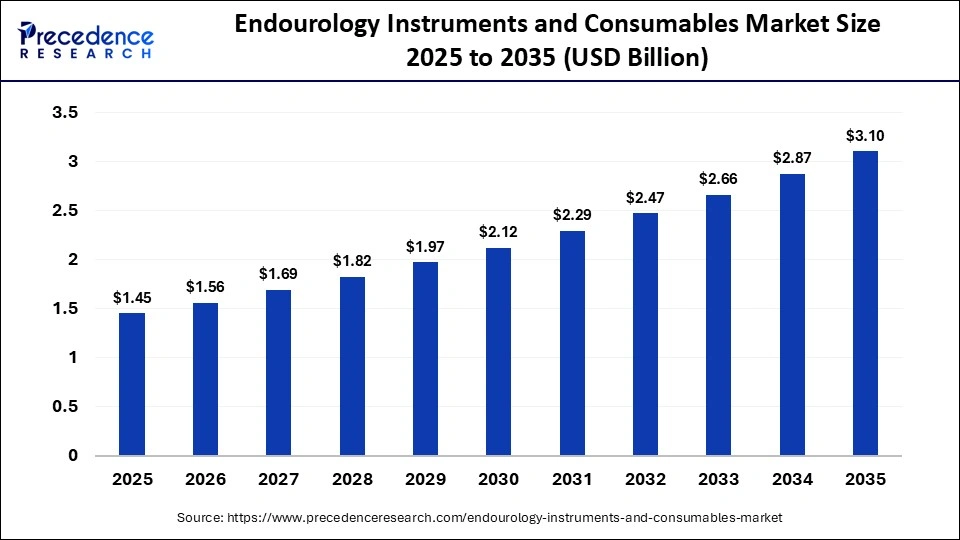
This growth is primarily driven by the rising incidence of kidney stones, urinary tract disorders, and prostate-related conditions, along with the increasing demand for single-use surgical instruments that enhance safety and efficiency in clinical settings.
Read Also: Respiratory Syncytial Virus Diagnostic Market
What Are Endourology Instruments and Consumables?
Endourology instruments and consumables are disposable or limited-use medical devices used in minimally invasive procedures for diagnosing and treating urological conditions. These include:
- Guidewires
- Ureteral stents
- Stone retrieval baskets
- Access sheaths
- Catheters and dilators
These products are essential in ensuring sterile, precise, and efficient procedures, particularly in modern urology practices where patient safety and recovery time are critical.
Market Growth Drivers
1. Rising Prevalence of Urological Disorders
The increasing incidence of kidney stones and urinary tract diseases is a major factor driving demand. Lifestyle changes, obesity, and aging populations are contributing to a higher global disease burden.
2. Growing Adoption of Minimally Invasive Procedures
Minimally invasive techniques such as ureteroscopy and RIRS are becoming the standard due to:
- Reduced patient trauma
- Faster recovery times
- Shorter hospital stays
This trend is significantly increasing the consumption of endourology instruments and consumables.
3. Shift Toward Single-Use Devices
Hospitals are increasingly adopting disposable instruments to:
- Reduce infection risks
- Avoid cross-contamination
- Lower maintenance costs
Reusable devices often require costly repairs and frequent maintenance, making single-use options more attractive.
Key Market Trends
Rise of Disposable Endourology Devices
The shift toward single-use instruments is transforming procurement strategies in hospitals and surgical centers, ensuring consistent performance and safety.
Technological Advancements
Innovations in laser lithotripsy, imaging systems, and flexible ureteroscopes are enhancing procedural accuracy and efficiency.
Growth of Outpatient Procedures
Ambulatory surgical centers are witnessing increased adoption of endourology procedures due to cost-effectiveness and faster patient turnover.
Market Segmentation Analysis
By Product Type
- Ureteral stents dominate with 25% market share, widely used for post-procedure drainage
- Stone retrieval devices and guidewires also hold significant shares due to frequent use
By Procedure Type
- Ureteroscopy leads with 40% share, driven by its minimally invasive nature
- Retrograde Intrarenal Surgery (RIRS) is the fastest-growing segment due to technological advancements
By Application
- Kidney stones account for 55% of the market, making it the largest application segment
- Other applications include ureteral strictures and benign prostatic hyperplasia
By End-Use
- Hospitals dominate with 60% share, supported by advanced infrastructure and high patient volumes
- Ambulatory surgical centers are the fastest-growing segment due to outpatient care trends
Regional Insights
North America
North America leads the market with a 38% share, driven by advanced healthcare infrastructure and high procedural volumes.
Asia Pacific
Asia Pacific is the fastest-growing region, expanding at a CAGR of 9.5%, supported by increasing healthcare investments and a large patient population.
Europe
Europe maintains steady growth due to increasing adoption of minimally invasive techniques and strong healthcare systems.
Role of AI in Endourology
Artificial intelligence is playing a transformative role in endourology by improving diagnostic accuracy and procedural precision. AI-powered imaging tools can detect kidney stones and other abnormalities earlier and with greater accuracy.
Additionally, AI-assisted surgical systems provide real-time guidance during procedures, enhancing navigation and reducing complications. This integration is helping improve patient outcomes and operational efficiency in urology practices.
Challenges in the Market
Despite steady growth, the market faces several challenges:
- High cost of advanced consumables
- Limited access to minimally invasive procedures in developing regions
- Dependence on procedural volumes
- Pricing pressures in healthcare systems
These factors may impact adoption, particularly in cost-sensitive markets.
Competitive Landscape
Key players in the endourology instruments and consumables market include:
- Boston Scientific Corporation
- Olympus Corporation
These companies are focusing on minimally invasive technologies, disposable device innovation, and advanced endoscopic systems to strengthen their market position.
Conclusion
The endourology instruments and consumables market is evolving into a procedure-driven, high-demand segment within the healthcare industry. With rising urological disorders, increasing adoption of minimally invasive procedures, and a growing preference for disposable devices, the market is expected to witness sustained growth through 2035.
As healthcare systems continue to prioritize efficiency, patient safety, and faster recovery, endourology consumables will play a critical role in shaping the future of urological care.
Get a Sample Link: https://www.precedenceresearch.com/sample/8324
For inquiries regarding discounts, bulk purchases, or customization requests, please contact us at [email protected]