
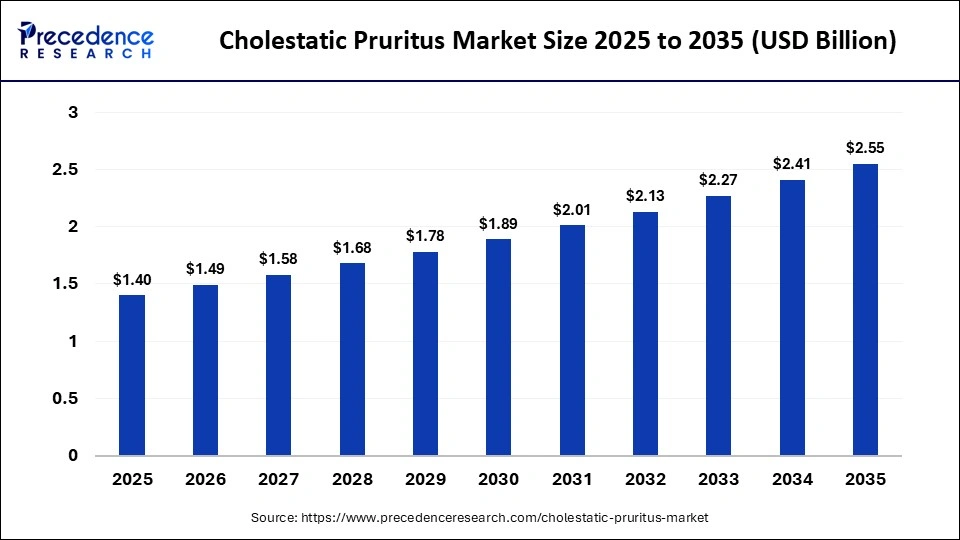
The global cholestatic pruritus market is steadily evolving as healthcare systems increasingly prioritize symptom management alongside disease treatment. The market was valued at USD 1.40 billion in 2025 and is expected to reach USD 2.55 billion by 2035, growing at a CAGR of 6.20% during the forecast period.
Cholestatic pruritus, a severe and persistent itching condition associated with liver dysfunction, is gaining recognition as a major clinical challenge. It significantly impacts patients’ quality of life, causing sleep disturbances, fatigue, and psychological distress. As awareness grows and treatment options improve, the market is witnessing consistent expansion.
Read Also: Amylin Analog Drugs Market
What is Cholestatic Pruritus?
Cholestatic pruritus is a symptom of cholestasis, a condition characterized by impaired bile flow. The buildup of bile acids and other pruritogens in the bloodstream leads to intense itching, often resistant to conventional treatments.
It is commonly associated with liver diseases such as:
- Primary biliary cholangitis (PBC)
- Primary sclerosing cholangitis (PSC)
- Cholestasis due to hepatic failure
This condition is not merely a dermatological issue but a systemic problem requiring targeted therapeutic intervention.
Cholestatic Pruritus Market Market Dynamics
Key Growth Drivers
Rising Prevalence of Liver Disorders
The increasing incidence of chronic liver diseases is the primary factor driving market growth. Conditions such as PBC and PSC are becoming more common due to lifestyle factors like obesity, alcohol consumption, and autoimmune disorders.
Advancements in Drug Development
Pharmaceutical companies are heavily investing in R&D to develop therapies that target the root cause of pruritus rather than just alleviating symptoms. This shift is significantly improving treatment outcomes.
Improved Diagnosis and Awareness
Better diagnostic tools and increased awareness among healthcare providers are enabling earlier detection and treatment, boosting market demand.
Role of AI in the Cholestatic Pruritus Market
Artificial intelligence is emerging as a transformative force in this market.
AI-driven platforms are accelerating drug discovery by analyzing complex biological pathways associated with bile acid metabolism. This enables faster identification of effective therapeutic targets.
In clinical settings, AI supports personalized treatment strategies by analyzing patient data and predicting disease progression. This leads to more effective symptom management and improved patient outcomes.
Market Trends
Shift Toward Targeted Therapies
The market is increasingly moving toward targeted therapies such as ileal bile acid transporter (IBAT) inhibitors, which directly address bile acid accumulation—the root cause of itching.
Focus on Quality of Life
Healthcare providers are prioritizing patient comfort and mental well-being, making pruritus management a key component of treatment strategies.
Expansion of Rare Disease Research
Increased investment in rare liver diseases is driving innovation and opening new opportunities for advanced therapies.
Market Segmentation Analysis
By Treatment Type
| Treatment Type | 2025 Share | 2035 Share |
|---|---|---|
| Pharmacological Treatments | 75% | 78% |
| Non-pharmacological Treatments | 25% | 22% |
Pharmacological treatments dominate due to their effectiveness in targeting internal biochemical mechanisms.
By Disease Type
| Disease Type | 2025 Share |
|---|---|
| Primary Biliary Cholangitis (PBC) | 60% |
| Cholestasis due to Hepatic Failure | 20% |
| Primary Sclerosing Cholangitis (PSC) | 15% |
| Others | 5% |
PBC leads the market, highlighting a significant unmet need for effective treatments.
By End-Use
| End-Use | 2025 Share |
|---|---|
| Hospitals | 50% |
| Clinics | 30% |
| Ambulatory Surgical Centers | 10% |
| Homecare Settings | 10% |
Hospitals dominate due to the need for specialized care and multidisciplinary treatment approaches.
Regional Analysis
North America
North America leads the market with a 35% share, driven by advanced healthcare infrastructure, strong R&D investments, and high disease prevalence.
Europe
Europe is expected to grow at the fastest pace due to increasing healthcare spending, improved diagnostics, and strong regulatory support for innovative therapies.
Asia Pacific
Asia Pacific holds a 25% market share and is witnessing rapid growth due to improving healthcare infrastructure and rising awareness of liver diseases.
Key Opportunities in the Market
Why Are Targeted Therapies Gaining Momentum?
Targeted therapies like IBAT inhibitors provide effective and long-lasting relief by addressing bile acid accumulation directly.
How Is Unmet Medical Need Driving Growth?
A large proportion of patients remain untreated or inadequately treated, creating strong demand for innovative solutions.
What Role Does Innovation Play?
Ongoing clinical trials and new drug approvals are expected to reshape the treatment landscape.
Recent Developments
A major breakthrough came in March 2026, when the U.S. FDA approved linerixibat (Lynavoy) for treating cholestatic pruritus in patients with PBC. This marks a significant advancement in targeted therapy development.
Additionally, therapies like maralixibat have demonstrated significant reductions in itching and bile acid levels, improving patient outcomes.
Competitive Landscape
Key Companies
- Allergan
- Mundipharma
- Intercept Pharmaceuticals
- Gilead Sciences
- Novartis AG
- AbbVie Inc.
- Johnson & Johnson
- Pfizer Inc.
- Takeda Pharmaceuticals
- Amgen Inc.
- Zydus Cadila
- Bristol-Myers Squibb
These companies are actively investing in R&D and expanding their product pipelines to gain a competitive edge.
Challenges in the Market
Despite promising growth, several challenges persist:
- High cost of advanced therapies
- Lack of standardized diagnostic criteria
- Limited accessibility in developing regions
- Side effects associated with existing treatments
Case Study: Targeted Therapy Transforming Care
Clinical advancements in IBAT inhibitors have demonstrated significant improvements in reducing pruritus severity and enhancing quality of life. These therapies represent a shift toward precision medicine, addressing the root cause rather than just symptoms.
Get a Sample PDF: https://www.precedenceresearch.com/sample/8320
For inquiries regarding discounts, bulk purchases, or customization requests, please contact us at [email protected]