
Dementia care is changing as the global population ages and the number of people living with cognitive disorders continues to increase. Families, healthcare providers, and care organizations are looking for solutions that can provide continuous support while helping patients maintain safety, independence, and quality of life.
The global dementia care sector was valued at USD 21.20 billion in 2025 and is projected to reach approximately USD 46.97 billion by 2035, expanding at a CAGR of 8.40% from 2026 to 2035.
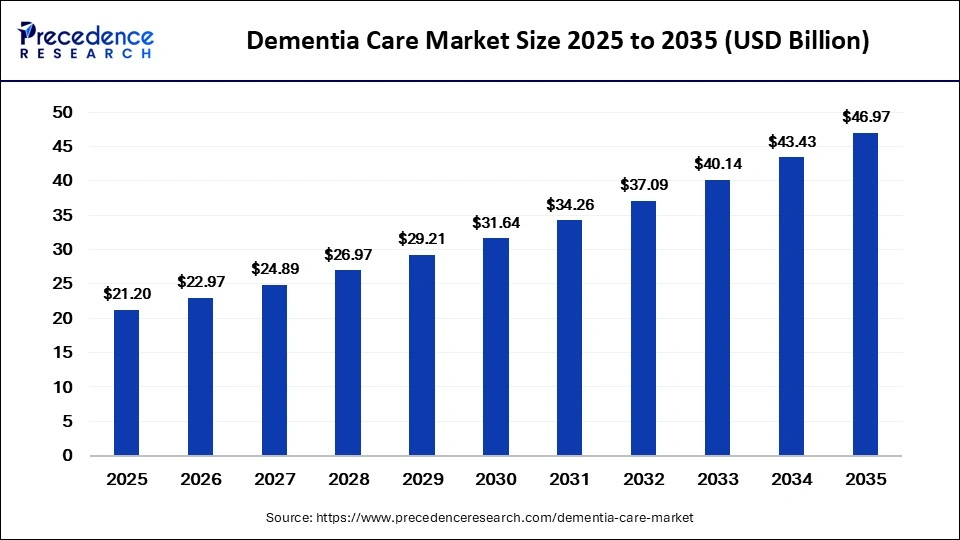
One of the biggest shifts taking place is the movement away from care that relies entirely on hospitals and facilities. Home-based services, digital monitoring, smart devices, cognitive support programs, and personalized care models are becoming increasingly important.
Download a Sample Report: https://www.precedenceresearch.com/sample/8461
Why Dementia Care Is Becoming More Important
Dementia is not a single condition. It describes a group of disorders that affect memory, thinking, behavior, and the ability to perform everyday activities.
Alzheimer’s disease remains the most common form and accounted for 58% of dementia types in 2025. As the condition progresses, patients may require increasing levels of assistance with medication, mobility, communication, nutrition, personal care, and safety.
This creates a significant responsibility for families and professional caregivers.
The growing aging population is increasing the need for specialized care services, while shortages of trained caregivers are encouraging greater adoption of technology-enabled solutions.
The focus is therefore shifting toward care models that combine professional support with digital tools, remote monitoring, and home-based services.
AI Is Changing How Dementia Patients Are Supported
Artificial intelligence is becoming an important part of modern dementia care.
AI-powered systems can analyze health information, behavioral patterns, cognitive assessments, and medical imaging to support earlier identification and more personalized care.
Smart sensors and connected devices can also establish an individual’s normal daily routine. Changes in movement, sleep, activity, or behavior can then trigger alerts for caregivers.
For example, AI-enabled fall detection can identify unusual movement patterns and notify caregivers when a patient may be at risk. GPS-enabled wearables can help families monitor individuals who may be vulnerable to wandering.
AI can also support clinical decision-making by analyzing patient information and identifying patterns associated with cognitive decline.
The larger opportunity is to move dementia care from a reactive approach toward a more proactive model where potential risks are identified earlier.
Key Trends Shaping Dementia Care
Home-Based Care Is Becoming the Preferred Option
Home-based care accounted for 34% of care types in 2025 and is expected to grow at the fastest rate, reaching a projected 9.6% CAGR from 2026 to 2035.
Many patients prefer to remain in familiar surroundings rather than move to a long-term facility. Familiar environments can also make daily routines easier to maintain.
Professional caregivers, visiting nurses, therapists, and home healthcare providers are therefore becoming more important in long-term dementia management.
Remote Monitoring Is Growing Rapidly
Remote monitoring and digital care are gaining momentum as healthcare becomes increasingly connected.
Wearable devices, activity sensors, smart home technology, digital reminders, and telehealth platforms can help families monitor patients without constant physical supervision.
These technologies can support medication reminders, movement tracking, emergency alerts, and communication between caregivers and healthcare professionals.
Memory Care Is Becoming More Specialized
Memory care centers provide structured environments designed specifically for people with dementia.
These facilities focus on cognitive support, behavioral management, safety, daily routines, and caregiver assistance. Their role is becoming more important as families look for specialized environments for patients with more complex needs.
Caregiver Support Is Receiving Greater Attention
Dementia affects not only patients but also family caregivers.
Caregivers often manage medications, appointments, mobility, nutrition, communication, and behavioral challenges. Digital platforms and community-based services are increasingly being used to provide education, scheduling assistance, remote support, and respite services.
How Leading Companies Are Positioning
The dementia care ecosystem includes pharmaceutical companies, biotechnology firms, healthcare providers, senior-care organizations, and digital health companies.
Eli Lilly and Company is strengthening its position in Alzheimer’s disease treatment through disease-modifying therapy research and development. The company is also contributing to a broader shift toward earlier disease identification and treatment.
Eisai is another important player in Alzheimer’s care. Its work in disease-modifying therapies is helping push healthcare toward treatment approaches that address underlying disease progression rather than focusing only on symptoms.
Biogen continues to focus on neurological diseases and has extensive experience in Alzheimer’s research and advanced therapeutic development.
Roche is active across neurological diagnostics and therapeutics, creating opportunities to connect disease assessment with more personalized approaches to patient care.
Novartis continues to invest in neuroscience and digital health capabilities that can support improved patient management.
BioArctic is contributing to Alzheimer’s research through approaches designed to address disease progression and improve long-term treatment possibilities.
At the digital health level, companies developing cognitive training platforms, remote monitoring tools, wearable technologies, and AI-based care systems are creating new ways for patients to remain independent for longer.
Segment Highlights
Alzheimer’s Disease Remains the Largest Dementia Type
Alzheimer’s disease represented 58% in 2025, reflecting its large patient population and extensive need for long-term support.
Patients may require different levels of assistance as the condition progresses, creating demand for home care, memory care centers, neurological services, and caregiver support.
Mixed dementia is expected to grow at a 8.3% CAGR, supported by improved diagnostic capabilities and greater recognition of patients who experience more than one form of cognitive impairment.
Medical Care Services Continue to Lead
Medical care services accounted for 32% in 2025.
These services include physician consultations, neurological care, treatment management, and ongoing medical supervision.
However, remote monitoring and digital care are expected to grow at 11.3%, reflecting growing interest in technology-enabled support.
Digital tools can help connect patients, caregivers, and healthcare professionals while reducing the need for unnecessary facility visits.
Long-Term Care Facilities Remain Important
Long-term care facilities accounted for 31% of end use in 2025.
They remain essential for patients who require continuous supervision and advanced support.
At the same time, homecare settings are expected to grow at a 10.2% CAGR, supported by lower costs, patient preferences, telehealth, and increasing availability of home-based care technology.
This indicates that future dementia care will likely involve a combination of facility-based and home-based models rather than relying on one approach alone.
North America Leads the Global Landscape
North America accounted for 39% of the sector in 2025.
The region benefits from advanced healthcare infrastructure, higher awareness of dementia, established care facilities, and greater adoption of digital technologies.
The United States remains the major contributor, supported by its extensive healthcare ecosystem and high concentration of specialized neurological and long-term care services.
U.S. healthcare providers are increasingly integrating remote monitoring, smart devices, telehealth, and digital cognitive tools into dementia care.
Asia Pacific Is Growing Fastest
Asia Pacific is projected to grow at the fastest rate, with a 10.5% CAGR from 2026 to 2035.
The region has a rapidly aging population, particularly in countries such as China and Japan. This is creating greater demand for dementia diagnosis, long-term support, assisted living, and home-based services.
Governments and healthcare organizations are also investing in healthcare infrastructure and digital health technologies.
China is emerging as a major contributor due to its large aging population and increasing focus on neurological healthcare.
Japan is also important because of its advanced elderly-care infrastructure and growing use of technology to support aging populations.
Europe Continues to Expand Dementia Support
Europe accounted for approximately 29% in 2025 and is expected to experience steady growth.
The region benefits from established healthcare systems, public dementia programs, aging populations, and increasing adoption of digital care technologies.
The UK is focusing on improving dementia diagnosis, care delivery, and support for patients and caregivers. Smart monitoring systems and home-based care are becoming increasingly relevant as healthcare providers seek more efficient long-term care models.
Technology Is Creating New Opportunities for Home Care
One of the most important developments is the growing integration of technology into the home.
Smart home systems can monitor movement and activity without requiring continuous supervision. Wearables can help track location and detect falls. Digital reminders can support medication schedules and daily routines.
Remote monitoring can also allow healthcare professionals to follow changes in a patient’s condition without requiring frequent hospital visits.
This technology does not replace caregivers. Instead, it can help caregivers respond faster and manage their responsibilities more effectively.
Challenges Facing Dementia Care
Despite significant progress, dementia care remains expensive and complex.
Long-term care, specialized facilities, professional caregivers, and advanced monitoring technologies can create significant financial pressure for families.
Another challenge is the shortage of trained care professionals. As the number of dementia patients increases, healthcare systems will need to expand the workforce while also finding ways to improve productivity.
Technology adoption also varies between regions. Access to reliable internet infrastructure, digital literacy, reimbursement, and affordable devices can affect the adoption of digital dementia care.
Privacy and data security are also important considerations as more patient information is collected through connected devices.
What Should Healthcare Companies Watch?
Healthcare organizations, technology providers, pharmaceutical companies, and investors should closely monitor:
- Home-based dementia care
- AI-assisted cognitive monitoring
- Fall detection technology
- GPS-enabled wearable devices
- Remote patient monitoring
- Digital cognitive assessment
- Memory care centers
- Telehealth services
- Caregiver support platforms
- Personalized dementia care models
What Comes Next?
The future of dementia care is moving toward more personalized, connected, preventive, and home-centered support.
Traditional medical services will remain essential, but they will increasingly work alongside digital technologies, remote monitoring, smart home systems, and specialized caregiving services.
The biggest opportunity is not simply adding more care facilities. It is creating a connected care model that allows patients to remain safer and more independent while giving caregivers better tools and support.
As AI, wearable technology, telehealth, and digital monitoring continue to improve, dementia care could become more proactive and personalized.
The long-term goal is clear: help people living with dementia maintain dignity, safety, independence, and quality of life for as long as possible while reducing the burden on families and healthcare systems.
Buy this report:https://www.precedenceresearch.com/checkout/8461
About Us
Healthcare Prism is a dedicated healthcare insights and outreach platform, operating as an extension of Precedence Research. We share relevant perspectives, industry developments, emerging trends, and research-driven insights across the global healthcare sector. Our content is built on the knowledge, research standards, and expertise of Precedence Research, with a focus on making healthcare information clear, accessible, and useful for industry professionals, businesses, researchers, and healthcare stakeholders. Healthcare Prism serves as a focused platform to extend the reach of Precedence Research’s healthcare insights and connect them with a broader professional audience.
You can place an order or ask any questions, please feel free to contact us at [email protected]
Quick Contact:
Europe Region: +44 778 256 0738
North America Region: +1 8044 4193 44
APAC Region: +91 9356 9282 04 and +65 31065601
Visit Our Website: Precedence Research – Advisory, Research & Reports