
Duchenne muscular dystrophy (DMD) is one of the most challenging rare genetic disorders, primarily affecting boys and causing progressive muscle weakness over time. For years, treatment has focused largely on slowing disease progression and managing complications. Today, that approach is changing as genetic therapies, exon-skipping medicines, and personalized treatment strategies move forward.
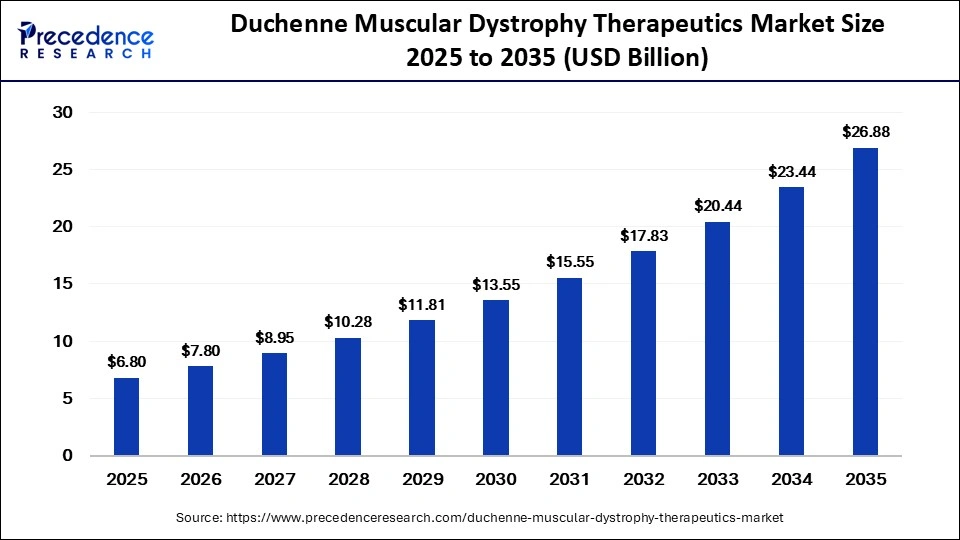
The global Duchenne muscular dystrophy therapeutics sector was valued at USD 6.80 billion in 2025 and is expected to reach approximately USD 26.88 billion by 2035, expanding at a CAGR of 14.80% from 2026 to 2035.
The most important development is the growing focus on treating the genetic cause of DMD rather than only managing its symptoms.
Download a Sample Report: https://www.precedenceresearch.com/sample/8456
Why DMD Treatment Is Evolving
Duchenne muscular dystrophy is caused by mutations in the DMD gene, which affects the production of dystrophin, a protein that helps protect muscle fibers.
As understanding of the disease improves, researchers are developing therapies designed to restore or increase dystrophin production, modify gene expression, or introduce functional genetic material.
This has created a transition from conventional supportive treatment toward more targeted therapies. Genetic testing is also becoming increasingly important because identifying the specific mutation can help determine whether a patient may be eligible for a mutation-specific treatment.
AI Is Supporting DMD Drug Development
Artificial intelligence is becoming increasingly useful in rare disease research.
AI and machine learning can analyze genetic information, clinical records, imaging data, and patient histories to identify patterns that may be difficult to detect manually. These tools can also support clinical trial recruitment by helping researchers identify suitable patients.
AI is additionally being explored for drug discovery and optimization. By analyzing large biological datasets, researchers can identify potential therapeutic targets and predict how treatments may perform.
For DMD, where patient populations are relatively small and clinical trials can be difficult to conduct, data-driven technologies can help make research more efficient.
Key Trends Shaping DMD Therapeutics
Exon-Skipping Therapies Remain Important
Exon-skipping therapies represented the largest therapy category, accounting for 34% in 2025.
These treatments are designed to help cellular machinery skip selected sections of the mutated dystrophin gene, potentially allowing production of a shorter but partially functional dystrophin protein.
Their importance has increased as genetic testing and mutation-specific treatment strategies become more widely used.
Gene Therapy Is Growing Rapidly
Gene therapy is expected to be the fastest-growing therapy segment, with a projected 24.5% CAGR from 2026 to 2035.
Researchers are investigating viral-vector approaches that deliver genetic instructions for producing micro-dystrophin or other therapeutic constructs.
The goal is to address the underlying genetic problem and potentially provide longer-lasting benefits compared with repeated conventional treatment.
RNA-Based Approaches Are Expanding
RNA-based treatments are also attracting significant attention. These approaches can be designed to influence gene expression and may provide greater precision for specific genetic mutations.
As RNA technology develops across rare diseases and neurological disorders, DMD is becoming another important area for therapeutic innovation.
Earlier Diagnosis Is Becoming More Important
The early-stage DMD segment is projected to grow at a 17.5% CAGR.
Early diagnosis can help families access genetic counseling, specialized care, and potentially mutation-specific treatments sooner. Earlier intervention may also help preserve muscle function before substantial damage occurs.
This is encouraging greater interest in genetic screening and newborn or early-life diagnostic strategies.
How Leading Companies Are Positioning
The DMD therapeutics landscape includes established pharmaceutical companies and specialized biotechnology firms competing through gene therapy, RNA technology, exon skipping, and targeted drug delivery.
Sarepta Therapeutics remains one of the most prominent companies in DMD, with a portfolio spanning exon-skipping treatments and gene therapy programs. Its development efforts have helped establish targeted genetic approaches as an important part of DMD care.
REGENXBIO is advancing gene therapy programs for DMD, including RGX-202, designed around micro-dystrophin expression.
Pfizer has invested in gene therapy development for DMD and continues to contribute to the broader advanced genetic medicine ecosystem.
Solid Biosciences is developing genetic medicine approaches aimed at addressing the underlying biology of DMD.
Wave Life Sciences, Avidity Biosciences, PepGen, and Dyne Therapeutics are exploring RNA-based and targeted delivery technologies that could improve precision in neuromuscular disease treatment.
These companies are increasingly differentiating themselves through delivery technologies, mutation-specific treatment strategies, clinical development capabilities, and manufacturing expertise.
Segment Highlights
Ambulatory Patients Represent the Largest Disease-Stage Group
Ambulatory DMD accounted for 38% in 2025. Maintaining the ability to walk is closely linked with quality of life, mobility, and independence, making preservation of muscle function an important treatment objective.
However, early-stage DMD is expected to grow faster, reflecting the increasing importance of early diagnosis and intervention.
Intravenous Treatment Currently Leads
Intravenous administration represented 46% in 2025, supported by the use of advanced therapies and infusion-based treatment approaches.
The subcutaneous segment is projected to grow at a 17.2% CAGR, indicating increasing interest in more convenient and patient-friendly delivery options.
Oral therapies also remain important, particularly for long-term disease management.
Hospitals Remain the Primary Care Setting
Hospitals accounted for 42% of end use in 2025, supported by infusion-based treatments, genetic testing, multidisciplinary care, and monitoring requirements.
Specialty neuromuscular clinics are expected to expand rapidly as patients require more specialized long-term management.
At the same time, homecare settings are projected to grow at an 18.8% CAGR, supported by telehealth, remote monitoring, and treatments that can reduce dependence on hospital visits.
North America Leads the Landscape
North America accounted for 44% in 2025, supported by advanced genetic research, strong biotechnology capabilities, early access to innovative therapies, and an established rare disease clinical trial ecosystem.
The U.S. remains the major contributor, with strong investment in genetic medicine, specialized neuromuscular clinics, and rare disease research.
The region also benefits from a large concentration of companies developing exon-skipping therapies, gene therapies, and next-generation RNA medicines.
Asia Pacific Is Growing Fastest
Asia Pacific is expected to grow at the fastest pace, with a projected 20.5% CAGR from 2026 to 2035.
Increasing rare disease awareness, improvements in genetic testing, healthcare infrastructure development, and growing pharmaceutical investment are supporting the region.
China is expanding its capabilities in biotechnology and precision medicine, while other countries are improving access to specialized genetic diagnostics and neuromuscular care.
Europe Continues to Build Rare Disease Capabilities
Europe held approximately 30% in 2025 and continues to benefit from strong public healthcare systems, research institutions, and rare disease programs.
The UK has developed a strong clinical research ecosystem for neuromuscular disorders, supported by universities, specialist care centers, and biotechnology companies.
Across Europe, increasing access to genetic testing and advanced treatment programs is helping improve the management of DMD.
Challenges in DMD Treatment
Despite significant progress, DMD treatment remains complex.
Gene therapies and other advanced treatments can require substantial investment, specialized administration, long-term monitoring, and sophisticated manufacturing capabilities.
The high cost of advanced therapies can also create access challenges, particularly where reimbursement systems are limited.
Another challenge is ensuring that new treatments provide durable clinical benefits while maintaining acceptable safety profiles over the long term.
What Should Healthcare Companies Watch?
Healthcare providers, pharmaceutical companies, biotechnology firms, and investors should closely monitor:
- Gene therapy development
- Exon-skipping technologies
- RNA-targeted treatments
- Mutation-specific medicine
- Genetic screening
- Micro-dystrophin approaches
- Targeted drug delivery
- AI-assisted clinical research
- Home-based disease management
- Long-term real-world evidence
What Comes Next?
The future of Duchenne muscular dystrophy treatment is moving toward earlier diagnosis, mutation-specific therapy, genetic medicine, and more personalized care.
Symptom management and supportive treatment will remain important, but the biggest scientific shift is the growing ability to target the underlying genetic mechanism.
Gene therapy, RNA therapeutics, exon skipping, and improved delivery technologies could reshape how DMD is managed over the next decade.
The larger opportunity is not simply developing another treatment. It is finding ways to preserve muscle function for longer, slow disease progression, and ultimately address the genetic cause of Duchenne muscular dystrophy.
As research advances, the combination of genetic testing, precision medicine, AI, and next-generation therapies could bring DMD care closer to a more personalized and disease-modifying model.
Buy this report: https://www.precedenceresearch.com/checkout/8456
About Us
Healthcare Prism is a dedicated healthcare insights and outreach platform, operating as an extension of Precedence Research. We share relevant perspectives, industry developments, emerging trends, and research-driven insights across the global healthcare sector. Our content is built on the knowledge, research standards, and expertise of Precedence Research, with a focus on making healthcare information clear, accessible, and useful for industry professionals, businesses, researchers, and healthcare stakeholders. Healthcare Prism serves as a focused platform to extend the reach of Precedence Research’s healthcare insights and connect them with a broader professional audience.
You can place an order or ask any questions, please feel free to contact us at [email protected]
Quick Contact:
Europe Region: +44 778 256 0738
North America Region: +1 8044 4193 44
APAC Region: +91 9356 9282 04 and +65 31065601
Visit Our Website: Precedence Research – Advisory, Research & Reports