
Huntington’s disease is a rare inherited neurological disorder that gradually affects movement, thinking, behavior, and the ability to perform daily activities. While current care largely focuses on managing symptoms, research is increasingly moving toward therapies that target the underlying genetic cause of the disease.
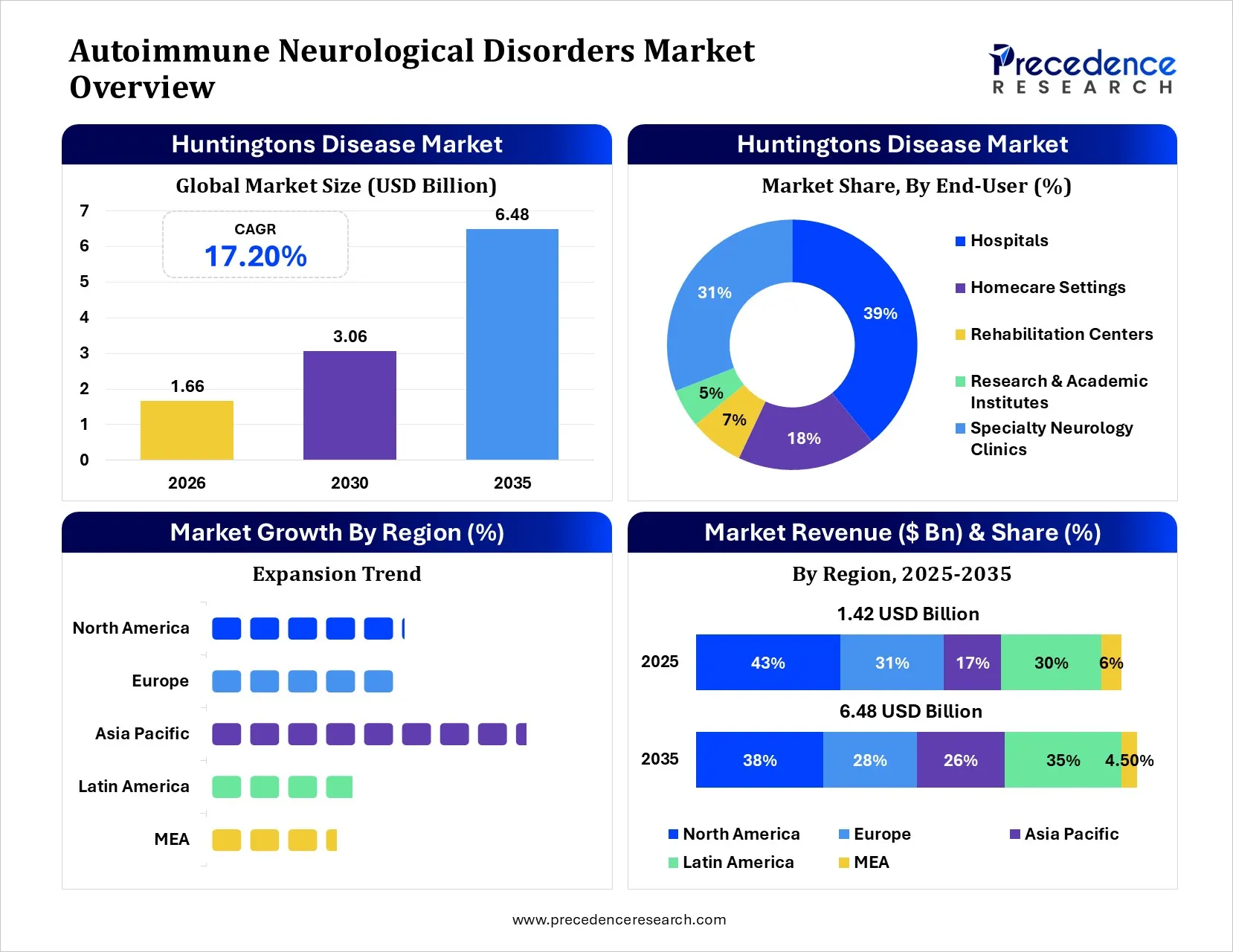
The global Huntington’s disease therapeutics sector was valued at USD 1.42 billion in 2025 and is projected to reach approximately USD 6.48 billion by 2035, expanding at a CAGR of 17.20% from 2026 to 2035.
The most important change is the growing focus on disease-modifying approaches, including gene therapies and RNA-targeted treatments that aim to influence the production of mutant huntingtin protein.
Download a Sample Report: https://www.precedenceresearch.com/sample/8455
Why Huntington’s Disease Treatment Is Changing
Huntington’s disease is caused by a mutation in the HTT gene. Because the genetic cause is well established, researchers have been able to focus on strategies that directly target the disease mechanism.
Genetic testing can help confirm a diagnosis, while neurological assessments and imaging are often used to understand disease progression. As awareness improves, more attention is also being placed on identifying the disease earlier.
Earlier diagnosis can help patients and families better understand the condition, plan care, and consider participation in clinical research.
At the same time, pharmaceutical and biotechnology companies are working to develop treatments that could move beyond symptom management and potentially slow disease progression.
AI Is Supporting Huntington’s Disease Research
Artificial intelligence is creating new opportunities in Huntington’s disease research and care.
AI and machine learning can analyze large volumes of genetic, clinical, imaging, and movement data. This can help researchers identify patterns associated with disease progression and improve clinical trial recruitment.
Computer vision and motion-analysis tools are also being explored to distinguish involuntary movements from voluntary movements. This can support more objective monitoring of motor symptoms.
AI can further assist drug discovery by identifying potential therapeutic targets, screening compounds, and analyzing biological pathways linked to Huntington’s disease.
As research becomes increasingly data-driven, AI could help make clinical development more efficient and improve how disease progression is measured.
Key Trends Shaping Huntington’s Disease Therapeutics
Shift Toward Gene-Targeted Therapies
Gene therapies are becoming one of the most closely watched areas of Huntington’s disease research.
The gene therapy segment is projected to grow at a 28.5% CAGR from 2026 to 2035, making it the fastest-growing therapy category.
Researchers are exploring gene silencing, gene editing, and other approaches designed to reduce the production or harmful effects of mutant huntingtin.
RNA-Targeted Therapies Are Gaining Momentum
RNA-targeted approaches, including antisense oligonucleotides, offer another way to reduce disease-related gene expression.
This segment is projected to expand at a 25.8% CAGR, supported by increasing investment in precision neurological therapies and the broader development of RNA-based treatments.
Earlier Diagnosis Is Becoming More Important
The early-stage Huntington’s disease segment is expected to grow at a 21.5% CAGR.
Improved genetic testing and greater awareness are making earlier diagnosis more achievable. Earlier identification may also help researchers enroll patients into clinical studies before substantial neurological damage occurs.
Intrathecal Delivery Is Expanding
Oral therapies currently account for the largest share of administration routes at 52%. However, intrathecal delivery is projected to grow at the fastest rate, with a 27.5% CAGR.
This approach is particularly relevant for RNA-based and other CNS-targeted therapies that need to reach the central nervous system more directly.
Home-Based Care Is Becoming More Important
Huntington’s disease often requires long-term support as symptoms progress.
The homecare segment is projected to grow at a 19.5% CAGR, supported by telehealth, remote monitoring, caregiver support, and the growing preference for care that allows patients to remain in familiar environments.
How Leading Companies Are Positioning
The Huntington’s disease therapeutics landscape includes established pharmaceutical companies and biotechnology firms developing disease-modifying and symptom-focused treatments.
Roche is pursuing genetic and molecular approaches to Huntington’s disease, including programs designed to address the underlying biology of the disorder.
Wave Life Sciences is developing RNA-based precision medicines aimed at selectively targeting disease-related genetic mechanisms.
uniQure has been advancing gene therapy approaches designed to reduce mutant huntingtin production through targeted genetic intervention.
Ionis Pharmaceuticals brings extensive experience in antisense technology and has contributed to the development of RNA-targeted approaches for neurological disorders.
PTC Therapeutics is focusing on treatments for neurological diseases and continues to explore innovative approaches for Huntington’s disease.
Prilenia Therapeutics is advancing therapies designed to address neurodegenerative and neuropsychiatric conditions, including Huntington’s disease.
Voyager Therapeutics is developing gene therapy platforms designed to improve delivery of genetic medicines to the central nervous system.
These companies are increasingly differentiating through gene-silencing technologies, RNA therapeutics, targeted delivery systems, biomarkers, and precision medicine.
Symptomatic Treatment Still Leads Today
Symptomatic treatments accounted for 48% of therapy types in 2025, reflecting the current need to manage chorea, psychiatric symptoms, mood changes, and other complications.
VMAT2 inhibitors, antipsychotics, antidepressants, and mood stabilizers remain important components of Huntington’s disease care.
However, the long-term direction is clearly shifting toward therapies that may modify the underlying disease process.
Mid-Stage Disease Currently Represents the Largest Patient Need
The mid-stage disease segment accounted for 42% in 2025.
Patients in this stage may experience greater difficulties with movement, work, decision-making, and daily activities. As a result, multidisciplinary care becomes increasingly important.
Meanwhile, early-stage care is growing faster as genetic testing and earlier intervention receive greater attention.
Advanced-stage disease continues to create demand for supportive care, rehabilitation, caregiver assistance, and home-based services.
North America Leads, Asia Pacific Accelerates
North America accounted for 43% in 2025, supported by advanced neurological research, genetic testing capabilities, specialized care centers, and strong clinical trial activity.
The U.S. remains a major center for Huntington’s disease research, biotechnology innovation, and development of gene- and RNA-based therapies.
Europe held approximately 31%, supported by established neurological research networks, precision medicine initiatives, and specialized rare disease care.
Asia Pacific is expected to grow fastest, with a projected 24.5% CAGR from 2026 to 2035. Improvements in neurological healthcare infrastructure, growing awareness of rare genetic disorders, biotechnology investment, and greater access to advanced diagnostics are supporting this expansion.
China is becoming an increasingly important contributor to neurological research and advanced treatment development across the region.
Challenges in Huntington’s Disease Care
Despite significant scientific progress, Huntington’s disease remains difficult to treat.
Advanced therapies can be expensive, while access to specialized neurological care and genetic testing varies significantly across countries.
Developing disease-modifying therapies also requires long clinical studies because researchers need reliable measures of neurological progression.
Another challenge is ensuring that emerging therapies can safely reach the brain while producing meaningful and sustained clinical benefits.
What Should Healthcare Companies Watch?
Healthcare providers, pharmaceutical companies, researchers, and investors should closely monitor:
- Gene silencing technologies
- RNA-targeted therapies
- Antisense oligonucleotides
- CNS gene delivery
- Biomarker development
- Early genetic testing
- AI-based disease monitoring
- Intrathecal drug delivery
- Precision neurology
- Home-based Huntington’s disease care
What Comes Next?
The future of Huntington’s disease treatment is moving beyond symptom control toward genetic, RNA-based, and disease-modifying strategies.
The next generation of therapies will likely focus on reducing mutant huntingtin, slowing neurological decline, and identifying patients earlier in the disease journey.
The biggest opportunity is not simply developing another treatment for Huntington’s disease. It is finding a way to change the course of the disease itself.
As gene therapy, RNA therapeutics, AI, biomarkers, and precision medicine continue to advance, Huntington’s disease could become an important testing ground for next-generation approaches to inherited neurological disorders.
Buy this report: https://www.precedenceresearch.com/checkout/8455
About Us
Healthcare Prism is a dedicated healthcare insights and outreach platform, operating as an extension of Precedence Research. We share relevant perspectives, industry developments, emerging trends, and research-driven insights across the global healthcare sector. Our content is built on the knowledge, research standards, and expertise of Precedence Research, with a focus on making healthcare information clear, accessible, and useful for industry professionals, businesses, researchers, and healthcare stakeholders. Healthcare Prism serves as a focused platform to extend the reach of Precedence Research’s healthcare insights and connect them with a broader professional audience.
You can place an order or ask any questions, please feel free to contact us at [email protected]
Quick Contact:
Europe Region: +44 778 256 0738
North America Region: +1 8044 4193 44
APAC Region: +91 9356 9282 04 and +65 31065601
Visit Our Website: Precedence Research – Advisory, Research & Reports