
Systemic mastocytosis treatment sector is advancing rapidly as awareness, diagnosis, and targeted treatment options improve for this rare blood disorder. Systemic mastocytosis is caused by the abnormal accumulation of mast cells in the bone marrow and other organs, creating a growing need for effective and targeted therapies.
The global systemic mastocytosis treatment sector was valued at approximately USD 562.18 million in 2025 and is projected to reach nearly USD 1.33 billion by 2035, expanding at a CAGR of 8.96% from 2026 to 2035.
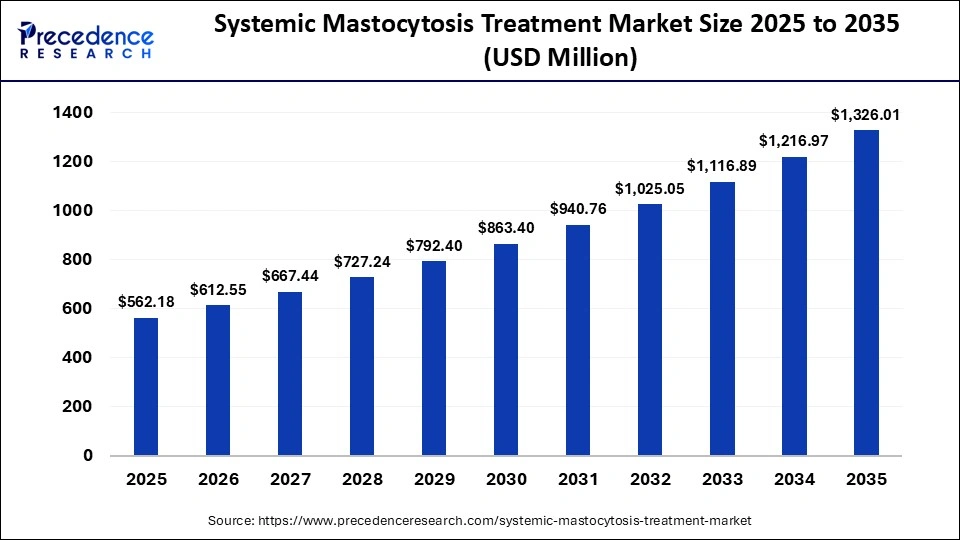
Growth is being driven by increasing disease awareness, advances in KIT-targeted therapies, rising clinical research, and greater investment in innovative treatments for rare hematologic disorders.
Download a Sample Report: https://www.precedenceresearch.com/sample/8139
Why Systemic Mastocytosis Treatment Is Evolving
Systemic mastocytosis can range from indolent forms with long-term symptoms to aggressive disease that can affect multiple organs. Treatment therefore varies according to disease subtype, symptoms, and disease progression.
Therapeutic approaches include KIT inhibitors, antihistamines, corticosteroids, mast cell stabilizers, immunomodulators, and cytoreductive therapies.
The growing focus is shifting from managing symptoms alone toward therapies that address the molecular mechanisms driving abnormal mast cell growth.
Targeted Therapy Is Changing Treatment Strategies
Targeted therapy accounted for approximately 43.7% of the sector in 2025, making it the leading treatment approach.
KIT inhibitors are particularly important because mutations involving the KIT pathway play a central role in many cases of systemic mastocytosis. By targeting this pathway, newer therapies aim to reduce abnormal mast cell activity and improve disease control.
This shift toward precision treatment is encouraging pharmaceutical companies to invest in more selective therapies and clinical programs for both indolent and advanced forms of the disease.
AI Is Supporting Research and Personalized Care
Artificial intelligence is beginning to influence systemic mastocytosis treatment development through data analysis, clinical research, and personalized care.
AI can analyze electronic health records, laboratory information, imaging data, and clinical notes to identify disease patterns and support earlier intervention. It can also help researchers identify potential drug targets, optimize clinical trial recruitment, and analyze treatment response.
In November 2025, Terray launched EMMI, an AI-based drug discovery platform designed to accelerate small-molecule development, highlighting the broader movement toward AI-assisted pharmaceutical research.
Indolent Systemic Mastocytosis Remains the Largest Disease Segment
Indolent systemic mastocytosis held approximately 46.8% of the sector in 2025.
Its leading position is associated with the larger patient population and the long-term management needs of individuals experiencing symptoms such as skin lesions, flushing, gastrointestinal problems, itching, and allergic reactions.
Meanwhile, mast cell leukemia is expected to expand at the fastest CAGR of 12.7% through 2035 as researchers and pharmaceutical companies focus on advanced therapies for more aggressive disease forms.
Oral Therapies Continue to Dominate
Oral therapies represented approximately 63.8% of the sector in 2025.
Their convenience makes them particularly valuable for long-term symptom management. Antihistamines, corticosteroids, leukotriene inhibitors, and several targeted treatments can be administered orally, reducing the need for frequent hospital visits.
Injectable and intravenous therapies remain important for patients requiring specialized treatment and closer clinical monitoring.
How Leading Companies Are Positioning
The competitive landscape includes pharmaceutical companies developing targeted therapies and broader hematology portfolios.
Blueprint Medicines has established a strong position in systemic mastocytosis treatment through Ayvakit (avapritinib), a targeted therapy designed to address KIT-driven disease.
Novartis continues to invest in biomedical research and targeted treatment development across rare diseases.
Cogent Biosciences is advancing bezuclastinib, a highly selective KIT inhibitor being developed for KIT-driven diseases.
Other major companies, including Takeda, AstraZeneca, Bristol Myers Squibb, Roche, Pfizer, Sanofi, AbbVie, and Eli Lilly, contribute to the broader rare disease and hematology ecosystem.
A notable development came in June 2025, when Sanofi acquired Blueprint Medicines, strengthening its position in innovative treatments for systemic mastocytosis.
Competition is increasingly centered on target specificity, treatment durability, safety, patient convenience, and clinical outcomes.
North America Leads, Asia Pacific Gains Momentum
North America held the largest share at 41.7% in 2025, supported by advanced healthcare infrastructure, greater awareness of rare diseases, strong pharmaceutical research capabilities, and access to targeted therapies.
The U.S. remains the region’s primary contributor, supported by clinical research, specialized treatment centers, and continued investment in rare disease therapeutics.
Asia Pacific is expected to record the fastest growth. Rising healthcare investment, improving access to specialty care, and increasing pharmaceutical activity in countries such as China, Japan, and India are supporting regional expansion.
What Comes Next?
The future of systemic mastocytosis treatment is moving toward more targeted, personalized, and potentially disease-modifying therapies.
The strongest opportunities are likely to come from selective KIT inhibitors, combination approaches, improved diagnostic pathways, and AI-supported drug discovery.
As research advances and access to specialized treatment improves, the focus will increasingly shift from symptom control toward deeper disease management and better long-term outcomes for patients living with systemic mastocytosis.
Buy this report: https://www.precedenceresearch.com/checkout/8139
About Us
Healthcare Prism is a dedicated healthcare insights and outreach platform, operating as an extension of Precedence Research. We share relevant perspectives, industry developments, emerging trends, and research-driven insights across the global healthcare sector. Our content is built on the knowledge, research standards, and expertise of Precedence Research, with a focus on making healthcare information clear, accessible, and useful for industry professionals, businesses, researchers, and healthcare stakeholders. Healthcare Prism serves as a focused platform to extend the reach of Precedence Research’s healthcare insights and connect them with a broader professional audience.
You can place an order or ask any questions, please feel free to contact us at [email protected]
Quick Contact:
Europe Region: +44 778 256 0738
North America Region: +1 8044 4193 44
APAC Region: +91 9356 9282 04 and +65 31065601
Visit Our Website: Precedence Research – Advisory, Research & Reports