
GLP-1 therapies have moved far beyond their traditional role in diabetes care. With growing evidence around weight management, cardiovascular health, and other metabolic conditions, these therapies are becoming an important part of modern chronic disease management.
The global GLP-1 sector was valued at USD 58.40 billion in 2025 and is projected to reach approximately USD 212.73 billion by 2035, expanding at a CAGR of 13.80% from 2026 to 2035.
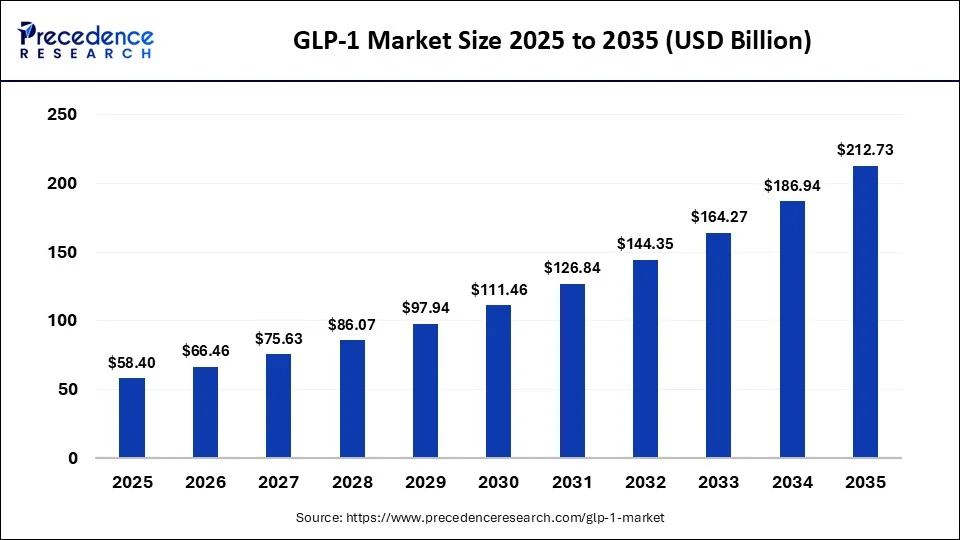
This growth is being driven by expanding clinical applications, increasing obesity and diabetes prevalence, growing demand for convenient therapies, and continued innovation in oral and next-generation GLP-1 treatments.
Download a Sample Report: https://www.precedenceresearch.com/sample/8542
Why GLP-1 Therapies Are Becoming More Important
GLP-1, or glucagon-like peptide-1, is a hormone involved in regulating blood glucose levels, appetite, and digestion.
GLP-1 receptor agonists are designed to mimic the effects of this naturally occurring hormone. They can stimulate insulin release when blood glucose levels are elevated, reduce glucagon secretion, slow gastric emptying, and increase feelings of fullness.
These effects have made GLP-1 therapies increasingly important in the management of type 2 diabetes and obesity.
The therapeutic opportunity is also expanding. Research and clinical development are evaluating GLP-1-based therapies across cardiovascular risk reduction, chronic kidney disease, metabolic liver conditions, and other areas.
This broader clinical potential is changing how pharmaceutical companies think about the future of the GLP-1 sector.
From Diabetes Treatment to Broader Metabolic Care
Type 2 diabetes mellitus remained the largest indication in 2025, accounting for 58% of the sector.
The large global diabetes population continues to create substantial demand for effective glucose-lowering therapies.
At the same time, obesity and weight management accounted for 28% in 2025 and are expected to grow at the fastest pace, with a projected 18.6% CAGR.
This shift is significant because GLP-1 therapies are increasingly being viewed as long-term medical treatments for chronic metabolic conditions rather than solutions limited to blood glucose control.
Growing clinical evidence around cardiovascular and kidney outcomes is also helping expand their role within broader cardiometabolic care.
Oral GLP-1 Therapies Could Change Patient Adoption
One of the most important developments is the shift toward oral GLP-1 formulations.
Injectable therapies have played a major role in the growth of the category, but oral medicines could remove some barriers associated with injections and improve convenience for certain patients.
The oral GLP-1 therapies segment accounted for 8% in 2025 and is expected to grow at a 21.8% CAGR during the forecast period.
For pharmaceutical companies, oral formulations also create opportunities to reach patients who may be hesitant about injectable treatments.
However, successful oral GLP-1 development requires careful attention to drug absorption, dosing, tolerability, manufacturing, and long-term patient adherence.
Key Trends Shaping the GLP-1 Sector
Long-Acting Therapies Continue to Lead
Long-acting GLP-1 agonists held the largest drug-class share at 63% in 2025.
Once-weekly dosing can make long-term treatment more convenient compared with more frequent administration.
The combination of dosing convenience with glucose control and weight-management benefits has supported the widespread adoption of long-acting therapies.
Dual Incretin Therapies Are Gaining Momentum
Dual incretin agonists accounted for 23% in 2025 and are projected to grow at an 18.5% CAGR.
These therapies target more than one metabolic pathway and are being developed to improve weight reduction and glycemic control.
Their expanding clinical programs are also increasing competition within the broader incretin therapy landscape.
Triple Agonists Represent a Future Opportunity
Triple agonists remain an emerging area, but they are attracting substantial research interest.
The segment is projected to grow at the fastest pace, with a 29.4% CAGR.
These therapies are being designed to target multiple metabolic pathways simultaneously, potentially delivering broader effects on body weight and glucose regulation.
Clinical development will determine how widely these next-generation therapies can ultimately be adopted.
How Leading Companies Are Positioning
The GLP-1 sector is highly competitive, with established pharmaceutical leaders and emerging biotechnology companies investing heavily in diabetes, obesity, and metabolic disease therapies.
Novo Nordisk is one of the most prominent companies in the GLP-1 space, with a strong portfolio centered around semaglutide-based diabetes and obesity therapies. The company continues to invest in manufacturing capacity, new formulations, and expanded therapeutic applications.
Eli Lilly and Company has strengthened its position through tirzepatide, a dual GIP/GLP-1 therapy used in diabetes and weight-management care. The company continues to expand its development pipeline and compete aggressively in the incretin therapy category.
Zealand Pharma is developing next-generation peptide therapies aimed at obesity and metabolic diseases, while also working with strategic partners to advance clinical development.
Amgen is investing in next-generation obesity and metabolic treatments and is competing through innovative approaches designed to improve efficacy, durability, and patient outcomes.
Viking Therapeutics is developing novel metabolic therapies, including next-generation incretin-based candidates, with a strong focus on obesity and related metabolic conditions.
AstraZeneca continues to maintain a presence in metabolic disease research and is developing therapies targeting obesity and cardiometabolic conditions.
Sanofi remains active in diabetes care and metabolic disease, creating opportunities to participate in the expanding incretin ecosystem.
Structure Therapeutics is developing orally administered small-molecule GLP-1 receptor agonists, reflecting the growing industry interest in convenient oral alternatives to injectable therapies.
Hansoh Pharmaceutical Group is strengthening its position in metabolic therapies through continued development of GLP-1-related treatments and domestic pharmaceutical capabilities in China.
Competition is increasingly focused on weight-loss efficacy, dosing frequency, oral delivery, tolerability, cardiovascular outcomes, manufacturing capacity, reimbursement, and expanded clinical indications.
Segment Highlights
GLP-1 Receptor Agonists Dominate Product Types
GLP-1 receptor agonists accounted for approximately 86% in 2025, making them the leading product category.
Semaglutide remains particularly important because of its established use in diabetes and obesity management and the expanding research surrounding cardiovascular, kidney, and metabolic health applications.
Obesity and Weight Management Is the Fastest-Growing Indication
The obesity and weight-management segment is projected to grow at an 18.6% CAGR.
Increasing obesity prevalence, greater awareness of medical weight management, and expanding clinical evidence are strengthening demand.
The development of therapies with improved efficacy and longer-lasting benefits is expected to intensify competition within this segment.
Homecare Is the Primary Treatment Setting
Homecare settings accounted for 64% in 2025.
GLP-1 therapies are increasingly managed outside hospitals because many treatments are designed for self-administration or routine outpatient use.
As chronic metabolic care becomes more decentralized, digital health platforms, telemedicine, online pharmacies, and remote patient support are becoming more important.
Online Pharmacies Are Growing Rapidly
Retail pharmacies held the largest distribution share at 54% in 2025 because they remain a major channel for prescription medicines.
However, online pharmacies are expected to grow at the fastest rate, with a projected 20.8% CAGR.
Digital prescribing, virtual consultations, home delivery, and subscription-based healthcare services are making medication access increasingly convenient.
North America Continues to Lead
North America held the largest regional share at 57% in 2025.
The region benefits from high adoption of obesity and diabetes therapies, advanced healthcare infrastructure, strong pharmaceutical research, and increasing awareness of cardiometabolic health.
The United States is the largest contributor, with GLP-1 therapies increasingly being prescribed for diabetes and obesity management.
The U.S. sector was valued at approximately USD 24.97 billion in 2025 and is projected to reach around USD 77.36 billion by 2035, expanding at a CAGR of 11.97%.
The country’s large patient population, established pharmaceutical ecosystem, and growing demand for weight-management therapies continue to support expansion.
Europe Expands Access and Manufacturing
Europe accounted for approximately 23% in 2025.
The region is experiencing increased demand for GLP-1 therapies as healthcare systems focus on obesity, diabetes, and broader metabolic health.
Pharmaceutical companies are also increasing manufacturing and research investments to support growing demand.
The UK is particularly focused on the impact of obesity on healthcare expenditure and workforce participation, creating additional interest in effective long-term weight-management treatments.
Asia Pacific Is Growing Fastest
Asia Pacific represented 15% in 2025 and is expected to expand at the fastest pace, with a projected 18.2% CAGR from 2026 to 2035.
The region is experiencing increasing diabetes and obesity prevalence, rising healthcare spending, and expanding access to modern pharmaceutical therapies.
China is emerging as an important center for GLP-1 development and manufacturing.
Domestic pharmaceutical companies are advancing clinical programs while expanding partnerships and licensing agreements, creating a more competitive regional ecosystem.
Japan, South Korea, India, and other countries across Asia Pacific are also strengthening healthcare infrastructure and increasing interest in modern metabolic therapies.
Latin America and the Middle East Offer New Opportunities
Latin America is expected to grow at a 14% CAGR, supported by increasing diabetes and obesity prevalence and improving access to modern healthcare.
Brazil is an important contributor, with growing public awareness of GLP-1 therapies and increasing interest in obesity treatment and metabolic health.
The Middle East and Africa region is projected to grow at a 14.8% CAGR.
Healthcare modernization, obesity-management initiatives, and pharmaceutical investment are creating new opportunities across the region.
Saudi Arabia is placing increasing emphasis on biotechnology and pharmaceutical manufacturing as part of its broader healthcare diversification strategy.
Manufacturing Is Becoming a Strategic Priority
Rapid growth in GLP-1 demand has placed significant pressure on pharmaceutical manufacturing capacity.
Peptide production, formulation, packaging, cold-chain logistics, quality control, and distribution all need to scale alongside patient demand.
This is encouraging pharmaceutical companies to invest in new production facilities, process improvements, supply-chain resilience, and alternative manufacturing technologies.
Oral GLP-1 therapies could further influence manufacturing strategies because small-molecule approaches may require different production processes from peptide-based injectable therapies.
For manufacturers, the ability to consistently produce high-quality therapies at scale could become a major competitive advantage.
Challenges Facing GLP-1 Therapies
Despite strong growth, several challenges remain.
High treatment costs can limit access for patients who lack adequate insurance coverage.
Supply constraints have also become an important issue as demand increases rapidly.
Regulatory requirements surrounding prescription medicines, promotion, safety, and clinical claims can influence adoption and commercialization strategies.
Long-term adherence is another consideration because chronic metabolic conditions often require sustained treatment.
Pharmaceutical companies must therefore balance efficacy and innovation with affordability, accessibility, manufacturing capacity, and patient support.
What Should Healthcare Companies Watch?
Pharmaceutical companies, biotechnology firms, healthcare providers, investors, and healthcare technology businesses should closely monitor:
- Oral GLP-1 therapies
- Long-acting GLP-1 agonists
- Dual incretin therapies
- Triple agonist pipelines
- Obesity and weight management
- Cardiovascular risk reduction
- Chronic kidney disease applications
- Metabolic liver disease
- Online pharmacy growth
- Manufacturing capacity
- Digital weight-management platforms
- Personalized metabolic care
What Comes Next?
The GLP-1 sector is entering a broader phase of development.
What started primarily as a diabetes treatment category is becoming a major component of metabolic health, obesity management, and cardiometabolic care.
The next wave of innovation will likely focus on oral therapies, more convenient dosing, improved tolerability, combination treatments, and therapies capable of addressing multiple metabolic conditions.
At the same time, the expansion of online healthcare, home-based treatment, and digital patient support is changing how these therapies reach patients.
The biggest opportunity is not simply developing another GLP-1 therapy. It is creating more accessible, effective, convenient, and sustainable approaches to long-term metabolic healthcare.
As pharmaceutical innovation and clinical evidence continue to expand, GLP-1 therapies are likely to remain one of the most influential areas of modern metabolic medicine.
Buy this report: https://www.precedenceresearch.com/checkout/8542
About Us
Healthcare Prism is a dedicated healthcare insights and outreach platform, operating as an extension of Precedence Research. We share relevant perspectives, industry developments, emerging trends, and research-driven insights across the global healthcare sector. Our content is built on the knowledge, research standards, and expertise of Precedence Research, with a focus on making healthcare information clear, accessible, and useful for industry professionals, businesses, researchers, and healthcare stakeholders. Healthcare Prism serves as a focused platform to extend the reach of Precedence Research’s healthcare insights and connect them with a broader professional audience.
You can place an order or ask any questions, please feel free to contact us at [email protected]
Quick Contact:
Europe Region: +44 778 256 0738
North America Region: +1 8044 4193 44
APAC Region: +91 9356 9282 04 and +65 31065601
Visit Our Website: Precedence Research – Advisory, Research & Reports