
Inflammatory disease treatment is entering a transformative phase as healthcare systems, pharmaceutical companies, and biotechnology researchers focus on more precise and patient-centered therapies.
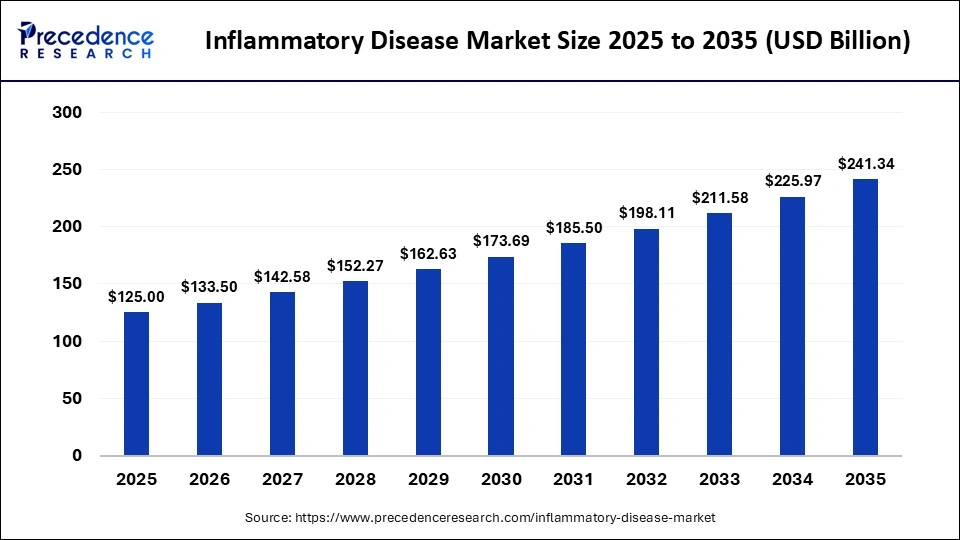
The global inflammatory disease sector was valued at USD 125.00 billion in 2025 and is projected to reach approximately USD 241.34 billion by 2035, expanding at a CAGR of 6.80% from 2026 to 2035. Rising chronic inflammatory conditions, greater awareness, improved diagnosis, and rapid advances in biologics and targeted therapies are creating strong opportunities for future growth.
Download a Sample Report: https://www.precedenceresearch.com/sample/8327
Rising Burden of Chronic Inflammatory Conditions
Inflammatory diseases such as rheumatoid arthritis, inflammatory bowel disease, psoriasis, psoriatic arthritis, asthma, and other chronic conditions affect millions of people worldwide. Increasing diagnosis rates and the growing need for long-term disease management are strengthening demand for effective therapies.
Healthcare providers are increasingly emphasizing early diagnosis and continuous disease monitoring. Advanced diagnostic tools and biomarker testing are helping clinicians identify inflammatory conditions earlier, enabling more timely treatment and improving long-term disease management.
AI Is Revolutionizing Inflammatory Disease Management
Artificial intelligence is becoming an important force in modern inflammatory disease care. AI-powered systems can analyze clinical records, imaging data, biomarkers, and patient histories to support earlier and more accurate disease identification.
AI also supports personalized treatment planning by identifying patterns associated with treatment response and disease progression. Machine learning can help healthcare professionals select appropriate therapeutic strategies while improving patient monitoring and reducing clinical uncertainty.
The integration of AI with remote monitoring, digital health platforms, and predictive analytics is also creating more proactive models of chronic disease management.
Biologics Continue to Lead Advanced Treatment
The biologics segment accounted for 45% of the total sector in 2025, making it the leading drug class. TNF inhibitors, interleukin inhibitors, and JAK inhibitors have transformed the treatment of several chronic inflammatory diseases by targeting specific pathways involved in inflammation.
These therapies are particularly important for patients with moderate to severe disease who may require long-term disease control. Continued innovation in targeted immunotherapies is expected to strengthen the role of biologics through 2035.
At the same time, the biosimilars segment is projected to grow at the fastest CAGR of 9.5%. Increasing patent expirations, cost advantages, and supportive regulatory frameworks are improving access to advanced biological treatments.
Rheumatoid Arthritis Holds a Strong Position
The rheumatoid arthritis segment held 30% of the sector in 2025, making it the largest disease category. Growing adoption of biologics and targeted therapies, combined with improved awareness and earlier diagnosis, continues to support this segment.
The inflammatory bowel disease segment is expected to grow at the fastest CAGR of 7.8% through 2035. Increasing prevalence of Crohn’s disease and ulcerative colitis, better diagnostic capabilities, and greater use of biomarker-based monitoring are contributing to this growth.
Psoriasis and psoriatic arthritis also continue to benefit from advances in IL-17 and IL-23 targeted therapies, while asthma and chronic inflammatory respiratory diseases are supported by rising environmental exposures and demand for more effective treatment approaches.
Injectable Therapies Remain Dominant
The injectable segment represented 55% of the sector in 2025. Injectable administration is widely used for biologics and targeted therapies because it can provide effective systemic treatment for moderate to severe inflammatory conditions.
Oral therapies accounted for 35% and remain important because of their convenience and ease of administration. JAK inhibitors, corticosteroids, NSAIDs, and immunosuppressants continue to support demand for oral treatment options.
As home-based disease management becomes increasingly common, convenient treatment formats and self-administration technologies are expected to become more important.
Digital Pharmacies Are Creating New Access Opportunities
Hospital pharmacies led distribution in 2025 with a 45% share, supported by their role in dispensing and monitoring complex therapies.
However, online pharmacies are expected to grow at the fastest CAGR of 9% through 2035. Digital prescriptions, home delivery, telehealth, and improved access to chronic disease management platforms are making online channels increasingly attractive.
This transition can improve convenience for patients who require long-term therapy and regular prescription refills.
Specialty Clinics Are Expanding Their Role
Hospitals accounted for 50% of the sector in 2025, reflecting their importance in diagnosing and managing severe inflammatory disorders. Hospitals provide access to specialists, advanced diagnostics, emergency services, and multidisciplinary care teams.
Specialty clinics are expected to grow at the fastest rate, reaching a 7.5% CAGR during the forecast period. These facilities provide focused care for conditions such as rheumatoid arthritis, inflammatory bowel disease, psoriasis, and other immune-mediated disorders.
Homecare is also expanding as patients increasingly seek convenient chronic disease management outside traditional healthcare facilities.
North America Maintains a Strong Leadership Position
North America accounted for 40% of the global sector in 2025, supported by advanced healthcare infrastructure, high adoption of biologics, strong pharmaceutical research, and sophisticated diagnostic capabilities.
The United States remains a major contributor because of its large pharmaceutical ecosystem and extensive clinical research infrastructure. Leading companies are continuously investing in targeted therapies, immunology research, and next-generation treatment technologies.
These factors are helping accelerate the development and adoption of innovative therapies for chronic inflammatory conditions.
Asia Pacific Is Emerging as a Powerful Growth Engine
Asia Pacific is projected to grow at the fastest rate, with a CAGR of 8.2% between 2026 and 2035. Rising healthcare expenditure, growing awareness of chronic inflammatory diseases, improving diagnostic infrastructure, and broader access to advanced therapies are supporting regional expansion.
China is a significant contributor to regional growth. Healthcare reforms, expanding insurance coverage, urbanization, and increasing investment in pharmaceutical research are helping improve access to diagnosis and treatment.
India, Japan, and other countries across the region are also strengthening healthcare infrastructure and expanding access to specialized care.
Europe Continues Its Strong Healthcare Progress
Europe accounted for 25% of the global sector in 2025 and is expected to expand at a CAGR of 6.2% during the forecast period.
Strong healthcare systems, increasing adoption of biologics, growing interest in biosimilars, and favorable regulatory frameworks are supporting continued development.
The United Kingdom remains an important contributor because of its strong healthcare infrastructure, clinical research ecosystem, and focus on innovative immunology and autoimmune disease treatments.
Innovation Is Reshaping the Competitive Landscape
Leading pharmaceutical and biotechnology companies are focusing on targeted immunotherapies, biologics, biosimilars, personalized medicine, and digital healthcare.
Key companies include AbbVie, Johnson & Johnson, Pfizer, Novartis, Amgen, Roche, Sanofi, Bristol Myers Squibb, Eli Lilly, Merck, Takeda, UCB, Biogen, and Regeneron Pharmaceuticals.
Competition is increasingly centered on therapeutic precision, treatment safety, long-term disease control, affordability, and patient convenience. AI, multi-omics research, predictive analytics, and digital monitoring are also creating new pathways for therapeutic development.
Emerging Resolution Based Therapies
An important innovation is the growing focus on therapies that support the body’s natural inflammation-resolution pathways rather than simply suppressing immune activity.
In April 2026, OSE Immunotherapeutics announced that its research on an FPR2 agonist monoclonal antibody was selected for presentation at the American Association of Immunologists annual meeting. This highlights growing interest in resolution biology as researchers explore new approaches to managing chronic inflammation.
In November 2025, Animate Biosciences introduced AnimateIQ, a platform combining multi-omics data and generative AI to support peptide therapeutic discovery for inflammatory and fibrotic diseases.
Future Outlook
The future of inflammatory disease care is moving toward precision, personalization, accessibility, and continuous monitoring. Biologics will remain an important treatment category, while biosimilars can help broaden access to advanced therapies.
AI-enabled diagnostics, digital health platforms, remote monitoring, and personalized therapeutic strategies are expected to play an increasingly important role in improving disease management.
With the global inflammatory disease sector projected to reach USD 241.34 billion by 2035, continued innovation in targeted therapies, digital healthcare, and patient-focused treatment models is expected to create significant opportunities across the healthcare ecosystem.
Inflammatory Disease Sector Report Snapshot
2025 Value: USD 125.00 Billion
2026 Value: USD 133.50 Billion
2035 Forecast: USD 241.34 Billion
CAGR: 6.80%
Leading Region: North America
Fastest-Growing Region: Asia Pacific
Buy this report: https://www.precedenceresearch.com/checkout/8327
About Us
Healthcare Prism is a dedicated healthcare insights and outreach platform, operating as an extension of Precedence Research. We share relevant perspectives, industry developments, emerging trends, and research-driven insights across the global healthcare sector. Our content is built on the knowledge, research standards, and expertise of Precedence Research, with a focus on making healthcare information clear, accessible, and useful for industry professionals, businesses, researchers, and healthcare stakeholders. Healthcare Prism serves as a focused platform to extend the reach of Precedence Research’s healthcare insights and connect them with a broader professional audience.
You can place an order or ask any questions, please feel free to contact us at [email protected]
Quick Contact:
Europe Region: +44 778 256 0738
North America Region: +1 8044 4193 44
APAC Region: +91 9356 9282 04 and +65 31065601
Visit Our Website: Precedence Research – Advisory, Research & Reports