
The way people access healthcare information is changing rapidly in the United States. Consumers are no longer relying only on traditional doctor visits to understand their health. At-home testing, digital health platforms, genetic screening, and direct access to laboratory services are giving individuals more control over routine health monitoring and risk assessment.
The U.S. direct-to-consumer laboratory testing sector was valued at USD 1.23 billion in 2025 and is projected to reach approximately USD 2.92 billion by 2035, expanding at a CAGR of 9.03% from 2026 to 2035.
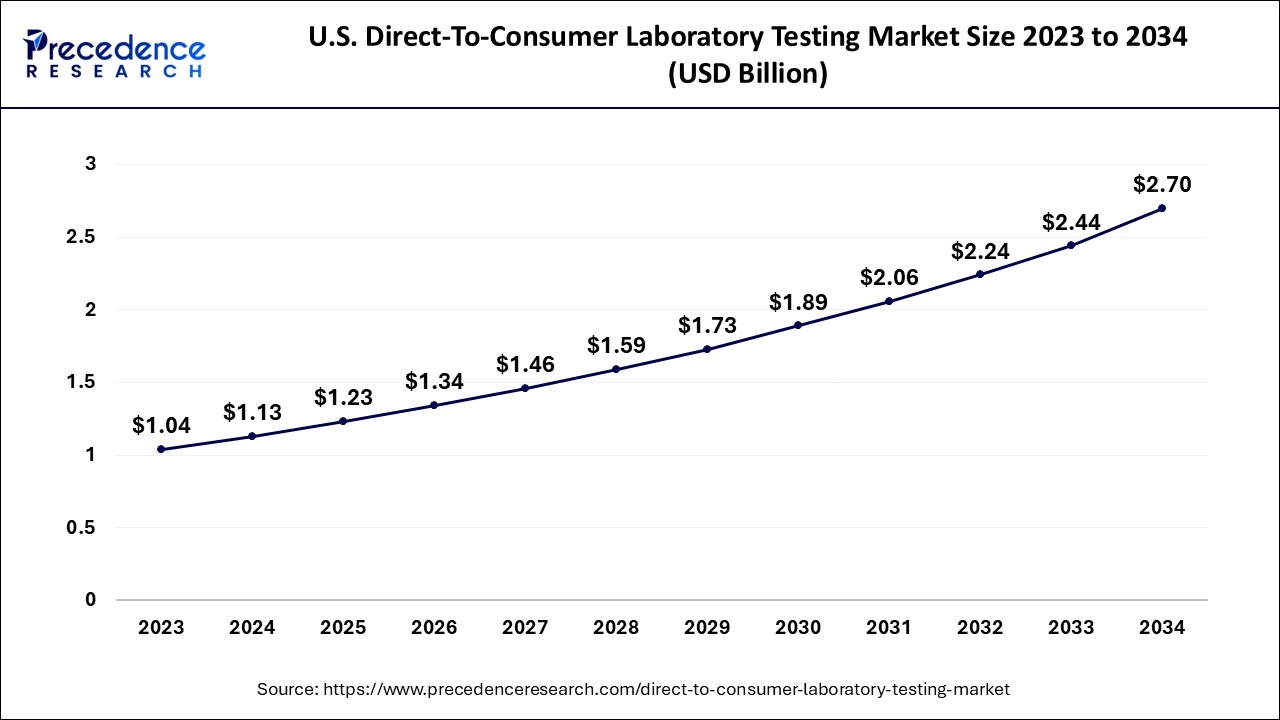
The growth is being supported by rising interest in preventive healthcare, personalized health insights, at-home testing, genetic information, and convenient digital access to laboratory services.
Download a Sample Report: https://www.precedenceresearch.com/sample/8512
Why Direct-to-Consumer Laboratory Testing Is Growing
Direct-to-consumer laboratory testing allows individuals to order certain laboratory tests without following the traditional pathway of scheduling a physician appointment first.
Consumers can purchase testing services through digital platforms, provide samples at home or at collection centers, and receive results through online portals.
This model is becoming increasingly relevant as Americans become more proactive about monitoring cholesterol, blood glucose, hormones, nutritional indicators, infectious diseases, genetic traits, and other health factors.
The growing burden of chronic diseases is another important driver. According to the Centers for Disease Control and Prevention, almost 129 million Americans live with at least one major chronic condition.
As healthcare shifts toward prevention and early detection, consumers are increasingly looking for convenient ways to understand their health before a serious problem develops.
AI Is Making Laboratory Results Easier to Understand
Artificial intelligence is becoming an important part of the direct-to-consumer laboratory testing ecosystem.
Traditional laboratory reports can contain technical terminology that may be difficult for consumers to interpret. AI-powered platforms can analyze laboratory, genetic, and biomarker data and present findings in a simpler and more personalized format.
AI can also identify patterns across multiple test results and support risk assessments based on health information.
Another important opportunity is integration with digital health platforms. Laboratory results can increasingly be combined with wearable data, health records, lifestyle information, and wellness metrics to provide a more complete picture of an individual’s health.
However, AI should complement professional medical guidance rather than replace clinical judgment, particularly when test results indicate a potential disease or serious health concern.
Key Trends Shaping the U.S. Testing Landscape
Routine Testing Remains the Largest Product Category
Routine clinical laboratory testing held the leading position in 2025 and is expected to maintain its importance through the forecast period.
Consumers increasingly use routine testing to monitor general wellness and track health indicators over time.
Recurring testing programs and digital health subscriptions are also creating opportunities for companies that can provide convenient access to regular laboratory services.
Genetic Testing Continues to Attract Consumer Interest
Genetic testing led the test type segment in 2025.
Consumers are increasingly interested in understanding inherited health risks, carrier status, genetic traits, and potential susceptibility to certain conditions.
The expanding availability of genomic technologies is also helping make genetic information more accessible outside traditional clinical settings.
Disease Risk Assessment Is Growing Rapidly
Disease risk assessment testing is expected to grow at the fastest pace from 2026 to 2035.
Consumers are becoming more interested in identifying potential risks earlier and using available information to make lifestyle or healthcare decisions.
Risk assessment can combine genetic markers, laboratory results, family history, and other factors to provide a broader view of potential health risks.
Blood Testing Is Becoming More Accessible
Saliva accounted for the largest sample share in 2025 because collection is simple, non-invasive, and convenient for home testing.
However, blood testing is expected to grow rapidly because blood contains a broad range of clinically useful biomarkers.
At-home finger-prick kits, expanded laboratory collection networks, and improved logistics are making blood-based testing more accessible to consumers.
How Leading Companies Are Positioning
The U.S. direct-to-consumer laboratory testing ecosystem includes diagnostic laboratories, genomics companies, digital health providers, and specialized testing platforms.
Quest Diagnostics is one of the country’s largest diagnostic testing companies and provides extensive laboratory services through its nationwide infrastructure. Its scale and laboratory capabilities provide an important foundation for expanding consumer-access testing.
Labcorp operates a broad diagnostic testing network and is expanding digital and consumer-oriented health services. Its established laboratory infrastructure supports routine and specialized testing.
Natera focuses heavily on molecular diagnostics and genetic testing. Its expertise in genomic analysis positions the company well as consumers increasingly seek personalized health information.
Myriad Genetics specializes in genetic testing and precision medicine. Its portfolio includes tests designed to assess hereditary disease and cancer-related risks.
23andMe helped popularize consumer genomics by providing individuals with direct access to genetic information. The company has played a significant role in increasing consumer awareness of personalized genetic testing.
Color Health combines genetic testing with digital healthcare services and works to connect testing with personalized health management.
Everlywell is focused on convenient at-home testing and digital health experiences, allowing consumers to order various testing services online and access their results digitally.
Tempus AI brings artificial intelligence and data analytics into precision healthcare, creating opportunities to combine laboratory and molecular data with advanced analytics.
Competition is increasingly focused on convenience, test accuracy, digital user experience, data interpretation, accessibility, and integration with broader healthcare services.
Segment Highlights
Routine Clinical Testing Leads
Routine clinical laboratory testing held the largest product share in 2025.
Basic health checks remain important because consumers increasingly want regular visibility into metrics such as cholesterol, glucose, thyroid function, and other common indicators.
The expansion of recurring wellness programs may further support routine testing adoption.
Genetic Testing Holds the Leading Test Type Position
Genetic testing dominated the test type category in 2025.
The growing awareness of inherited disease risk and personalized healthcare is encouraging more consumers to explore genetic information.
Advances in sequencing technology and bioinformatics are also improving the range of insights that can be derived from genetic samples.
Saliva Leads Sample Collection
Saliva represented the largest sample type in 2025.
The major advantage is convenience. Consumers can collect saliva without needles or specialized equipment, which makes these tests particularly suitable for home use.
Blood-based testing is expected to expand more quickly because of its broader clinical applications.
California Is a Major Innovation Hub
California plays an important role in the U.S. direct-to-consumer laboratory testing ecosystem.
The state benefits from a strong concentration of biotechnology companies, genomics firms, diagnostic laboratories, universities, and technology startups.
Leading research institutions such as Stanford Medicine, UCSF, and the Salk Institute contribute to a broader innovation environment around genomics and personalized medicine.
The combination of technology talent, venture investment, healthcare infrastructure, and consumer adoption of digital health services creates favorable conditions for direct-access laboratory testing.
Texas Is Emerging as Another Growth Center
Texas is becoming increasingly important because of its growing population, healthcare infrastructure, and large medical research ecosystem.
The Texas Medical Center includes more than 60 medical and research institutions, creating a strong environment for healthcare innovation and laboratory services.
As healthcare organizations expand digital services and consumers become more comfortable ordering healthcare products and services online, Texas could become an important center for direct-access testing.
How the Testing Value Chain Works
The direct-to-consumer laboratory testing process involves several important stages.
Test Kit and Consumable Manufacturing
The process starts with collection kits, reagents, assay materials, tubes, sensors, and other laboratory consumables.
Companies such as Thermo Fisher Scientific, QIAGEN, Bio-Rad Laboratories, and Agilent Technologies support the broader diagnostic supply chain.
Sample Collection and Logistics
Consumers may collect blood, saliva, or urine samples at home or visit a collection center.
Companies including Everlywell, LetsGetChecked, Quest Diagnostics, and Labcorp participate in consumer-facing testing and sample logistics.
Laboratory Testing and Data Analysis
Certified laboratories process samples using technologies such as molecular diagnostics, immunoassays, sequencing, and clinical chemistry.
Quest Diagnostics, Labcorp, Natera, Myriad Genetics, and GeneDx are among the companies contributing to this stage.
Digital Reporting and Consumer Platforms
The final stage involves delivering results and health information through online platforms.
Companies such as 23andMe, Tempus AI, Helix, Everlywell, and Color Health are contributing to the growing digital layer of consumer healthcare.
Challenges Facing Direct-to-Consumer Testing
Despite strong adoption potential, the segment faces several challenges.
One concern is test interpretation. Laboratory results do not always provide a diagnosis on their own, and consumers may misunderstand the significance of an abnormal or uncertain result.
Genetic testing presents an additional challenge because some findings represent probabilities rather than definitive outcomes.
Data privacy is another major consideration. Direct-to-consumer platforms collect highly sensitive genetic and health information, making cybersecurity and responsible data management essential.
Regulatory requirements, laboratory accreditation, test validation, and maintaining analytical quality also remain important for long-term consumer trust.
What Should Healthcare Companies Watch?
Healthcare organizations, diagnostic companies, biotechnology firms, and investors should closely monitor:
- At-home laboratory testing
- Genetic testing
- Disease risk assessment
- Blood-based diagnostics
- Consumer genomics
- Digital laboratory platforms
- AI-assisted result interpretation
- Personalized health monitoring
- Preventive screening
- Telehealth integration
What Comes Next?
The U.S. direct-to-consumer laboratory testing landscape is moving toward a healthcare model where consumers have faster and more convenient access to health information.
Routine testing will remain important, but genetic testing, personalized risk assessment, digital platforms, and home-based sample collection are likely to become increasingly influential.
AI will add another layer by helping consumers organize and understand complex health information, while integration with telehealth and healthcare providers can create a more connected patient journey.
The biggest opportunity is not simply allowing consumers to order laboratory tests online. It is building a more complete ecosystem where testing, data interpretation, professional guidance, and ongoing health monitoring work together.
As preventive healthcare becomes more important, direct-access laboratory services could play a growing role in helping Americans identify potential risks earlier and take a more informed approach to long-term health management.
Buy this report: https://www.precedenceresearch.com/checkout/8512
About Us
Healthcare Prism is a dedicated healthcare insights and outreach platform, operating as an extension of Precedence Research. We share relevant perspectives, industry developments, emerging trends, and research-driven insights across the global healthcare sector. Our content is built on the knowledge, research standards, and expertise of Precedence Research, with a focus on making healthcare information clear, accessible, and useful for industry professionals, businesses, researchers, and healthcare stakeholders. Healthcare Prism serves as a focused platform to extend the reach of Precedence Research’s healthcare insights and connect them with a broader professional audience.
You can place an order or ask any questions, please feel free to contact us at [email protected]
Quick Contact:
Europe Region: +44 778 256 0738
North America Region: +1 8044 4193 44
APAC Region: +91 9356 9282 04 and +65 31065601
Visit Our Website: Precedence Research – Advisory, Research & Reports