
The neuropharmacology market is experiencing steady growth as the prevalence of neurological and psychiatric disorders continues to rise worldwide. Advances in neuroscience research, precision medicine, and innovative drug development are creating new opportunities for therapies targeting conditions such as Alzheimer’s disease, Parkinson’s disease, epilepsy, depression, and schizophrenia.
Neuropharmacology Market Size and Forecast 2026 to 2035
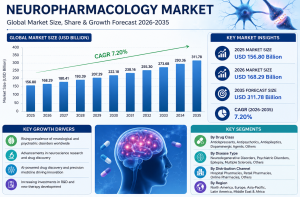
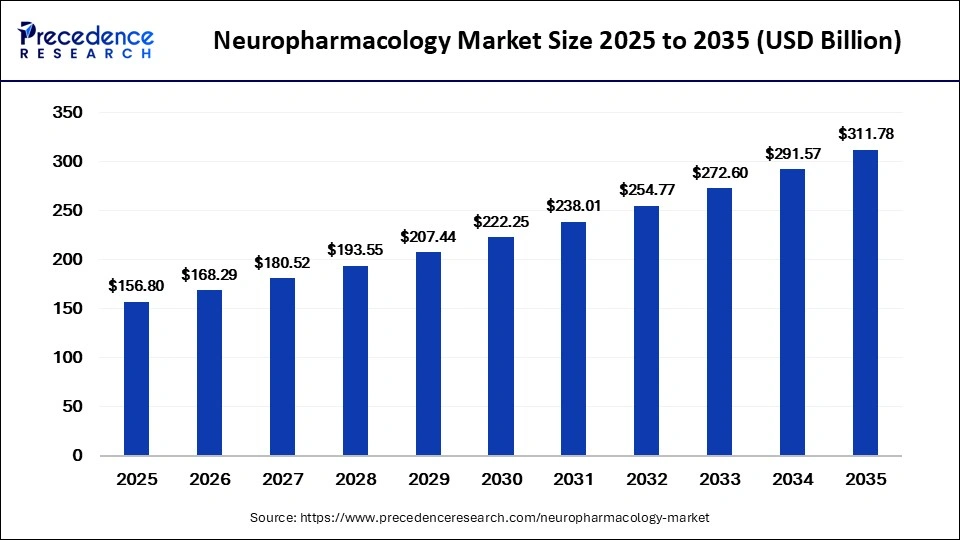
The global neuropharmacology market size accounted for USD 156.80 billion in 2025 and is predicted to increase from USD 168.29 billion in 2026 to approximately USD 311.78 billion by 2035, expanding at a CAGR of 7.20% from 2026 to 2035. The increasing prevalence of neurological diseases, advances in research, and the growing number of clinical trials are key factors driving market growth.
Market Highlights
- North America dominated the global neuropharmacology market in 2025, accounting for 41% of the total revenue. The region’s leadership is attributed to a high prevalence of neurological disorders, robust healthcare infrastructure, and strong investments in neuroscience research.
- Asia-Pacific is anticipated to witness the fastest growth during the forecast period, expanding at a CAGR of 9.1%, supported by rising healthcare expenditure, improving access to treatment, and increasing awareness of mental and neurological health.
- By drug class, antidepressants emerged as the leading segment in 2025, capturing 24% of the market share. Growing cases of depression and anxiety disorders, coupled with increasing diagnosis rates, have contributed to the segment’s dominance.
- Alzheimer’s disease drugs are expected to register the fastest growth, with a CAGR of 10.5% between 2026 and 2035, driven by the aging population and ongoing advancements in therapies targeting neurodegenerative diseases.
- Based on indication, the depression segment accounted for the largest revenue share of 26% in 2025, reflecting the growing burden of mood disorders and the increasing demand for effective treatment options.
- The Alzheimer’s disease segment is projected to experience the highest growth rate during the forecast period, advancing at a CAGR of 10.4%, fueled by rising disease prevalence and increased focus on early diagnosis and innovative treatment approaches.
- In terms of route of administration, oral formulations dominated the market with a 72% share in 2025, owing to their convenience, patient compliance, and widespread availability.
- The injectable segment is anticipated to expand at the fastest pace, registering a CAGR of 9% over the forecast period, supported by the development of advanced biologics and long-acting therapies.
- By distribution channel, retail pharmacies held the largest share of 46% in 2025, benefiting from their extensive presence and easy accessibility to prescription medications.
- Online pharmacies are expected to witness the fastest growth, with a CAGR of 11.2% through 2035, as digital healthcare platforms and home delivery services continue to gain popularity.
- Among end users, hospitals accounted for the highest revenue share of 47% in 2025, driven by the growing number of patients requiring specialized neurological care and treatment.
- Specialty neurology clinics are projected to register the highest CAGR of 8.4% from 2026 to 2035, supported by increasing demand for targeted neurological services and advancements in personalized treatment approaches.
Market Overview
The neuropharmacology market focuses on the development, manufacturing, and commercialization of drugs that influence the nervous system to treat neurological and psychiatric disorders. These therapies are designed to regulate neurotransmitters, receptors, and signaling pathways that affect cognitive functions, mood, behavior, and motor control. The market encompasses medications for a broad range of conditions, including Alzheimer’s disease, Parkinson’s disease, epilepsy, anxiety disorders, multiple sclerosis, and major depressive disorder.
Growing awareness regarding mental health and neurological diseases has transformed the industry landscape. Rising life expectancy and aging populations are contributing to an increasing burden of neurodegenerative disorders, creating sustained demand for innovative treatments. Healthcare systems and research organizations are placing greater emphasis on early diagnosis and long-term disease management, encouraging pharmaceutical companies to expand their neuroscience portfolios.
Scientific advances in genomics, molecular biology, and biomarker discovery are changing how neurological diseases are understood and treated. Researchers are moving beyond symptom management and focusing on disease-modifying therapies that address the underlying mechanisms of brain disorders. This shift is driving significant investments in clinical trials and precision medicine approaches.
Despite strong growth prospects, the market faces several challenges. Drug development in neuroscience is complex and associated with lengthy clinical timelines, high failure rates, and regulatory hurdles. The blood-brain barrier remains one of the major obstacles for effective drug delivery. However, breakthroughs in targeted therapies, biologics, and advanced delivery systems are creating new opportunities for pharmaceutical innovators.
The long-term outlook for the neuropharmacology market remains promising. Increasing collaboration between biotechnology companies, academic institutions, and pharmaceutical manufacturers is expected to accelerate the discovery of next-generation therapies and expand treatment options for patients worldwide.
AI Impact on Neuropharmacology Market
Artificial intelligence is transforming neuropharmacology by improving drug discovery processes and helping researchers identify promising compounds more efficiently. Machine learning algorithms are capable of analyzing massive biological datasets, enabling scientists to uncover patterns associated with neurological diseases and predict the therapeutic potential of new molecules. This approach reduces research timelines and enhances the probability of successful clinical outcomes.
AI-powered predictive analytics are also supporting personalized medicine initiatives. By combining genetic information, imaging data, and patient history, advanced algorithms can assist clinicians in selecting therapies that are better suited to individual patients. Personalized treatment strategies are becoming increasingly important for complex neurological disorders where responses to medication vary significantly.
Pharmaceutical companies are using AI to optimize clinical trials, identify patient populations, and monitor disease progression. Digital biomarkers derived from wearable devices and remote monitoring platforms are providing real-time insights into patient conditions, improving trial efficiency and reducing development costs.
AI applications are extending into manufacturing and supply chain operations as well. Intelligent systems help forecast demand, streamline production planning, and enhance quality control. As neuroscience research generates increasingly complex datasets, AI is expected to become an essential tool for accelerating innovation across the neuropharmacology industry.
Market Trends
- Rising investments in neuroscience research and drug discovery programs.
- Growing focus on disease-modifying therapies for neurodegenerative disorders.
- Increasing adoption of artificial intelligence and machine learning in pharmaceutical research.
- Expansion of precision medicine and personalized treatment approaches.
- Development of advanced drug delivery technologies capable of crossing the blood-brain barrier.
- Growing interest in biologics, gene therapies, and RNA-based therapeutics.
- Rising collaborations between pharmaceutical companies and biotechnology firms.
- Increasing use of digital biomarkers and remote patient monitoring technologies.
- Strong emphasis on mental health awareness and early disease diagnosis.
- Expansion of clinical trials targeting Alzheimer’s disease, Parkinson’s disease, and rare neurological disorders.
Market Scope
| Report Coverage | Details |
| Market Size in 2025 | USD 156.80 Billion |
| Market Size in 2026 | USD 168.29 Billion |
| Market Size by 2035 | USD 311.78 Billion |
| Market Growth Rate from 2026 to 2035 | CAGR of 7.20% |
| Dominating Region | North America |
| Fastest Growing Region | Asia Pacific |
| Base Year | 2025 |
| Forecast Period | 2026 to 2035 |
| Segments Covered | Drug Class, Indication, Route of Administration, Distribution Channel, End User, and Region |
| Regions Covered | North America, Europe, Asia-Pacific, Latin America, and Middle East & Africa |
Segment Insights
By Drug Class
Antidepressants account for a substantial share of the neuropharmacology market owing to the increasing incidence of depression and anxiety disorders worldwide. Growing awareness surrounding mental health and improved access to treatment have contributed to sustained demand for these medications.
Antipsychotic drugs are witnessing continued growth due to rising diagnoses of schizophrenia, bipolar disorder, and related psychiatric conditions. New-generation therapies with improved safety profiles are attracting considerable interest from healthcare providers and pharmaceutical companies.
Antiepileptic drugs represent another major segment, supported by the increasing prevalence of epilepsy and advancements in targeted treatment approaches. Continuous research aimed at reducing side effects and improving seizure control is driving innovation within this segment.
By Disease Type
Neurodegenerative disorders constitute one of the fastest-growing segments in the market. Conditions such as Alzheimer’s disease and Parkinson’s disease are becoming increasingly common due to aging populations. Significant investments in disease-modifying therapies and biomarker research are supporting segment growth.
Psychiatric disorders remain a major contributor to market revenues. The growing burden of depression, anxiety, and mood disorders has intensified the need for more effective and personalized treatment options.
By Distribution Channel
Hospital pharmacies continue to dominate the market because many neurological therapies require specialist supervision and long-term disease management. Retail pharmacies maintain a significant presence, while online pharmacies are gaining traction due to the growing adoption of digital healthcare services and convenient medication access.
Regional Insights
North America represents a leading market for neuropharmacology due to strong healthcare infrastructure, high healthcare expenditure, and extensive investment in neuroscience research. The United States remains at the forefront of clinical trials and drug development activities, supported by the presence of major pharmaceutical companies and advanced regulatory frameworks.
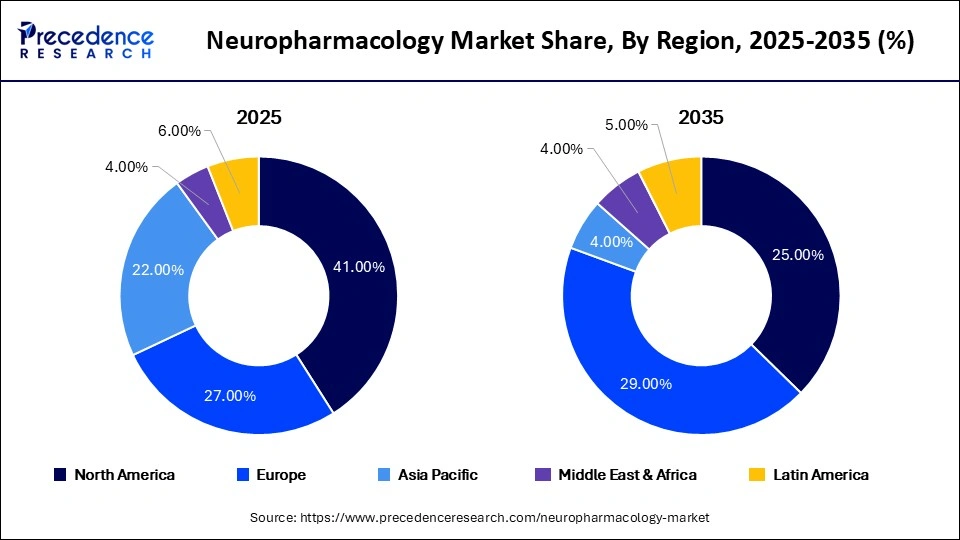
Europe maintains a strong position in the global market, driven by rising awareness of neurological disorders and increasing government support for mental health initiatives. Countries such as Germany, the United Kingdom, and France are investing heavily in neuroscience research and innovative treatment approaches.
Asia-Pacific is projected to witness the fastest growth during the forecast period. Rapid improvements in healthcare infrastructure, expanding pharmaceutical industries, and rising incidences of neurological diseases are creating favorable market conditions. China, Japan, South Korea, and India are emerging as important centers for drug development and clinical research.
Latin America is experiencing gradual market expansion due to increasing healthcare investments and improving access to neurological care. Brazil and Mexico are among the major contributors, supported by growing awareness regarding mental health and chronic neurological diseases.
The Middle East and Africa region is showing steady progress with expanding healthcare infrastructure and increasing focus on specialized neurological services. Government initiatives aimed at strengthening healthcare systems are expected to support long-term market development across the region.
Competitive Landscape
The neuropharmacology market is characterized by intense competition among global pharmaceutical giants and specialized biotechnology companies. Industry participants are investing heavily in research programs focused on neurodegenerative diseases and psychiatric disorders, seeking to address unmet medical needs through innovative therapies.
Strategic collaborations have become a key growth strategy across the industry. Pharmaceutical companies are increasingly partnering with biotechnology firms, academic institutions, and AI-driven drug discovery companies to accelerate the development of next-generation treatments. These partnerships are helping organizations gain access to advanced technologies and novel therapeutic platforms.
Mergers and acquisitions continue to reshape the competitive landscape. Large pharmaceutical manufacturers are acquiring promising biotechnology companies to strengthen their neuroscience pipelines and expand their capabilities in precision medicine and biologics. Portfolio diversification remains a priority as companies seek opportunities in emerging therapeutic areas.
Innovation is becoming the defining factor in market competition. Companies are focusing on gene therapies, monoclonal antibodies, RNA therapeutics, and digital health solutions to differentiate themselves in an increasingly dynamic environment. Investments in AI-enabled drug discovery and biomarker research are expected to play a central role in shaping future industry leadership.
Leading Companies
- Pfizer Inc.
- Johnson & Johnson
- F. Hoffmann-La Roche Ltd.
- Novartis AG
- AbbVie Inc.
- Bristol Myers Squibb
- Eli Lilly and Company
- Merck & Co., Inc.
- Biogen Inc.
- Teva Pharmaceutical Industries Ltd.
- Otsuka Pharmaceutical Co., Ltd.
- UCB S.A.
- Sanofi S.A.
- Lundbeck A/S
- AstraZeneca PLC
Get Sample Link : https://www.precedenceresearch.com/sample/8493
Recent Developments
- In June 2026, a study examined the molecular, cellular, and circuit abnormalities involved in neurodegenerative and neuropsychiatric disorders, with particular focus on the motor and non-motor symptoms of Parkinson’s disease and the complications associated with dopamine replacement therapies. The study was based on the characterization of animal models representing these disorders, combined with multiscale analyses to identify molecular, cellular, and circuit abnormalities as potential targets for future treatments.
- In January 2026, two new therapies entered the final stages of clinical trials ahead of potential FDA approval. One is a novel dopamine-based therapy for managing motor symptoms, while the other is a stem cell therapy designed to replace the brain cells lost in Parkinson’s disease (PD). Together, these therapies represent two distinct yet complementary approaches in the fight against PD.
Segments Covered in the Report
By Drug Class
- Antidepressants
- Antipsychotics
- Antiepileptics
- Anti-Parkinson Drugs
- Alzheimer’s Disease Drugs
- CNS Stimulants
- Others
By Indication
- Depression
- Schizophrenia
- Epilepsy
- Parkinson’s Disease
- Alzheimer’s Disease
- Attention Deficit Hyperactivity Disorder (ADHD)
- Others
By Route of Administration
- Oral
- Injectable
- Transdermal
- Others
By Distribution Channel
- Hospital Pharmacies
- Retail Pharmacies
- Online Pharmacies
By End User
- Hospitals
- Specialty Neurology Clinics
- Ambulatory Care Centers
- Homecare Settings
By Region
- North America
- Latin America
- Europe
- Asia-pacific
- Middle and East Africa
Also Read Our Latest Article : US Electron Microscopy Market