
The global next-generation bispecific antibody sector is entering a new phase of rapid development as pharmaceutical and biotechnology companies seek more precise approaches to treating cancer, autoimmune disorders, and other complex diseases.
Bispecific antibodies are engineered to recognize two different targets simultaneously. This capability can help direct immune cells toward diseased cells, block multiple biological pathways, and create therapeutic effects that may not be achievable with conventional single-target antibodies.
The global next-generation bispecific antibody sector was valued at USD 9.53 billion in 2025 and is projected to increase from USD 11.29 billion in 2026 to approximately USD 52.08 billion by 2035, expanding at a CAGR of 18.51% from 2026 to 2035.
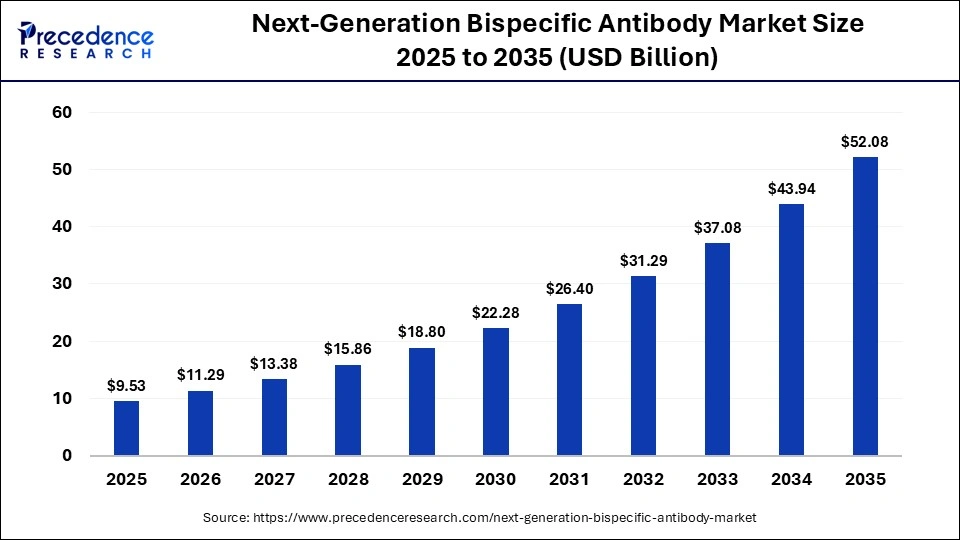
The expansion is being supported by advances in antibody engineering, increasing clinical trials, growing investment in immuno-oncology, personalized medicine, strategic partnerships, and the development of increasingly sophisticated multi-target therapeutic formats.
Download a Sample Report: https://www.precedenceresearch.com/sample/7336
Compact Scope Table of Next-Generation Bispecific Antibody
| Report Coverage | Details |
|---|---|
| Sector Size in 2025 | USD 9.53 Billion |
| Sector Size in 2026 | USD 11.29 Billion |
| Sector Size by 2035 | USD 52.08 Billion |
| Growth Rate from 2026 to 2035 | CAGR of 18.51% |
| Leading Region | North America |
| Fastest-Growing Region | Asia Pacific |
| Leading Antibody Format | IgG-Like Bispecific Antibodies |
| Fastest-Growing Format | Multispecific/Engineered Next-Gen Formats |
| Leading Mechanism | T-Cell Engagers |
| Fastest-Growing Mechanism | Dual Immune Checkpoint Targeting |
| Leading Therapeutic Application | Oncology |
| Fastest-Growing Application | Autoimmune & Inflammatory Diseases |
| Leading Target Type | Tumor Antigen × Immune Cell Targets |
| Fastest-Growing Target Type | Immune Checkpoint × Immune Checkpoint Targets |
| Base Year | 2025 |
| Forecast Period | 2026–2035 |
What Are Next-Generation Bispecific Antibodies
Next-generation bispecific antibodies are engineered therapeutic proteins designed to interact with two distinct antigens or epitopes.
The dual-targeting ability can produce several therapeutic advantages. A molecule can simultaneously engage a tumor antigen and an immune-cell receptor, block two disease pathways, or target multiple immune checkpoints.
This flexibility is making bispecific antibodies an increasingly important component of precision medicine.
Next-generation approaches go beyond conventional bispecific structures by incorporating more sophisticated protein engineering, multispecific formats, improved stability, longer half-lives, enhanced targeting, and potentially more personalized treatment approaches.
These technologies are being explored across oncology, autoimmune and inflammatory diseases, hematology, and other emerging indications.
Why Next-Generation Bispecific Antibodies Are Growing
One of the strongest growth drivers is the increasing demand for targeted cancer therapies.
Cancer cells can use multiple biological mechanisms to evade the immune system. Bispecific antibodies can be designed to address more than one target simultaneously, potentially improving immune activation and therapeutic response.
The expanding clinical pipeline is another major contributor.
Pharmaceutical and biotechnology companies are advancing bispecific candidates through preclinical development and clinical trials, creating increasing demand for antibody engineering, analytical testing, manufacturing, and clinical development capabilities.
Personalized medicine is further supporting adoption. As researchers gain a better understanding of disease biology, therapies can increasingly be designed around specific molecular targets and patient populations.
Strategic partnerships are also accelerating development by combining antibody platforms, computational technologies, clinical expertise, and manufacturing capabilities.
AI Is Accelerating Bispecific Antibody Development
Artificial intelligence is becoming an important tool in the discovery and optimization of next-generation bispecific antibodies.
AI algorithms can analyze biological datasets to identify promising target combinations and prioritize molecular constructs.
Machine learning can support antibody sequence design, structural prediction, stability assessment, and optimization.
AI can also help researchers evaluate how different targets may interact and identify potential combinations that could produce stronger therapeutic effects.
Another important application is combination therapy development. Predictive models can help evaluate whether two mechanisms are likely to produce complementary or synergistic effects.
AI-driven high-throughput screening can further accelerate the evaluation of large numbers of antibody constructs.
During development, computational models can also support pharmacokinetic optimization and help identify molecules with desirable properties.
The result is a more data-driven development process that can potentially reduce experimentation, improve candidate selection, and accelerate progression toward clinical testing.
Key Trends Shaping Next-Generation Bispecific Antibodies
Oncology Continues to Drive Innovation
Cancer remains the primary application area for bispecific antibody development.
Researchers are designing molecules that can recognize tumor antigens while simultaneously engaging immune cells or blocking immune-suppression pathways.
The growing number of hematological and solid-tumor targets is creating opportunities for a broader range of bispecific products.
Protein Engineering Is Becoming More Sophisticated
Advances in molecular design are improving antibody stability, half-life, specificity, and manufacturability.
Engineered antibodies can be optimized to reduce unwanted immune responses while improving therapeutic activity.
These advances are expanding the range of molecular architectures available to developers.
Multispecific Formats Are Emerging
Trispecific, tetraspecific, and other engineered formats are receiving increasing research attention.
These molecules can potentially modulate several biological pathways at the same time.
Their development reflects a broader effort to create therapies capable of addressing diseases with highly complex mechanisms.
Combination Therapies Are Expanding
Bispecific antibodies can potentially be used alongside checkpoint inhibitors, chemotherapy, targeted therapies, and other biologics.
Combination approaches are being explored to improve response rates and overcome treatment resistance.
This trend is particularly relevant in oncology but may also create opportunities across immune-mediated diseases.
Strategic Collaborations Are Increasing
The complexity of next-generation antibody development is encouraging partnerships between pharmaceutical companies, biotechnology companies, platform developers, and research institutions.
Collaborations can provide access to antibody libraries, protein-engineering platforms, AI tools, clinical expertise, and manufacturing infrastructure.
IgG-Like Bispecific Antibodies Lead the Format Segment
IgG-like bispecific antibodies accounted for approximately 52% of the segment in 2025.
Their leading position is supported by structural similarities to conventional IgG antibodies, established manufacturing platforms, favorable pharmacokinetic properties, and relatively long half-lives.
These characteristics can simplify translation from development to clinical use.
IgG-like molecules can also be engineered to simultaneously target tumor antigens and immune cells, making them particularly important in oncology.
Their established development infrastructure and growing clinical pipeline continue to support their strong position.
Multispecific and Engineered Formats Are Growing Fastest
Multispecific and engineered next-generation formats are expected to expand at the fastest rate.
These sophisticated molecules can potentially interact with multiple disease pathways simultaneously.
Advanced protein engineering, computational modeling, and AI-assisted design are accelerating development of these structures.
Trispecific and tetraspecific formats are attracting interest because they may help address biological mechanisms that remain difficult to treat with conventional or dual-target therapies.
T-Cell Engagers Remain the Leading Mechanism
T-cell engagers represented approximately 44% in 2025.
These bispecific antibodies are designed to connect T cells with diseased cells, particularly tumor cells, facilitating targeted immune-cell activity.
Their strong position reflects significant development activity in cancer immunotherapy and the potential to produce selective cytotoxic responses.
T-cell engagers can also be combined with other immunotherapies, creating opportunities for broader treatment strategies.
Dual Immune Checkpoint Targeting Is Expanding Rapidly
Dual immune checkpoint targeting is expected to grow at the fastest pace.
Instead of inhibiting one immune checkpoint, these approaches can simultaneously influence multiple checkpoint pathways.
Targets such as PD-1 and CTLA-4 are being investigated because combined immune activation may improve responses in patients who do not respond adequately to single-agent checkpoint therapies.
The growing need to overcome resistance in difficult-to-treat tumors is supporting development in this area.
Oncology Dominates Therapeutic Applications
Oncology accounted for approximately 78% of therapeutic applications in 2025.
Cancer is particularly well suited to bispecific antibody approaches because the technology can connect immune cells with tumor cells or block multiple disease pathways simultaneously.
A broad clinical pipeline covering hematological malignancies and solid tumors is strengthening oncology’s leadership.
The expanding use of combination regimens is further increasing the potential value of bispecific therapies in cancer treatment.
Autoimmune and Inflammatory Diseases Offer New Opportunities
Autoimmune and inflammatory diseases are expected to grow at the fastest rate among therapeutic applications.
Conditions such as rheumatoid arthritis, psoriasis, inflammatory bowel disease, and multiple sclerosis involve complex immune pathways.
Bispecific antibodies may provide opportunities to simultaneously modulate multiple cytokines, immune receptors, or signaling mechanisms.
Advances in protein engineering are making it increasingly possible to design molecules around specific immune pathways.
Tumor Antigen × Immune Cell Targets Lead Target Types
Tumor antigen × immune cell targets accounted for approximately 48% in 2025.
These approaches can simultaneously recognize a tumor-associated antigen and an immune-cell target.
The resulting interaction can direct immune cells toward tumor cells and promote targeted killing.
Strong clinical activity, growing regulatory experience, and continued investment in cancer immunotherapy are supporting this segment.
Dual Immune Checkpoint Targets Are Growing Quickly
Immune checkpoint × immune checkpoint targets are expected to grow at the fastest pace.
These molecules can potentially suppress multiple immune-inhibitory mechanisms simultaneously and strengthen T-cell activation.
The approach is particularly attractive for tumors that develop resistance to single checkpoint inhibitors.
Continued investment in immuno-oncology research and antibody engineering is expected to support further development.
North America Remains the Leading Region
North America accounted for approximately 46% of the global sector in 2025.
The region benefits from a strong biotechnology and pharmaceutical ecosystem, extensive clinical research infrastructure, high healthcare spending, and significant investment in innovative biologics.
The United States is the primary contributor, with numerous biotechnology and pharmaceutical companies advancing next-generation antibody programs.
Strong regulatory infrastructure and access to advanced technologies are also supporting the development and commercialization of bispecific therapies.
The U.S. Is a Major Innovation Center
The U.S. represents an important center for bispecific antibody research and development.
The country benefits from extensive biotechnology investment, advanced clinical-trial infrastructure, sophisticated biologics manufacturing capabilities, and a large patient population.
Pharmaceutical and biotechnology organizations are increasingly using advanced protein engineering, computational biology, AI, and high-throughput screening to accelerate antibody development.
The strong interaction between biotechnology companies, academic institutions, research organizations, and large pharmaceutical companies is supporting continued innovation.
Asia Pacific Is Growing Fastest
Asia Pacific is expected to record the fastest growth between 2026 and 2035.
The region is benefiting from rising healthcare expenditure, expanding pharmaceutical infrastructure, increasing cancer and autoimmune disease burden, and growing clinical research capabilities.
Countries such as China, Japan, India, and South Korea are strengthening their biotechnology ecosystems.
International partnerships and technology transfers are also supporting regional development.
The increasing ability to conduct clinical trials and manufacture complex biologics locally is creating additional opportunities.
China Is Strengthening Bispecific Antibody Development
China is becoming an increasingly important center for advanced biologics.
Growing investment in biotechnology, pharmaceutical research, and clinical development is supporting domestic innovation.
Regional biotechnology companies are forming partnerships with international organizations to accelerate development and improve access to advanced antibody technologies.
Increasing local manufacturing capabilities are also helping create a stronger ecosystem for next-generation biologics.
Europe Continues to Expand Biologics Research
Europe remains an important contributor to bispecific antibody research and development.
Countries including Germany, France, and the UK benefit from established pharmaceutical industries, strong academic research, and advanced biotechnology infrastructure.
Investment in antibody engineering, single-use manufacturing technologies, and immuno-oncology research is supporting regional development.
European companies and research organizations are also participating in cross-border collaborations focused on innovative biologics.
The Next-Generation Bispecific Antibody Value Chain
The value chain extends from target identification and molecular design through clinical development, manufacturing, regulatory approval, and commercialization.
Target Discovery and Antibody Design
Researchers identify therapeutic targets and design antibody constructs capable of interacting with multiple biological pathways.
AI, computational modeling, structural biology, and protein-engineering technologies are increasingly important at this stage.
Preclinical and Clinical Development
Promising constructs undergo testing to evaluate safety, efficacy, pharmacokinetics, and biological activity.
Clinical trials generate the evidence needed to demonstrate therapeutic value and support regulatory submissions.
Manufacturing and Scale-Up
Manufacturers develop cell lines, optimize upstream and downstream processes, and establish scalable production systems.
Advanced analytics and single-use technologies are increasingly being used to improve efficiency and manufacturing flexibility.
Regulatory and Commercialization Support
Once sufficient clinical evidence has been generated, developers work with regulators to obtain approval.
Commercialization requires reliable manufacturing capacity, distribution systems, quality controls, and ongoing safety monitoring.
Major Companies in Next-Generation Bispecific Antibodies
The competitive landscape includes large pharmaceutical companies, biotechnology firms, and organizations specializing in antibody engineering.
Key participants include:
- Novartis
- Amgen
- Sanofi
- Roche
- Pfizer
- Celgene Corporation
- AstraZeneca
- Johnson & Johnson
- Regeneron Pharmaceuticals
- GSK plc
Competition is increasingly focused on target selection, molecular design, therapeutic efficacy, safety, half-life, manufacturability, combination strategies, AI integration, and the ability to advance candidates rapidly through clinical development.
Recent Industry Developments
In April 2025, SparX Biopharmaceutical reported clinical developments concerning SPX-303, an anti-LILRB2/PD-L1 bispecific antibody, at the 2025 Annual Meeting of the American Association for Cancer Research.
In March 2025, Harbour BioMed established Elance Therapeutics, focusing on therapeutic approaches for obesity and related challenges. The new company is leveraging Harbour BioMed’s HCAb-based bispecific antibody technology for next-generation therapeutic development.
These developments illustrate how bispecific antibody platforms are expanding beyond traditional oncology applications and into emerging therapeutic areas such as metabolic disease.
Challenges Facing Next-Generation Bispecific Antibodies
Despite strong growth potential, development remains technically challenging.
Bispecific molecules are generally more complex than conventional monoclonal antibodies and can present challenges involving stability, expression, folding, aggregation, pharmacokinetics, and manufacturing.
The selection of appropriate targets is also critical. A poorly selected target combination may create limited therapeutic value or increase safety risks.
Clinical development can be expensive and time-consuming, particularly for complex biologics requiring extensive characterization.
Manufacturing is another important consideration because increasingly sophisticated molecular structures can require specialized processes and analytical capabilities.
Regulatory pathways may also become more complex as products move toward novel multispecific formats.
What Biopharmaceutical Companies Should Watch
Pharmaceutical companies, biotechnology firms, investors, and healthcare technology providers should closely monitor:
- IgG-like bispecific antibodies
- Multispecific antibody formats
- Trispecific and tetraspecific platforms
- T-cell engagers
- Dual immune checkpoint targeting
- Tumor antigen × immune cell therapies
- AI-assisted antibody design
- Protein engineering
- Computational antibody modeling
- Combination immunotherapies
- Oncology pipelines
- Autoimmune and inflammatory applications
- Advanced biologics manufacturing
The Road Ahead
Next-generation bispecific antibodies are moving toward a more precise, multi-targeted, and technology-driven era of therapeutic development.
The dominance of oncology will continue to support near-term growth, but expanding research in autoimmune, inflammatory, metabolic, and other complex diseases could significantly broaden the field.
The next generation of molecules is likely to become increasingly sophisticated, with multispecific designs capable of influencing several biological pathways simultaneously.
AI will play a growing role in target selection, molecular design, protein engineering, screening, pharmacokinetic optimization, and combination-therapy development.
At the same time, improvements in manufacturing and analytical technologies will help developers address the challenges associated with increasingly complex antibody formats.
The biggest opportunity lies in combining advanced antibody engineering, AI, precision medicine, clinical research, and scalable biologics manufacturing.
As pharmaceutical companies continue searching for more effective ways to address difficult diseases, next-generation bispecific antibodies are positioned to become an increasingly important part of the future biologics landscape.
Buy this report: https://www.precedenceresearch.com/checkout/7336
About Us
Healthcare Prism is a dedicated healthcare insights and outreach platform, operating as an extension of Precedence Research. We share relevant perspectives, industry developments, emerging trends, and research-driven insights across the global healthcare sector. Our content is built on the knowledge, research standards, and expertise of Precedence Research, with a focus on making healthcare information clear, accessible, and useful for industry professionals, businesses, researchers, and healthcare stakeholders. Healthcare Prism serves as a focused platform to extend the reach of Precedence Research’s healthcare insights and connect them with a broader professional audience.
You can place an order or ask any questions, please feel free to contact us at [email protected]
Quick Contact:
Europe Region: +44 778 256 0738
North America Region: +1 8044 4193 44
APAC Region: +91 9356 9282 04 and +65 31065601
Visit Our Website: Precedence Research – Advisory, Research & Reports