
The U.S. medical oxygen concentrators sector was valued at USD 380 million in 2025 and is projected to reach USD 400 million in 2026 and approximately USD 690 million by 2035, expanding at a CAGR of 6.15% from 2026 to 2035.
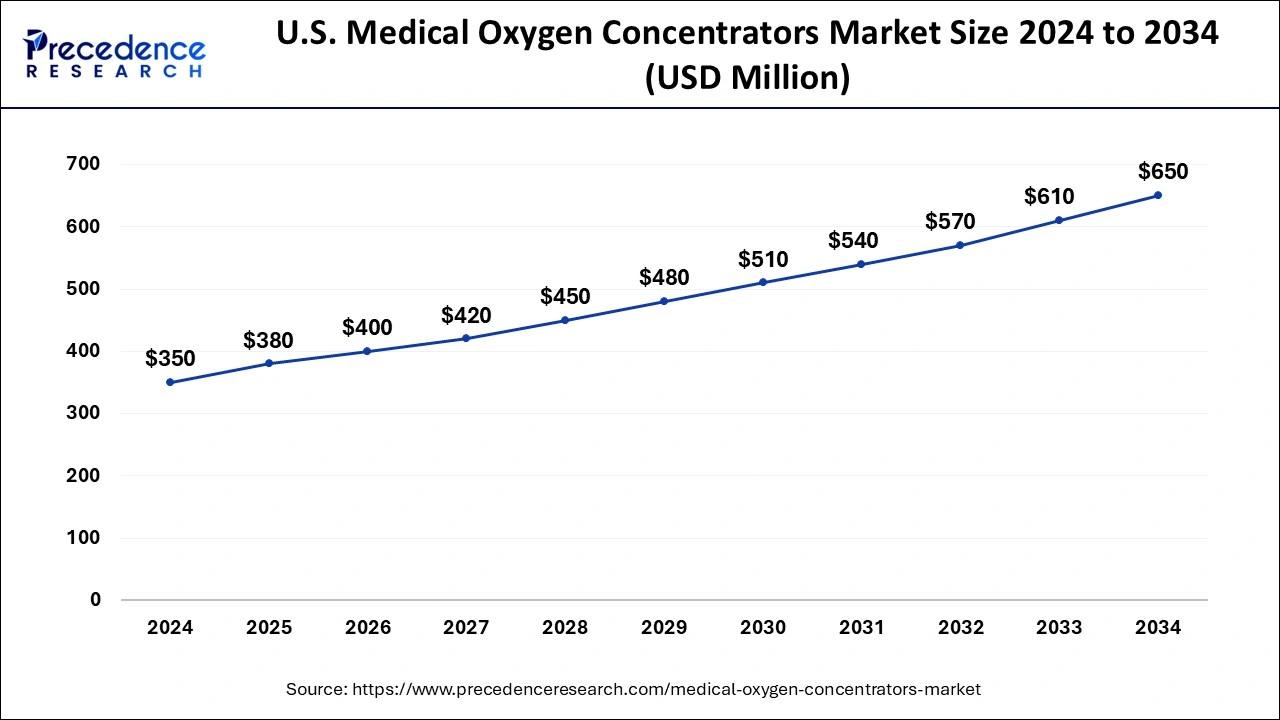
Growth is being driven by the rising prevalence of chronic respiratory conditions, an aging population, increasing demand for home-based oxygen therapy, and continued development of compact and technologically advanced oxygen delivery devices.
Download a Sample Report: https://www.precedenceresearch.com/sample/7994
U.S. Medical Oxygen Concentrators Overview
U.S. medical oxygen concentrators are devices that extract nitrogen from ambient air and provide concentrated oxygen to patients who require supplemental oxygen therapy. They are commonly used in the management of chronic obstructive pulmonary disease, asthma, sleep apnea, and other respiratory conditions.
Demand is increasingly shifting toward convenient and patient-friendly devices that support treatment at home and during daily activities. Portable concentrators are particularly attractive because of their lightweight designs, battery operation, and mobility. At the same time, fixed systems remain important for patients requiring continuous and higher-flow oxygen therapy.
Advanced Technology Is Transforming Oxygen Therapy
Technology is becoming a major differentiator in the U.S. medical oxygen concentrators sector. Manufacturers are introducing devices with improved oxygen purity, quieter operation, longer battery life, lower energy consumption, and enhanced portability.
Smart sensors and connected technologies can support real-time monitoring and device performance tracking. Remote patient monitoring and telehealth connectivity can also help healthcare professionals oversee therapy outside traditional clinical settings. These advances are encouraging a shift toward more personalized, connected, and convenient respiratory care.
Powerful Trends Shaping U.S. Medical Oxygen Concentrators
Rising Respiratory Disease Burden
The increasing prevalence of respiratory disorders is strengthening demand for supplemental oxygen therapy. COPD remains a significant health burden in the U.S., while aging, smoking exposure, air pollution, and other risk factors continue to increase the need for respiratory support.
Strong Shift Toward Home Care
Patients increasingly prefer receiving long-term oxygen therapy in familiar home environments. Home-based treatment can provide greater comfort and convenience while reducing unnecessary hospital visits.
Portable Devices Gain Momentum
Portable oxygen concentrators are becoming increasingly popular among patients who want greater mobility and independence. Compact designs and rechargeable batteries allow patients to maintain daily routines while receiving prescribed oxygen therapy.
Smart and Connected Devices
Manufacturers are incorporating sensors, connectivity, remote monitoring capabilities, and intelligent controls into next-generation systems. These technologies can improve therapy oversight and support proactive maintenance.
Portable Oxygen Concentrators Lead Product Demand
The portable segment dominated in 2025 because patients increasingly value mobility, independence, and convenience. Lightweight and battery-powered devices allow users to receive oxygen therapy while traveling, working, or participating in everyday activities.
The fixed segment is expected to grow strongly through 2035. Fixed oxygen concentrators provide stable and continuous oxygen delivery and are particularly suitable for patients with severe respiratory disorders who require long-term or high-flow therapy. Their use across homes, hospitals, and long-term care environments continues to support demand.
Continuous Flow Remains Essential for High-Need Patients
The continuous flow segment held the leading position in 2025. These systems deliver a steady oxygen supply and are widely used among patients requiring uninterrupted oxygen therapy.
The pulse flow segment is expected to experience faster growth during the forecast period. Pulse-dose systems release oxygen during inhalation, helping reduce oxygen consumption and extend battery life. This makes them especially attractive for portable and ambulatory oxygen therapy.
Home Care Continues to Dominate Applications
The home care segment accounted for the largest share in 2025. The growing preference for treatment at home, combined with reimbursement support and the rising prevalence of chronic respiratory diseases, is strengthening demand.
The non-homecare segment is also expected to expand as hospitals, clinics, rehabilitation facilities, and other healthcare settings continue to require reliable oxygen delivery systems. The growing need for respiratory support in acute and post-acute care is creating additional demand.
U.S. Healthcare Trends Support Continued Expansion
The U.S. benefits from an advanced healthcare infrastructure, established reimbursement systems, strong medical device innovation, and a large network of respiratory care providers. Medicare and private insurance coverage for eligible home oxygen equipment can also improve access for qualifying patients.
The country is experiencing a broader transition toward decentralized healthcare, where suitable patients can receive long-term care outside hospitals. This shift is creating opportunities for oxygen concentrators that are quieter, more energy efficient, connected, and easier to operate.
Competitive Landscape and Innovation
Leading companies are focusing on product miniaturization, energy efficiency, battery improvements, oxygen purity, and connected monitoring capabilities. Manufacturers are also expanding their portfolios to serve both homecare and clinical environments.
Recent innovations demonstrate this direction. In January 2025, Inogen introduced the Voxi 5 stationary oxygen concentrator, designed for long-term home oxygen therapy with improved noise reduction and energy efficiency. In February 2025, CAIRE expanded its stationary concentrator portfolio with upgraded models emphasizing energy efficiency and durability. In March 2025, VARON introduced the VP-8G portable oxygen concentrator with multiple pulse-flow settings and extended battery capability.
Future Outlook for U.S. Medical Oxygen Concentrators
The future of U.S. medical oxygen concentrators is being shaped by portable technology, home-based respiratory care, smart monitoring, improved energy efficiency, and patient-centered design. As respiratory disease prevalence rises and healthcare delivery continues moving beyond hospitals, demand for flexible oxygen therapy solutions is expected to strengthen.
With the U.S. sector projected to reach approximately USD 690 million by 2035, continued technological innovation and wider adoption of convenient oxygen therapy solutions are expected to create significant opportunities for manufacturers and healthcare providers.
Buy this report: https://www.precedenceresearch.com/checkout/7994
About Us
Healthcare Prism is a dedicated healthcare insights and outreach platform, operating as an extension of Precedence Research. We share relevant perspectives, industry developments, emerging trends, and research-driven insights across the global healthcare sector. Our content is built on the knowledge, research standards, and expertise of Precedence Research, with a focus on making healthcare information clear, accessible, and useful for industry professionals, businesses, researchers, and healthcare stakeholders. Healthcare Prism serves as a focused platform to extend the reach of Precedence Research’s healthcare insights and connect them with a broader professional audience.
You can place an order or ask any questions, please feel free to contact us at [email protected]
Quick Contact:
Europe Region: +44 778 256 0738
North America Region: +1 8044 4193 44
APAC Region: +91 9356 9282 04 and +65 31065601
Visit Our Website: Precedence Research – Advisory, Research & Reports