
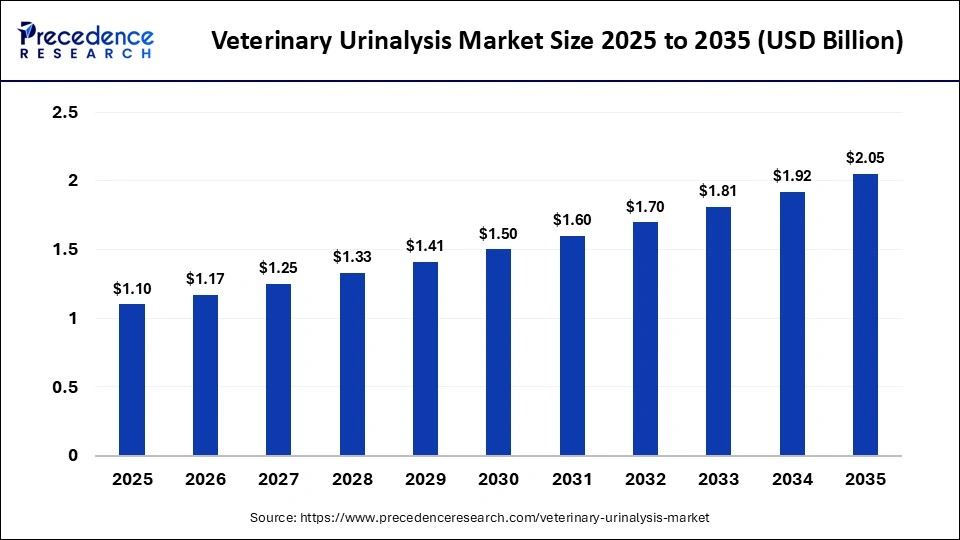
The global veterinary urinalysis market is entering a new phase of growth as veterinarians increasingly rely on rapid, accurate, and preventive diagnostic solutions for both companion animals and livestock. The market was valued at USD 1.10 billion in 2025 and is projected to grow from USD 1.17 billion in 2026 to nearly USD 2.05 billion by 2035, expanding at a CAGR of 6.40% during the forecast period. Rising pet ownership, growing awareness of animal wellness, increasing prevalence of kidney disease and urinary tract infections, and the adoption of automated urinalysis systems are among the key factors accelerating demand.
Read Also: AI in Omics Studies Market
Quick Insights
- The global veterinary urinalysis market reached USD 1.10 billion in 2025 and is forecast to hit USD 2.05 billion by 2035.
- North America remained the leading regional market in 2025, accounting for 40% of total revenue.
- Asia Pacific is expected to witness the fastest growth, with a projected CAGR of 8.5% through 2035.
- Analyzers represented the leading product segment, holding around 45% market share in 2025.
- Pets dominated by animal type, accounting for 60% of market demand due to the growing emphasis on companion animal healthcare.
- Veterinary clinics emerged as the leading end-use segment with 55% market share in 2025.
- Major industry participants include IDEXX Laboratories, Zoetis, Heska Corporation, Thermo Fisher Scientific, and Randox Laboratories.
How is AI Transforming the Veterinary Urinalysis Market?
Artificial intelligence is increasingly becoming a core component of veterinary urinalysis systems. AI-enabled analyzers can automatically identify urine sediment, crystals, bacteria, and abnormal cells with greater speed and accuracy than manual testing. This reduces the risk of human error while improving diagnostic confidence for veterinarians.
AI is also enabling real-time, point-of-care testing within clinics and hospitals. New systems can process multiple urine parameters within minutes and provide actionable insights for diseases such as kidney dysfunction, diabetes, urinary tract infections, and liver disorders. These innovations are particularly valuable for high-volume clinics looking to improve workflow efficiency and patient outcomes.
What Are the Major Growth Factors Driving the Veterinary Urinalysis Market?
Why Is Preventive Animal Healthcare Becoming More Important?
Preventive healthcare is becoming a top priority among pet owners and livestock producers. Routine wellness checkups increasingly include urinalysis because it helps detect chronic diseases such as kidney dysfunction, diabetes, and urinary tract infections at an early stage. This trend is especially important in aging pets, where early diagnosis can significantly improve quality of life and reduce long-term treatment costs.
Why Are Point-of-Care Diagnostics Gaining Traction?
Veterinary clinics are moving toward decentralized, in-clinic testing to deliver immediate diagnostic results. Portable analyzers and rapid urine test strips are making it easier for veterinarians to provide faster diagnoses without relying on external laboratories. This shift is particularly beneficial in emergency care, livestock monitoring, and rural veterinary settings.
How Is Pet Insurance Supporting Market Growth?
The growing adoption of pet insurance is increasing spending on diagnostic testing. Insured pet owners are more willing to approve preventive screenings and follow-up testing, which is helping drive demand for urinalysis systems and related consumables such as reagents and strips.
Which Segment Is Leading the Market?
The analyzers segment dominated the market in 2025 because of its ability to improve testing accuracy and reduce manual errors. Veterinary professionals increasingly prefer automated analyzers for diagnosing kidney disease, diabetes, and infections. Meanwhile, test strips are expected to grow at the fastest pace because of their affordability, portability, and ease of use.
Among animal types, pets held the largest market share due to the growing number of dogs and cats undergoing preventive screening and chronic disease monitoring. Livestock applications are also expanding rapidly as farmers adopt herd health management programs and disease monitoring practices.
Kidney disease emerged as the leading application segment, accounting for 40% of total market demand in 2025. Urinary tract infections followed closely due to their high incidence among dogs and cats. Diabetes mellitus is expected to grow at the fastest rate as obesity in pets becomes more common.
Why Does North America Continue to Dominate?
North America led the global veterinary urinalysis market with a 40% share in 2025. The region benefits from high pet ownership rates, advanced veterinary infrastructure, and widespread adoption of automated diagnostic technologies. Approximately 66% of households in the United States own pets, creating strong demand for preventive screening and routine veterinary care.
Meanwhile, Asia Pacific is projected to grow at the fastest pace due to rising pet adoption, expanding livestock management programs, and improving access to veterinary services in emerging economies.
What Are the Biggest Challenges Facing the Market?
Despite strong growth prospects, the market faces several challenges. High costs associated with advanced analyzers and AI-enabled systems may limit adoption among smaller clinics and practices. In addition, maintaining equipment, ensuring software compatibility, and training staff to use advanced diagnostic platforms can increase operational expenses.
Another challenge is the competitive nature of the market, especially as clinics evaluate multiple equipment providers. Discussions among veterinary professionals often highlight strong preferences for certain brands based on reliability, connectivity, and maintenance needs. Many veterinarians note that systems from IDEXX are viewed as more dependable and easier to integrate than some competing solutions.
Recent Breakthroughs and Competitive Developments
Several companies are investing heavily in AI-powered veterinary diagnostics and connected platforms:
- Zoetis expanded its Vetscan Imagyst platform with an AI-powered urine sediment analysis feature that delivers in-clinic urine analysis within minutes.
- BioNote introduced systems capable of processing samples in approximately four minutes while evaluating multiple chemistry and sediment parameters.
- IDEXX Laboratories continues to strengthen its market position through premium instrument placements and advanced connected diagnostic platforms.
Other notable players in the market include Mindray Medical International, Arkray, Virbac, F. Hoffmann-La Roche, and Alpha Diagnostics.
Case Study: AI-Powered Urinalysis in Companion Animal Clinics
Many veterinary clinics are now integrating AI-enabled analyzers into routine pet wellness packages. These systems allow veterinarians to detect kidney dysfunction, urinary tract infections, and diabetes in minutes during a single clinic visit. This not only improves patient outcomes but also reduces repeat visits and speeds up treatment decisions. AI-driven urinalysis is especially valuable for aging pets that require ongoing disease monitoring and long-term care management.
Get Sample Link: https://www.precedenceresearch.com/sample/8299
For inquiries regarding discounts, bulk purchases, or customization requests, please contact us at [email protected]