
The global Tylosin market is witnessing steady growth, driven by rising demand for animal healthcare products and increasing awareness regarding livestock disease management. Growing investments in veterinary pharmaceuticals and advancements in antimicrobial formulations are expected to create new opportunities for market expansion over the coming years.
What is the Tylosin Market Size?
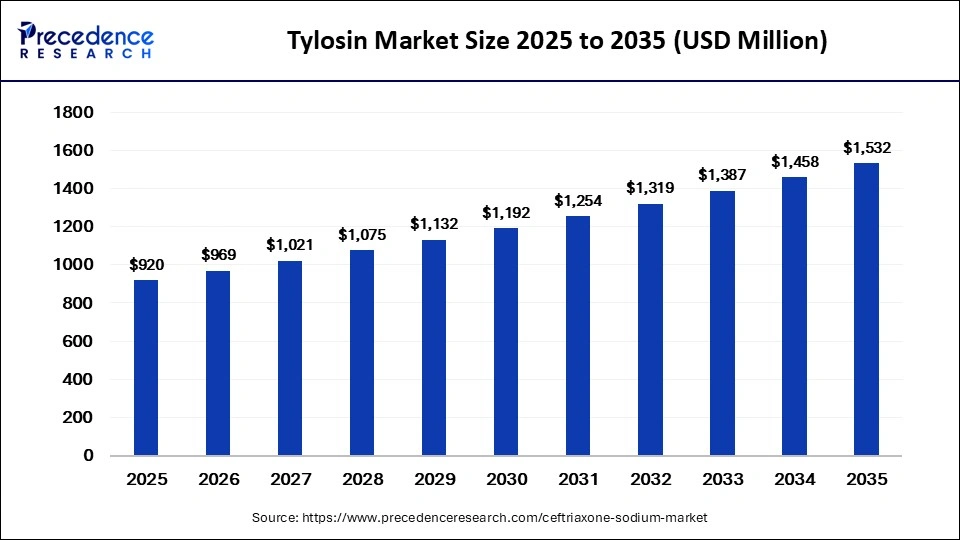
The global tylosin market size accounted for USD 920 million in 2025 and is predicted to increase from USD 969 million in 2026 to approximately USD 1,532 million by 2035, expanding at a CAGR of 5.30% from 2026 to 2035. The market is rapidly expanding due to the increasing demand for protein-rich foods, commercial poultry and swine farming, and mandatory rules to prevent bacterial infections in livestock amid rising meat consumption.
Market Overview
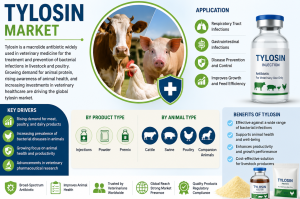
The Tylosin market forms an important part of the veterinary pharmaceutical industry, primarily serving the livestock and poultry sectors. Tylosin is a macrolide antibiotic widely used for the treatment and prevention of bacterial infections in cattle, swine, poultry, and companion animals. Its effectiveness against respiratory and gastrointestinal diseases has made it a preferred therapeutic option among veterinarians and animal producers worldwide.
Growing concerns about animal health and productivity have encouraged livestock producers to adopt advanced veterinary medicines to reduce mortality rates and improve feed efficiency. Increasing consumption of meat and dairy products across emerging economies has intensified the need for efficient disease management solutions, contributing to the demand for tylosin-based products.
The industry is also experiencing changes due to stricter regulations surrounding antibiotic use in food-producing animals. Manufacturers are investing in improved formulations and responsible usage practices to align with evolving regulatory frameworks and antimicrobial stewardship programs. These developments are reshaping the competitive landscape and encouraging innovation within the sector.
Technological improvements in veterinary diagnostics and the expansion of commercial animal farming are creating favorable conditions for market growth. Demand from developing countries, where livestock production continues to expand rapidly, is expected to support long-term market opportunities.
The future outlook for the Tylosin market remains positive as producers focus on maintaining animal welfare standards while improving operational efficiency. Increasing investments in veterinary healthcare infrastructure and growing awareness regarding disease prevention are likely to sustain market momentum during the forecast period.
AI Impact
Artificial intelligence is gradually transforming the veterinary pharmaceutical sector by improving disease surveillance and livestock health monitoring. AI-powered predictive analytics enable farmers and veterinarians to identify disease outbreaks at an early stage, allowing timely administration of antibiotics and minimizing production losses.
Machine learning technologies are supporting pharmaceutical manufacturers in optimizing research and development processes. AI algorithms can analyze large volumes of biological and clinical data to accelerate drug formulation and improve treatment efficacy, helping companies reduce development timelines and costs.
The integration of AI with precision livestock farming systems is enhancing decision-making capabilities. Smart sensors and connected devices collect real-time information on animal behavior, feed intake, and health conditions, allowing producers to implement targeted treatment strategies and improve antibiotic management practices.
AI-based supply chain optimization tools are also helping manufacturers forecast demand, streamline inventory management, and ensure uninterrupted distribution of veterinary medicines across global markets.
Market Trends
- Growing adoption of precision livestock farming technologies.
- Rising demand for veterinary antibiotics to improve animal productivity.
- Increasing focus on antimicrobial stewardship and responsible antibiotic usage.
- Expansion of commercial poultry and swine farming activities.
- Higher investments in veterinary pharmaceutical research and development.
- Growing integration of AI and digital health monitoring systems.
- Development of advanced injectable and water-soluble formulations.
- Strategic partnerships between pharmaceutical companies and animal healthcare providers.
- Rising emphasis on sustainable livestock management practices.
- Increasing regulatory oversight regarding antibiotic residues and food safety.
Segment Insights
By Product Type
Injectable tylosin formulations account for a significant share of the market due to their effectiveness in treating severe bacterial infections and providing rapid therapeutic action. Water-soluble powders are also experiencing strong demand because they offer convenient administration in poultry and swine production systems.
By Animal Type
Livestock animals represent the largest segment, supported by increasing meat and dairy production worldwide. Poultry and swine producers continue to rely on tylosin to manage respiratory and enteric diseases, while the companion animal segment is witnessing steady growth as pet healthcare spending increases.
By Distribution Channel
Veterinary hospitals and clinics remain major distribution channels owing to the increasing preference for professional diagnosis and treatment. Online veterinary pharmacies are emerging as a fast-growing segment, driven by digitalization and improved accessibility to animal healthcare products.
Regional Insights
North America maintains a strong position in the Tylosin market due to its advanced veterinary healthcare infrastructure and large-scale livestock production. The United States and Canada are investing heavily in animal disease prevention and precision farming technologies, supporting sustained demand for veterinary antibiotics.
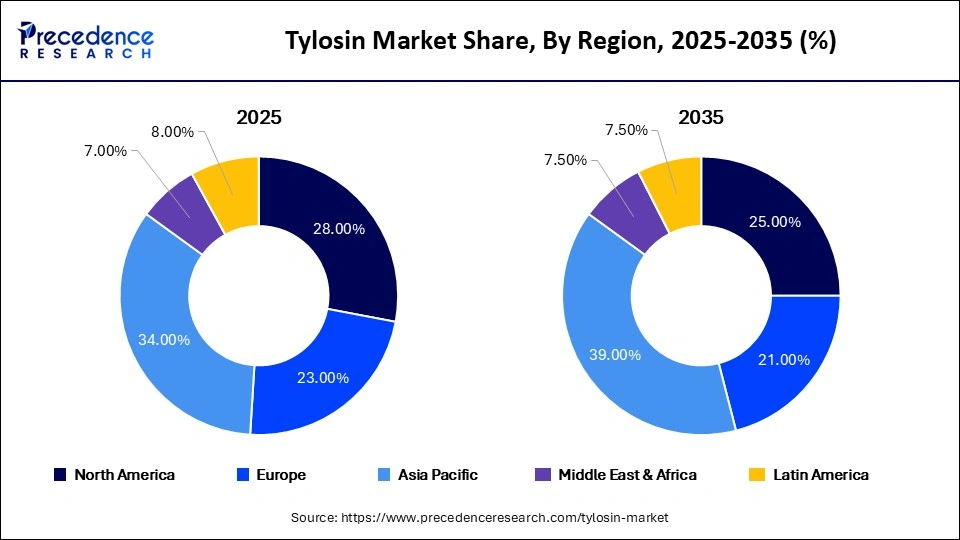
Europe is characterized by stringent regulations regarding antibiotic use and animal welfare standards. Countries such as Germany, France, and the United Kingdom are focusing on responsible antimicrobial practices while promoting innovations that improve livestock productivity and food safety.
Asia-Pacific represents the fastest-growing regional market, supported by expanding poultry and swine industries in China, India, Vietnam, and Indonesia. Rising disposable incomes and increasing consumption of animal protein are encouraging producers to invest in veterinary healthcare solutions and disease management programs.
Latin America is benefiting from strong growth in cattle and poultry production. Brazil, Argentina, and Mexico are emerging as important markets owing to expanding livestock exports and growing awareness regarding animal health management.
The Middle East and Africa are experiencing gradual market expansion as governments focus on improving food security and livestock productivity. Investments in veterinary infrastructure and modernization of farming practices are creating new opportunities for pharmaceutical manufacturers.
Competitive Landscape
Competition within the Tylosin market is characterized by continuous investments in product innovation and manufacturing capabilities. Leading companies are focusing on expanding their veterinary portfolios to address the evolving needs of livestock producers and veterinary professionals.
Research activities aimed at improving antibiotic formulations and delivery mechanisms are gaining momentum. Manufacturers are introducing enhanced products with better efficacy and stability while complying with regulatory standards governing antimicrobial use.
Strategic collaborations, acquisitions, and partnerships are helping companies strengthen their geographic presence and distribution networks. Expansion into emerging economies is becoming an important growth strategy as demand for animal healthcare products increases across developing regions.
Sustainability and responsible antibiotic usage are also influencing competitive strategies. Industry participants are investing in advanced production technologies and quality assurance systems to maintain compliance and build trust among customers and regulatory authorities.
Leading Key players in the Market
- Elanco Animal Health
- Zoetis Inc.
- Huvepharma
- Phibro Animal Health Corporation
- Vetoquinol S.A.
- Merck Animal Health
- Ceva Santé Animale
- Virbac
- Boehringer Ingelheim
- Dechra Pharmaceuticals PLC
- Norbrook Laboratories
- Bimeda Holdings PLC
Get Our Sample Link : https://www.precedenceresearch.com/sample/8505
Recent Developments
- In February 2026, a global leader in livestock pharmacy compounding, Veterinary Pharma Solutions, announced the launch of two compounded oral formulations called AmoxMelox and Enteriquell. They are developed using combinations of antibiotic and anti-inflammatory medications with ingredients like tylosin, Gentamicin, and Dexamethasone.
- In February 2026, a group of researchers from Texas A&M VERO collaborated with the cattle feeding industry to develop empirical strategies that show tylosin minimizes the risk associated with liver abscess in animals and supports antibiotic use with greater responsibility.
Segments Covered in the Report
By Product Type
- Tylosin Tartrate
- Tylosin Phosphate
By Application
- Animal Feed Additives
- Veterinary Pharmaceuticals
By Livestock
- Poultry
- Swine
- Cattle
- Others
By Dosage Form
- Powder
- Injectable
- Oral Solution
- Premix
By Distribution Channel
- Veterinary Hospitals and Clinics
- Feed Mills
- Veterinary Pharmacies
- Online Veterinary Distribution
By Region
- North America
- Latin America
- Europe
- Asia-pacific
- Middle and East Africa
Also Read Our Latest Article : U.S. Supplemental Health Market