
What is Telehealth Market Size?
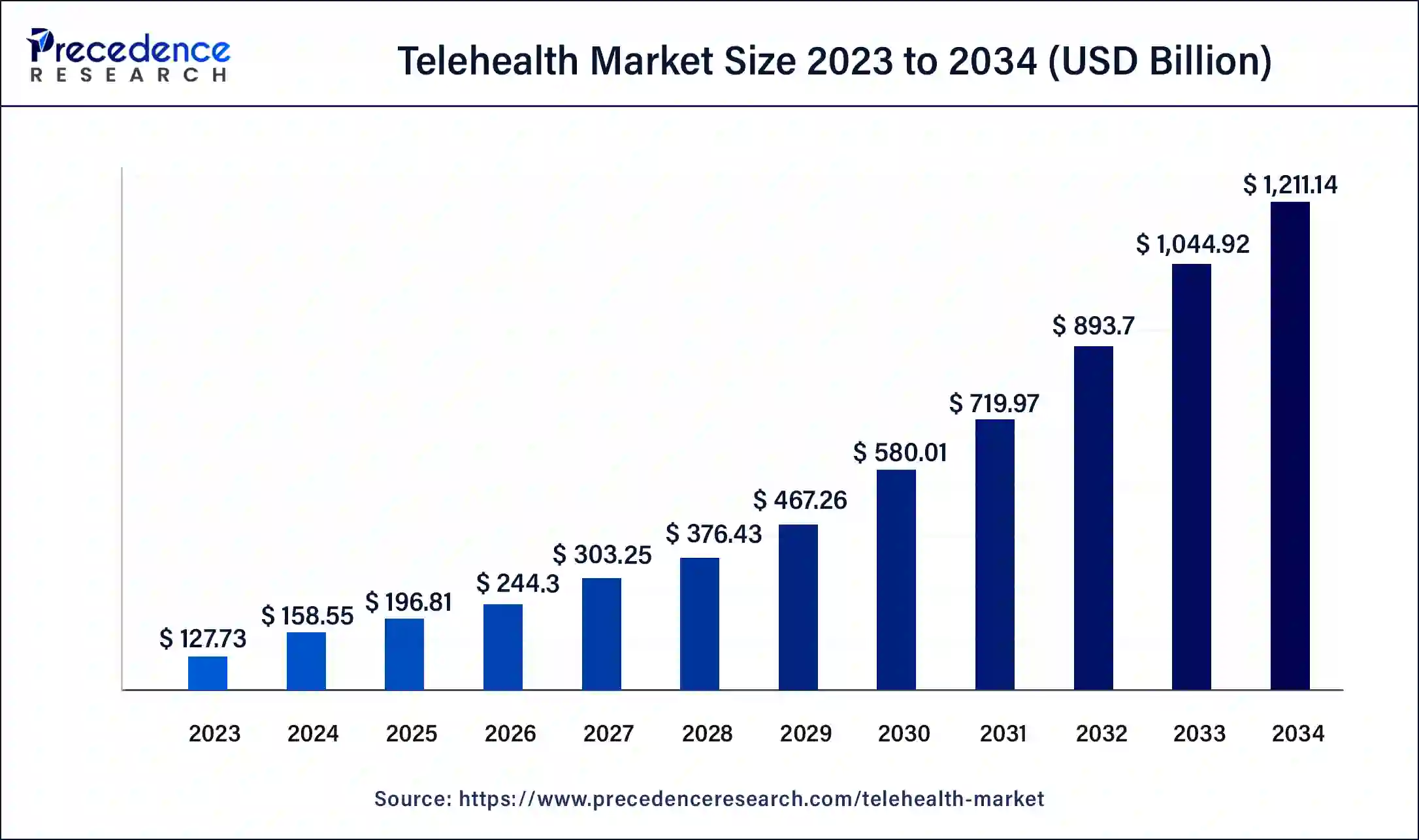
The global telehealth market size accounted at USD 196.81 billion in 2025 and is predicted to increase from USD 244.30 billion in 2026 to approximately USD 1367.36 billion by 2035, expanding at a CAGR of 23.19% from 2026 to 2035.
Market Highlights
- North America region accounted for 54% market share in 2025.
- By product type, the services segment has accounted for more than 50% of total revenue share in 2025.
- By delivery mode, the web-based delivery segment has garnered a market share of 48.5% in 2025.
- By end user, the providers segment accounted for 57% of revenue share in 2025.
Market Overview
The global telehealth market is experiencing rapid growth due to the increasing adoption of digital healthcare technologies and the growing demand for convenient, remote medical services. Telehealth enables healthcare professionals to deliver clinical consultations, patient monitoring, diagnosis, treatment guidance, and follow-up care through digital communication platforms such as smartphones, computers, and connected medical devices. The market is being driven by rising internet penetration, expanding smartphone usage, and increasing investments in healthcare IT infrastructure across both developed and emerging economies. In addition, telehealth solutions are helping improve healthcare accessibility in remote and underserved regions by reducing the need for physical hospital visits and enabling faster access to medical professionals.
The growing prevalence of chronic diseases, rising geriatric population, and increasing preference for home-based healthcare services are further accelerating market growth. Healthcare providers are increasingly integrating artificial intelligence, cloud computing, wearable devices, and remote patient monitoring technologies into telehealth platforms to improve diagnostic accuracy, patient engagement, and operational efficiency. Governments and healthcare organizations worldwide are also investing heavily in digital healthcare transformation initiatives to strengthen healthcare systems and expand virtual care capabilities. As demand for personalized, accessible, and cost-effective healthcare services continues to rise, the telehealth market is expected to witness substantial expansion in the coming years.
Impact of Artificial Intelligence on the Telehealth Market
Artificial intelligence is significantly transforming the telehealth industry by improving virtual healthcare delivery, enhancing diagnostic accuracy, and streamlining clinical workflows. AI-powered technologies support automated patient triage, intelligent diagnostics, predictive remote monitoring, and personalized treatment planning, helping healthcare providers deliver faster and more efficient care remotely.
AI systems are increasingly being integrated into telehealth platforms to enable real-time transcription, automated electronic health record (EHR) documentation, and smart data management. These capabilities reduce administrative burdens on healthcare professionals and allow clinicians to focus more on patient care. AI-driven analytics also help healthcare providers monitor chronic conditions, predict potential health complications, and develop customized care plans based on patient-specific medical data.
In addition, AI-powered virtual assistants and conversational technologies improve patient engagement by providing symptom assessments, appointment scheduling, medication reminders, and healthcare guidance through digital platforms. By enhancing clinical decision-making and improving operational efficiency, artificial intelligence is helping telehealth services become more scalable, accessible, and effective across global healthcare systems.
Telehealth Market Growth Factors
The global telehealth market is witnessing strong growth due to the increasing demand for convenient, accessible, and digitally connected healthcare services among both consumers and healthcare providers. Telehealth platforms are rapidly gaining popularity because they allow patients to access medical consultations, healthcare advice, and follow-up services remotely through smartphones, tablets, and internet-connected devices.
The growing adoption of smartphones, broadband internet, and digital communication technologies worldwide is playing a major role in accelerating telehealth adoption. Rising investments in IT infrastructure and digital healthcare systems are further supporting market expansion. As internet accessibility continues improving globally, telehealth services are becoming more widely available across both urban and rural populations.
Healthcare professionals and physicians are increasingly using telehealth platforms as an important channel for delivering consultations, monitoring patients, and managing healthcare services remotely. The convenience, cost efficiency, and flexibility offered by virtual healthcare platforms are driving strong demand among both patients and medical practitioners.
The rising prevalence of chronic diseases such as diabetes, cardiovascular disorders, respiratory illnesses, and hypertension is another key factor contributing to market growth. Telehealth solutions enable continuous patient monitoring, remote disease management, and timely medical intervention, improving long-term treatment outcomes.
Additionally, the rapidly growing geriatric population is increasing demand for remote healthcare and home-based medical monitoring services. Elderly patients often require continuous supervision and regular consultations, making telehealth an effective solution for improving healthcare accessibility and reducing hospital visits.
The increasing number of hospitals, clinics, and healthcare centers adopting telehealth systems is also supporting market development. Telehealth platforms help healthcare providers collect patient health data, monitor treatment progress, and deliver more informed and personalized care. Furthermore, strategic initiatives such as mergers, acquisitions, partnerships, and new product launches by major healthcare technology companies are accelerating innovation and expanding the global telehealth ecosystem.
Market Outlook
- Industry Growth Overview: Telehealth moves to the AI-based integration of chronic care, mental care, and remote monitoring.
- Trends in Sustainability: Virtual care prevents travel emissions and promotes energy-efficient, low-waste digital healthcare infrastructure.
- Global Expansion: Asia-Pacific and emerging markets increase access to telehealth by providing regulatory backing and investing in digital healthcare.
- Major Investors: Major investors include General Catalyst, Exor, KKR, BlackRock, New Enterprise Associates, and Edwards Lifesciences.
Market Scope
| Report Highlights | Details |
| Market Size in 2025 | USD 196.81 Billion |
| Market Size in 2026 | USD 244.30 Billion |
| Market Size by 2035 | USD 1367.36 Billion |
| Growth Rate From 2026 to 2035 | CAGR of 23.19% |
| Largest Market | North America |
| Fastest Growing Market | Asia Pacific |
| Base Year | 2025 |
| Forecast Period | 2026 to 2035 |
| Segments Covered | Component, End User, Application, Mode of Delivery and Region |
| Regions Covered | North America, Europe, Asia-Pacific, Latin America, and Middle East & Africa |
Opportunity
Integration of artificial intelligence
Artificial intelligence models can analyze patient data to create personalized treatment plans based on an individual’s unique medical history, genetic makeup and lifestyle factors. This level of personalization can lead to more effective treatments and better patient compliance. AI-powered chatbots and virtual health assistants can offer basic medical advice, answer common health-related questions, and assist patients with managing chronic conditions. This relieves some of the burdens on healthcare providers and enhances patient engagement. Thus, the integration of artificial intelligence-based models in telehealth tools is observed to create an opportunity for the market.
Challenge
Technical challenges and limitations
Telehealth relies heavily on technology, and technical issues such as connectivity problems, software glitches or hardware malfunctions can disrupt patient-doctor communication and overall user experience. Some medical conditions may require physical examinations or specialized diagnostic procedures that are difficult to replicate in a telehealth setting. The inability to perform hands-on assessments might limit the scope of telehealth in certain cases. Thus, the technical challenges and limitations are observed to pose a challenge for the market.
Technological Advancement
Technological advancements in the telehealth market feature remote patient monitoring, virtual care platforms, telepharmacy, and medical drones. Telepharmacy provides a remote consultation facility to patients. It enables receiving prescriptions and maintaining timely medications. Medical drones mainly work as a transporter of medical supplies. It also delivers medication to underdeveloped or rural areas. Cloud computing and IoT technology provide data storage, sharing, and analysis. Big data and analytics analyze patient data, supporting personalized care. AR and VR technology are beneficial for training medical professionals, enhancing and improving patients’ experiences.
Regional Insights
North America continues to lead the global telehealth market due to its advanced healthcare infrastructure, widespread internet connectivity, and high adoption of digital healthcare technologies. The United States and Canada are witnessing strong demand for virtual healthcare services driven by the increasing prevalence of chronic diseases, rising healthcare expenditures, and growing acceptance of remote consultations among patients and healthcare providers. The region is also experiencing rapid integration of AI-powered telehealth platforms, wearable health monitoring devices, and cloud-based healthcare systems. Supportive reimbursement policies and government investments in digital healthcare transformation are further contributing to market expansion.
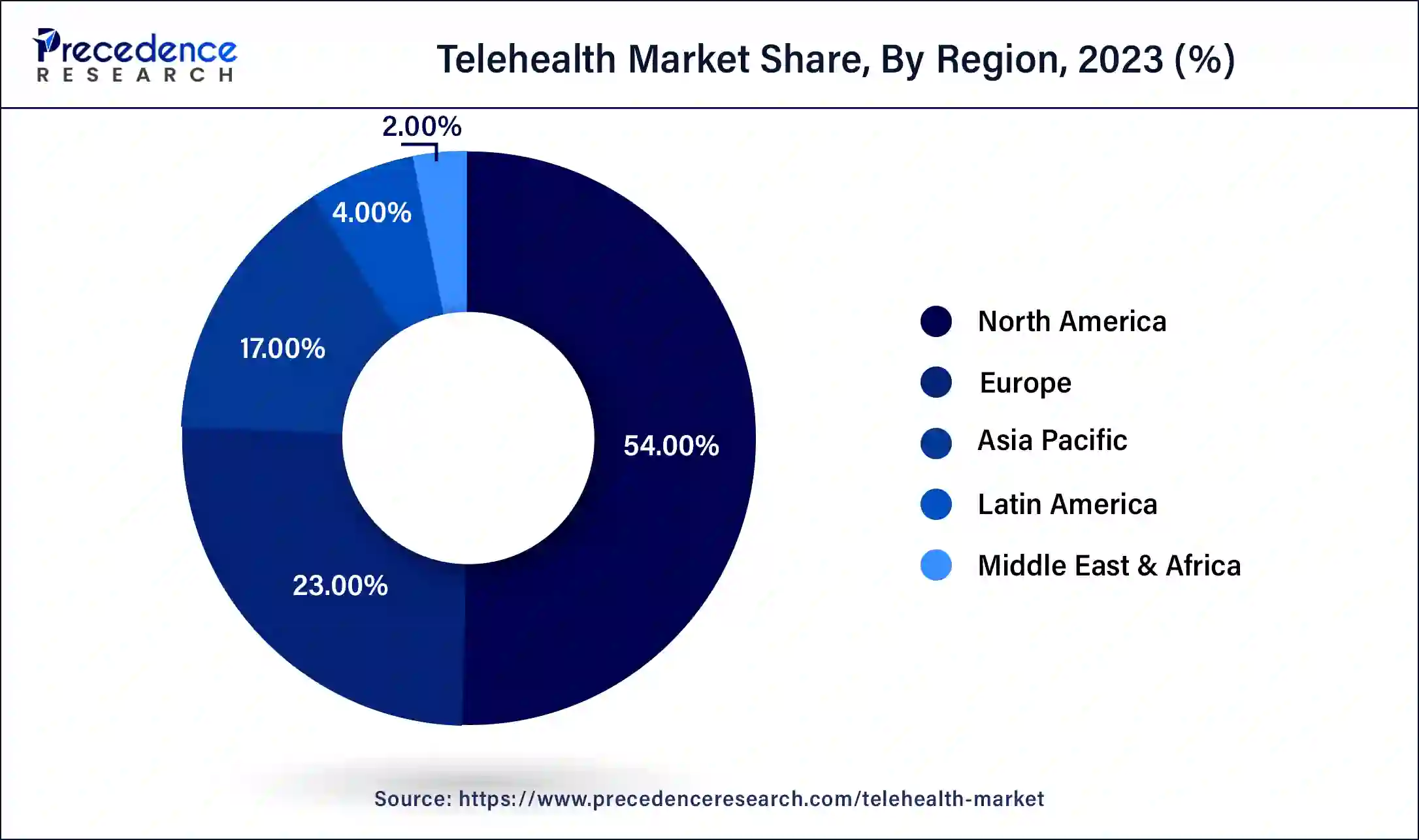
Europe is experiencing significant growth in the telehealth market as governments and healthcare organizations increasingly prioritize digital healthcare modernization. Countries such as Germany, the United Kingdom, France, Italy, and Spain are actively adopting telehealth solutions to improve healthcare accessibility, reduce hospital burden, and support aging populations. The region is also benefiting from strong investments in electronic health records, remote patient monitoring systems, and AI-enabled healthcare technologies. Increasing awareness regarding preventive healthcare and the growing demand for home-based medical services are further supporting telehealth adoption across Europe.
Asia Pacific is emerging as one of the fastest-growing regions in the telehealth market due to expanding internet penetration, increasing smartphone adoption, and rising healthcare digitalization initiatives. Countries including China, India, Japan, South Korea, and Australia are witnessing rapid growth in virtual healthcare services, particularly in rural and underserved areas where access to healthcare professionals remains limited. Government initiatives promoting telemedicine, increasing healthcare IT investments, and rising adoption of AI-driven telehealth platforms are accelerating regional market growth. The region is also experiencing growing demand for remote patient monitoring and chronic disease management solutions.
Latin America is witnessing increasing adoption of telehealth services as healthcare systems focus on improving healthcare accessibility and affordability. Countries such as Brazil, Mexico, Argentina, and Chile are increasingly integrating telehealth platforms into healthcare delivery systems for remote consultations, diagnostics, and chronic care management. Expanding mobile connectivity, rising investments in healthcare infrastructure, and growing awareness regarding digital healthcare services are contributing to market growth across the region. Telehealth is also helping address healthcare access challenges in remote and underserved communities.
The Middle East & Africa region is gradually expanding in the telehealth market due to rising investments in healthcare digitalization and smart healthcare infrastructure. Countries such as the UAE, Saudi Arabia, South Africa, and Israel are actively implementing telehealth technologies to improve healthcare accessibility, enhance patient outcomes, and strengthen healthcare delivery systems. Government-led digital transformation initiatives, increasing smartphone usage, and the growing adoption of AI-powered healthcare platforms are supporting market growth across the region. In addition, telehealth is becoming increasingly important in addressing healthcare workforce shortages and expanding medical services in remote areas.
Value Chain Analysis of the Telehealth Market
- R&D: The identification and creation of digital healthcare solutions based on ongoing software development, clinical validation, and usability testing.
Key Players: Teladoc Health, Amwell, Epic Systems, Koninklijke Philips - Clinical Trials and Regulatory Approvals: Assessing safety, efficacy, and adherence of telehealth platforms based on the regulatory-authority-reviewed clinical trials.
Key Players: Parexel, Catalent, Almac Group, Dictum Health, FDA - Formulation and Final Dosage Preparation: Designing stable and secure digital workflows and clinical algorithms to deliver virtual care consistently.
Key players: CVS Health, Hims & Hers Health, Capsule - Packaging and Serialization: Implementation of secure platforms that are authenticated, traceable, and system integrity measures through data protection.
Key Players: Sharp Services, PCI Pharma Services, Almac Group - Delivery of Hospitals, Pharmacies of Telehealth: The efficient delivery of telehealth platforms by use of integrated networks to providers, pharmacies, and patients.
Key players: Amazon Pharmacy, CVS Pharmacy, Netmeds, Portea Medical
Telehealth Market Major Key Players
- Doctor on Demand
- OpenTeleHealth
- Grand Rounds, Inc.
- Dictum Health, Inc.
- AirStrip Technologies
- INTeleICU
- Masimo
Recent Developments
- In May 2025, Brandon Werber, CEO and founder at Airvet, added Fido to the employee benefits plan. The idea of pet telehealth comes to the workplace. Airvet offers discounted pet insurance options from multiple providers, pharmacy benefits with home delivery, food discounts, and even backup care.
- In May 2025, the startup that runs online-only clinics Juniper, pilot, and kin, released a document outlining what it considers to be best practice principles for Australian online telehealth providers.
- In April 2025, Novo Nordisk opened weight loss drug Wegovy to telehealth; Hims and Hers shares rocket 23%. Patients will be able to access Novo Nordisk’s new direct-to-consumer online pharmacy.
Segments Covered in the Report
By Component
- Software
- Hardware
- Services
By End User
- Hospitals
- Homecare
- Others
By Application
- Telemedicine
- Patient Monitoring
- Medical Education
- Others
By Mode of Delivery
- Web Based
- Cloud Based
- On Premises
By Region
- North America
- Latin America
- Europe
- Asia-pacific
- Middle and East Africa
Get Free Sample Link: https://www.precedenceresearch.com/sample/1363
Also Read Our Latest Article : Telemedicine Market