
The peptide therapeutics market is experiencing steady expansion as pharmaceutical companies focus on developing highly targeted and effective treatments for chronic and complex diseases. Growing prevalence of cancer, metabolic disorders, and cardiovascular diseases is creating strong demand for peptide-based medicines.
Innovations in peptide synthesis technologies, increasing regulatory approvals, and rising investments in biologics research are expected to create new opportunities for market participants over the coming decade.
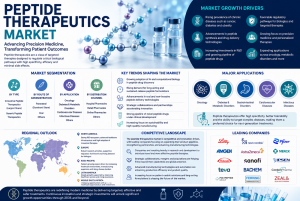
What is the Peptide Therapeutics Market Size?
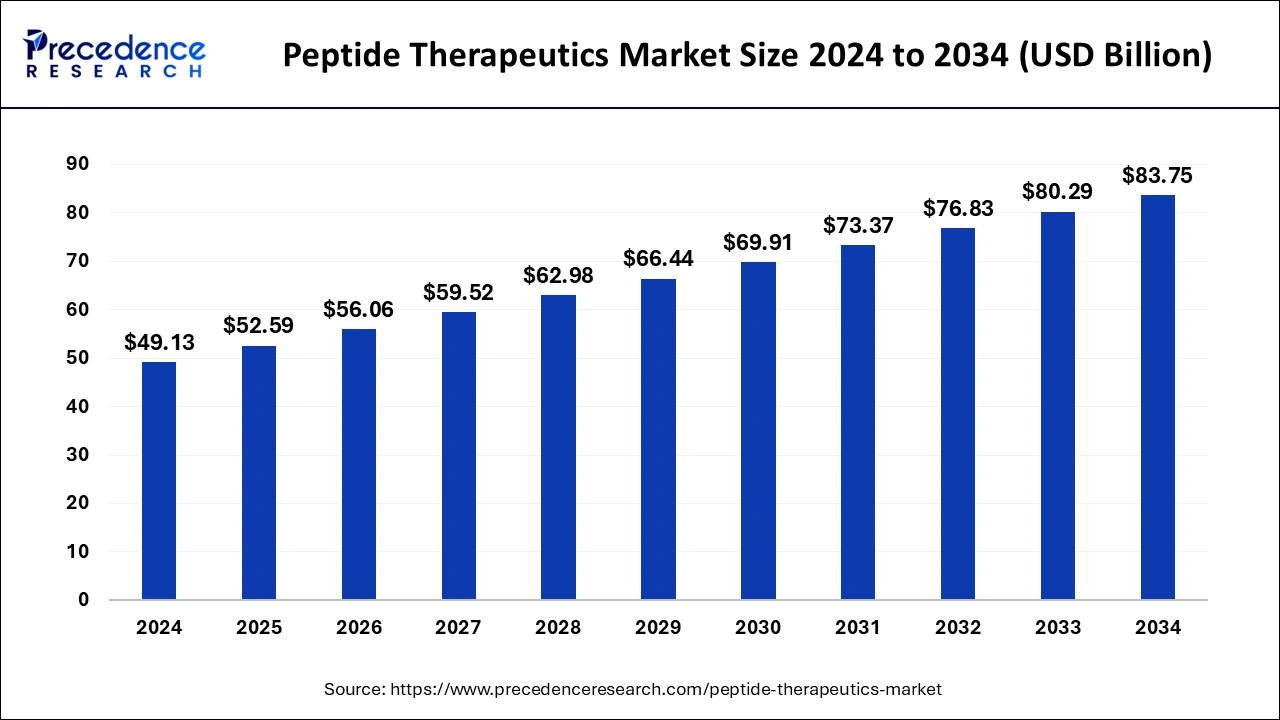
The global peptide therapeutics market size is calculated at USD 52.59 billion in 2025 and is predicted to increase from USD 56.06 billion in 2026 to approximately USD 87.21 billion by 2035, expanding at a CAGR of 5.19% from 2026 to 2035. The peptide therapeutics market growth is driven by an increasing prevalence of cancer and other metabolic diseases.
Industry Outlook
Peptide therapeutics represent a rapidly evolving segment of the pharmaceutical industry, offering highly selective treatments with improved efficacy and fewer side effects compared to conventional small-molecule drugs. These therapies are widely used in oncology, diabetes management, gastrointestinal disorders, infectious diseases, and hormonal conditions. Their ability to mimic natural biological processes makes them attractive candidates for precision medicine.
Over the last few years, advances in peptide engineering and manufacturing technologies have significantly improved the stability and bioavailability of peptide drugs. Researchers are developing long-acting formulations and innovative delivery mechanisms that address challenges associated with degradation and short half-lives. Such improvements are expanding the clinical applications of peptide-based medicines and supporting market growth.
The increasing burden of chronic diseases remains one of the primary factors driving demand. Rising incidences of obesity, diabetes, cancer, and cardiovascular diseases have encouraged pharmaceutical companies to accelerate the development of novel peptide therapeutics. Growing awareness among healthcare professionals regarding the benefits of targeted treatments is also contributing to wider adoption.
The industry is witnessing a surge in research collaborations between biotechnology firms, pharmaceutical companies, and academic institutions. Strategic partnerships are helping accelerate drug discovery and improve manufacturing capabilities. At the same time, favorable regulatory pathways for biologics are supporting the commercialization of innovative therapies.
Despite strong growth prospects, the market faces several challenges, including high development costs, manufacturing complexities, and storage requirements. However, ongoing advancements in peptide chemistry and drug delivery systems are expected to overcome these barriers and unlock substantial opportunities during the forecast period.
AI Impact on the Peptide Therapeutics Market
Artificial intelligence is transforming peptide drug discovery by enabling researchers to identify promising therapeutic candidates more efficiently. Machine learning algorithms can analyze vast biological datasets and predict peptide structures with greater precision, significantly reducing the time required for early-stage development.
AI-powered platforms are improving molecular design and optimizing peptide sequences for enhanced efficacy and stability. Predictive analytics is helping researchers understand protein interactions and accelerate the identification of potential treatment targets. This approach increases the probability of success during clinical trials and reduces research costs.
Manufacturing operations are also benefiting from artificial intelligence. Smart automation and digital monitoring systems are improving process efficiency and ensuring quality control across production facilities. AI-driven analytics helps manufacturers optimize supply chains and forecast demand, reducing waste and improving operational performance.
As precision medicine gains momentum, AI is expected to play an increasingly important role in developing personalized peptide therapies. Advanced computational models are enabling the design of patient-specific treatments, creating new growth avenues for the industry.
Key Market Trends
- Rising adoption of targeted therapies for cancer and metabolic disorders.
- Increasing investments in peptide engineering and synthesis technologies.
- Growing demand for long-acting and sustained-release peptide formulations.
- Expansion of artificial intelligence and computational biology in drug discovery.
- Rising collaborations between pharmaceutical companies and biotechnology firms.
- Increasing focus on precision medicine and personalized healthcare.
- Advancements in oral and transdermal peptide delivery technologies.
- Strong pipeline of novel peptide drugs undergoing clinical development.
- Growing regulatory support for innovative biologics and specialty therapeutics.
- Increasing use of contract manufacturing organizations to enhance production capabilities.
Market Scope
| Report Coverage | Details |
| Market Size in 2025 | USD 52.59 Billion |
| Market Size in 2026 | USD 56.06 Billion |
| Market Size by 2035 | USD 87.21 Billion |
| Growth Rate from 2026 to 2035 | CAGR of 5.19% |
| Largest Market | North America |
| Base Year | 2025 |
| Forecast Period | 2026 to 2035 |
| Segments Covered | By Application, By Type, By Route of Administration, By Distribution Channel and By Synthesis Technology |
| Regions Covered | North America, Europe, Asia-Pacific, Latin America and Middle East & Africa |
Segment Insights
By Type
Innovative peptide therapeutics account for a substantial share of the market owing to their growing use in targeted treatment approaches. Pharmaceutical companies are actively investing in research programs aimed at developing next-generation peptide drugs with enhanced therapeutic profiles. Generic peptide therapeutics are also witnessing increasing demand due to their affordability and expanding availability.
By Route of Administration
Parenteral administration remains the dominant segment because injectable formulations provide superior bioavailability and rapid therapeutic action. However, technological developments in oral peptide delivery are attracting considerable attention. Researchers are working on novel formulations that can improve absorption and patient convenience, which is expected to support segment growth.
By Application
Cancer treatment represents one of the most important application areas for peptide therapeutics. The rising global cancer burden and increasing preference for targeted therapies are driving demand. Diabetes and metabolic disorders also contribute significantly to market growth, supported by growing incidences of obesity and lifestyle-related diseases worldwide.
By Distribution Channel
Hospital pharmacies account for a major share of the market due to the administration of many peptide therapies in clinical settings. Retail pharmacies and online channels are gaining momentum as healthcare systems increasingly emphasize accessibility and patient convenience.
Regional Analysis
North America remains the leading market for peptide therapeutics owing to its advanced healthcare infrastructure, strong presence of major pharmaceutical companies, and significant investments in biotechnology research. The United States continues to drive innovation through extensive clinical trials and regulatory support for biologics.
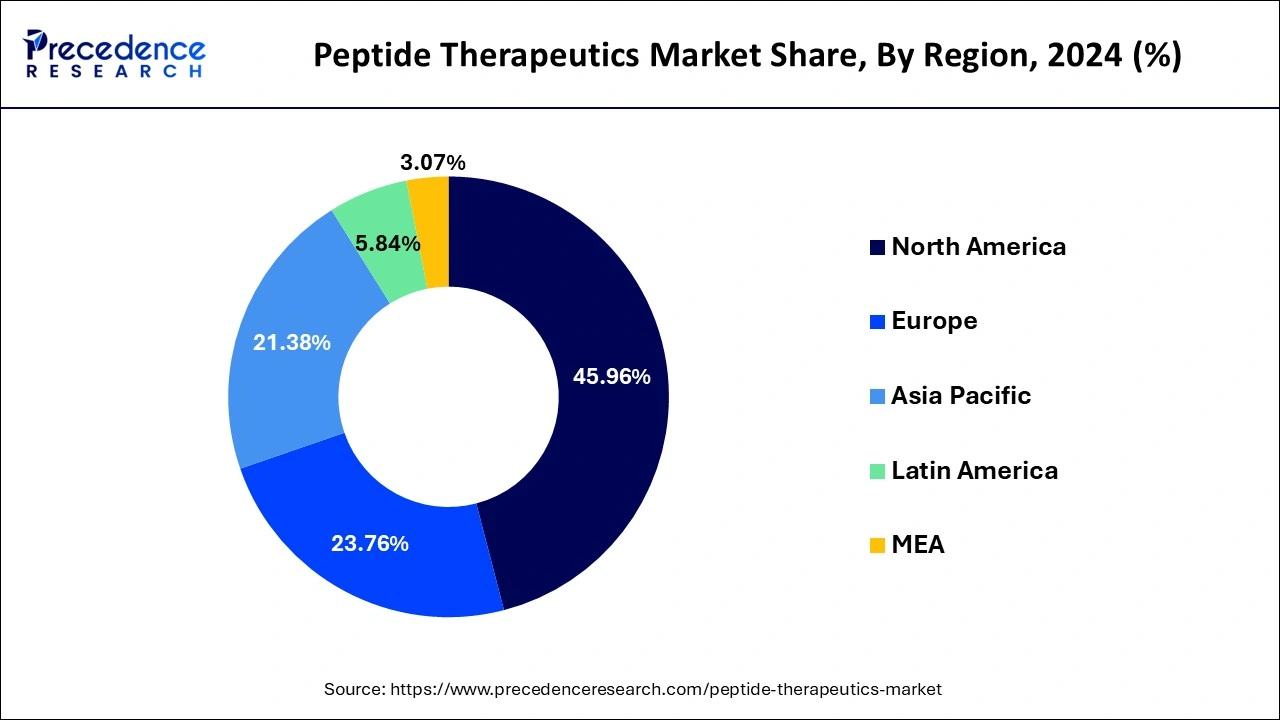
Europe represents a mature market characterized by strong research capabilities and increasing government support for innovative therapies. Countries such as Germany, France, and the United Kingdom are investing heavily in biotechnology and precision medicine initiatives. Rising healthcare expenditures and favorable reimbursement policies are supporting market growth.
Asia-Pacific is expected to witness the fastest growth during the forecast period. Rapid expansion of pharmaceutical manufacturing, increasing healthcare spending, and rising prevalence of chronic diseases are creating favorable conditions for the market. China, Japan, South Korea, and India are emerging as important hubs for peptide research and production.
Latin America is experiencing steady growth supported by improving healthcare infrastructure and growing awareness regarding advanced treatment options. Brazil and Mexico are attracting investments from pharmaceutical companies seeking to expand their regional presence.
The Middle East and Africa market is gradually developing due to increasing healthcare investments and rising demand for innovative medicines. Governments across the Gulf countries are strengthening healthcare systems and promoting biotechnology research to diversify their economies.
Competitive Landscape
Competition within the peptide therapeutics market is characterized by intensive research activities and continuous product innovation. Leading pharmaceutical companies are focusing on expanding their peptide pipelines to address unmet medical needs across oncology, metabolic diseases, and rare disorders.
Strategic collaborations between biotechnology firms and established drug manufacturers are becoming increasingly common. These partnerships are accelerating drug discovery, improving manufacturing capabilities, and strengthening commercialization strategies. Companies are also investing in advanced synthesis technologies to enhance product quality and production efficiency.
Mergers and acquisitions continue to reshape the competitive environment. Large pharmaceutical companies are acquiring innovative biotechnology firms to gain access to novel peptide platforms and strengthen their positions in high-growth therapeutic areas.
The growing emphasis on personalized medicine and AI-driven drug discovery is encouraging companies to integrate digital technologies into research processes. This trend is expected to intensify competition and drive innovation throughout the forecast period.
Get Sample Link : https://www.precedenceresearch.com/sample/2548
Leading Key Players In the Market
- Eli Lilly and Company
- Novo Nordisk A/S
- Pfizer Inc.
- Amgen Inc.
- AstraZeneca PLC
- Takeda Pharmaceutical Company Limited
- Sanofi
- Teva Pharmaceutical Industries Ltd.
- Ipsen Pharma
- Bachem Holding AG
- CordenPharma International
- PolyPeptide Group
- Merck KGaA
- Ferring Pharmaceuticals
- Zealand Pharma A/S
Recent Developments
- In August 2025, to launch an AI-powered platform for accelerated peptide drug discovery, Atombeat, Inc., a leading force in AI for drug discovery, and BioDuro, a globally trusted Contract, Research, Development, and Manufacturing Organization (CRDMO).
- In November 2024, to develop mirror peptides, Aizen Therapeutics was launched. Mirror peptide-based biologics can be stable than the traditional peptide-based drugs.
Segments Covered in the Report
By Application
- Gastrointestinal Disorder
- Metabolic Disorder
- Neurological Disorder
- Cancer
- Others
By Type
- Generic
- Innovative
By Route of Administration
- Oral
- Parenteral
- Pulmonary
- Mucosal
- Others
By Distribution Channel
- Hospital Pharmacies
- Retail Pharmacies
- Online Drug Stores
By Synthesis Technology
- Solid Phase Peptide Synthesis (SPPS)
- Liquid Phase Peptide Synthesis (LPPS)
- Hybrid Technology
By Region
- North America
- Europe
- Asia-Pacific
- Latin America
- The Middle East and Africa
Also Read Our Latest Article : Healthcare Cybersecurity Market