
The Hematopoietic Stem Cell Transplantation (HSCT) market is witnessing rapid growth in 2025, driven by rising cases of blood cancers, increasing adoption of cell and gene therapies, and advancements in transplant technologies. Leading companies are focusing on CAR-T therapies, stem cell processing systems, bioprocessing innovations, and precision oncology solutions to improve transplant success rates and patient outcomes globally.
Leading Companies in the Hematopoietic Stem Cell Transplantation Market
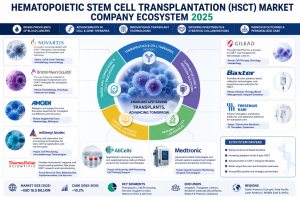
Novartis
Novartis is one of the leading pharmaceutical companies involved in the Hematopoietic Stem Cell Transplantation (HSCT) market through its oncology, immunology, and cell & gene therapy portfolio. The company offers therapies associated with stem cell transplantation procedures, including immunosuppressive agents, supportive oncology drugs, CAR-T cell therapies, and hematologic cancer treatments. Its flagship products related to HSCT and hematological malignancies include Kymriah (CAR-T therapy), Jakavi, and supportive transplant care medications.
The company is estimated to hold approximately 10-12% share of the global HSCT-associated therapeutics and supportive care market. Novartis generated over USD 48 billion in total revenue in 2025, with oncology remaining one of its strongest segments contributing significantly to transplant-related treatment revenues.
Recent developments include expansion of CAR-T manufacturing capabilities, investments in cell therapy infrastructure, and collaborations with cancer research institutions to improve personalized hematology treatments. Novartis strategically focuses on precision medicine, advanced biologics, and next-generation cell therapies for leukemia, lymphoma, and bone marrow disorders.
Its major customers include hospitals, cancer centers, transplant institutes, and specialty hematology clinics globally. The company continues to maintain strong competitive positioning due to its leadership in cell and gene therapy innovation.
Gilead Sciences
Gilead Sciences plays a significant role in the HSCT market through its subsidiary Kite Pharma and its hematology-oncology portfolio. The company provides CAR-T therapies, antiviral agents, and supportive treatments widely used in stem cell transplant settings. Products such as Yescarta and Tecartus are extensively utilized for hematologic malignancies associated with transplantation procedures.
Gilead is estimated to account for approximately 8-10% of the HSCT-related advanced therapy market. The company reported annual revenue exceeding USD 28 billion in 2025, with oncology and cell therapy segments demonstrating strong growth.
Recent innovations include expansion of Kite Pharma’s cell therapy manufacturing network and partnerships focused on next-generation engineered cell therapies. Gilead’s strategy centers on oncology leadership, cell therapy commercialization, and expanding access to advanced hematologic treatments.
The company primarily serves cancer hospitals, research centers, transplant institutes, and specialty hematologists. Gilead maintains strong market competitiveness through aggressive investment in CAR-T technology and oncology pipeline expansion.
Baxter International
Baxter International is a leading provider of medical devices, blood processing systems, infusion therapies, and transplant-related healthcare solutions. In the HSCT market, Baxter supplies infusion pumps, blood collection technologies, IV solutions, and supportive care systems critical for stem cell transplantation procedures.
The company holds an estimated 5-6% share within the HSCT-supportive medical devices and infusion systems segment. Baxter generated approximately USD 15 billion in total revenue in 2025.
Recent developments include expansion of digital infusion technologies, automation in transfusion medicine, and strategic investments in hospital care solutions. Baxter’s competitive strength lies in its broad hospital infrastructure portfolio and global healthcare distribution network.
Its primary customers include transplant hospitals, blood banks, oncology centers, and intensive care facilities. The company focuses strategically on connected healthcare systems and advanced patient support technologies.
Fresenius Kabi
Fresenius Kabi is a major provider of clinical nutrition, infusion therapies, transfusion medicine technologies, and biosimilars supporting HSCT procedures. The company offers apheresis systems, IV drugs, infusion solutions, and supportive therapies essential in stem cell transplantation and hematologic care.
Fresenius Kabi is estimated to hold approximately 6-7% share of the HSCT supportive therapy and transfusion medicine market. The company generated over USD 9 billion in revenue from healthcare and infusion-related operations in 2025.
Recent innovations include advanced blood component collection systems, biosimilar expansion, and hospital-focused digital infusion management solutions. Fresenius strategically focuses on critical care, transfusion medicine, and oncology support infrastructure.
Key customers include hospitals, transplant clinics, blood banks, and specialty oncology centers across Europe, North America, and Asia-Pacific.
Celgene (Bristol Myers Squibb)
Celgene, now part of Bristol Myers Squibb (BMS), remains highly influential in the HSCT market through its hematology and oncology portfolio. The company’s therapies including Revlimid, Abraxane, and CAR-T collaborations are widely used in bone marrow transplant preparation and hematologic cancer treatment.
The company commands an estimated 9-11% share in the HSCT-related hematologic oncology therapeutics market. Bristol Myers Squibb reported more than USD 47 billion in revenue in 2025.
Recent developments include continued expansion of cell therapy capabilities through Breyanzi and Abecma, as well as partnerships focused on immuno-oncology and precision hematology. BMS strategically prioritizes blood cancer innovation and next-generation immune therapies.
Its customer base includes transplant hospitals, oncology specialists, and academic medical institutions globally.
Medtronic
Medtronic participates in the HSCT ecosystem primarily through patient monitoring systems, surgical technologies, infusion systems, and hospital care solutions supporting transplantation procedures.
The company is estimated to hold around 3–4% share within the HSCT-supportive medical technology segment. Medtronic generated approximately USD 33 billion in annual revenue in 2025.
Recent developments include AI-enabled patient monitoring systems, smart infusion technologies, and digital healthcare integration. Medtronic focuses strategically on connected care and hospital automation.
Key customers include specialty hospitals, transplant centers, and critical care institutions worldwide.
Amgen
Amgen is a major biotechnology company providing supportive biologics and oncology therapies associated with stem cell transplantation. Products such as Neulasta and supportive hematology biologics are widely used during bone marrow transplantation recovery.
Amgen is estimated to hold approximately 5% share within HSCT supportive biologics. The company generated more than USD 34 billion in revenue in 2025.
Recent innovations include expansion of biosimilars, oncology biologics, and immune-support therapies. Amgen strategically focuses on hematology, oncology, and biologic manufacturing scalability.
The company serves oncology hospitals, transplant clinics, and specialty healthcare providers globally.
Miltenyi Biotec
Miltenyi Biotec is one of the leading specialized players in the HSCT market, focusing on cell separation technologies, stem cell processing systems, immunotherapy manufacturing, and transplant diagnostics.
The company holds an estimated 4–5% share in stem cell processing and transplantation technologies. While privately held, industry estimates place annual revenues above USD 2 billion.
Recent developments include expansion of CliniMACS cell processing systems, automation platforms for cell therapy manufacturing, and collaborations in regenerative medicine. Miltenyi strategically emphasizes advanced cell engineering and translational medicine.
Its major customers include research laboratories, transplant centers, biotech companies, and academic institutions worldwide.
AllCells
AllCells specializes in sourcing, processing, and supplying human primary cells and blood products for stem cell transplantation research and cell therapy development. The company supports clinical research, regenerative medicine, and immunotherapy applications.
AllCells operates within a niche segment of the HSCT research supply market with estimated revenues below USD 500 million. The company focuses heavily on customized cell sourcing and bioprocessing solutions.
Recent developments include expansion of donor-derived cell products and partnerships supporting clinical trial research in hematology and regenerative medicine.
Its customers include biotech firms, pharmaceutical companies, academic researchers, and cell therapy developers.
Thermo Fisher Scientific
Thermo Fisher Scientific is a major life sciences company supporting the HSCT market through cell culture systems, laboratory instruments, cryopreservation technologies, bioprocessing tools, and genomic analysis solutions.
The company is estimated to hold approximately 7–8% share in stem cell research tools and transplantation support technologies. Thermo Fisher generated over USD 43 billion in annual revenue in 2025.
Recent developments include expansion of cell therapy manufacturing services, bioprocessing technologies, and genomic medicine capabilities. Thermo Fisher strategically focuses on enabling large-scale cell and gene therapy commercialization.
The company serves pharmaceutical companies, transplant laboratories, research institutions, and biotechnology firms globally.
Explore Full Reort : https://healthcareprism.com/hematopoietic-stem-cell-transplantation-market/
Get Sample Link : https://www.precedenceresearch.com/sample/8421