
What is the Tau Protein Targeting Therapeutics Market Size in 2026?
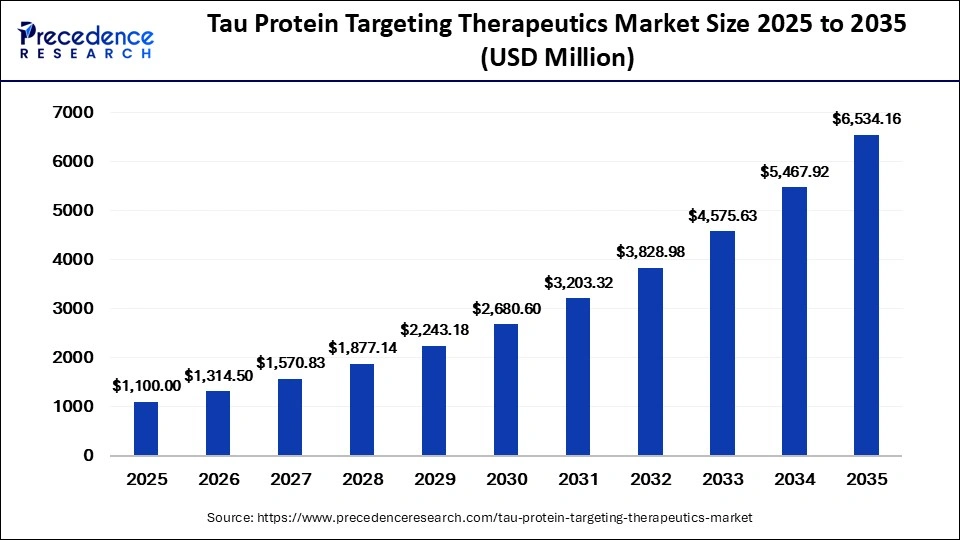
The global tau protein targeting therapeutics market size was calculated at USD 1,100.00 million in 2025 and is predicted to increase from USD 1,314.50 million in 2026 to approximately USD 6,534.16 million by 2035, expanding at a CAGR of 19.50% from 2026 to 2035. The rising prevalence of neurodegenerative disorders, along with increased research activities and government healthcare initiatives, is a key driver of market growth.
Key Market Highlights
- North America dominated the global Tau Protein Targeting Therapeutics Market in 2025, accounting for 44% of the total market share.
- Asia-Pacific is projected to register the fastest growth during the forecast period, expanding at a CAGR of 24%.
- Based on therapeutic type, the monoclonal antibodies segment held the largest market share of 42% in 2025.
- The gene therapies segment is anticipated to witness the highest growth rate, with a projected CAGR of 28% over the forecast timeline.
- By indication, the Alzheimer’s disease segment led the market with a 58% revenue share in 2025 and is expected to maintain strong growth momentum.
- In terms of mechanism of action, tau aggregation inhibition emerged as the leading segment, contributing 34% of the market share in 2025.
- The tau clearance enhancement segment is expected to grow rapidly in the coming years, driven by ongoing advancements in neurodegenerative disease therapies.
- By route of administration, intravenous (IV) therapies accounted for the largest market share of 48% in 2025.
- The intrathecal administration segment is forecast to experience significant expansion throughout the study period.
- Hospitals represented the leading end-use segment with 40% market share in 2025 due to increasing neurological treatment procedures.
- Pharmaceutical and biotechnology companies are expected to emerge as the fastest-growing end-use segment, supported by rising R&D investments and clinical trial activities.
Tau Protein Targeting Therapeutics Market Overview
The global Tau Protein Targeting Therapeutics Market is experiencing rapid growth due to the increasing prevalence of neurodegenerative disorders such as Alzheimer’s disease, Parkinson’s disease, frontotemporal dementia, and other tauopathies. Tau proteins play a critical role in stabilizing neuronal microtubules; however, abnormal tau aggregation and hyperphosphorylation are strongly associated with progressive neurodegenerative conditions. As a result, pharmaceutical and biotechnology companies are intensifying efforts to develop targeted therapies capable of slowing disease progression and improving neurological outcomes.
The market is being driven by rising investments in neuroscience research, growing awareness regarding early diagnosis of neurodegenerative diseases, and increasing demand for disease-modifying therapies. Advancements in monoclonal antibodies, gene therapies, antisense oligonucleotides, and small molecule inhibitors are significantly accelerating innovation across the market. Additionally, strong government support, expanding clinical trial activity, and strategic collaborations between biotechnology firms and pharmaceutical companies are contributing to market expansion.
Increasing focus on Tau aggregation inhibition, Tau clearance enhancement, and intracellular protein targeting strategies is reshaping the competitive landscape. Companies are also investing in advanced biomarker technologies and personalized therapeutic approaches to improve treatment efficacy and clinical outcomes.
Impact of Artificial Intelligence on the Tau Protein Targeting Therapeutics Market
Artificial intelligence (AI) is playing a transformative role in the Tau Protein Targeting Therapeutics Market by accelerating drug discovery, improving clinical trial efficiency, and enhancing precision medicine capabilities. AI-powered platforms are helping researchers identify potential Tau-targeted compounds faster by analyzing large biological datasets, predicting molecular interactions, and optimizing therapeutic candidates.
Machine learning algorithms and AI-driven virtual screening tools are increasingly being used to identify Tau aggregation inhibitors and develop next-generation monoclonal antibodies and gene therapies. AI also enables researchers to analyze protein folding behavior, biomarker patterns, and disease progression pathways with greater accuracy, significantly reducing drug development timelines and research costs.
Additionally, AI-assisted nanobody engineering and predictive modeling technologies are improving the development of therapies targeting intrinsically disordered Tau proteins. Pharmaceutical companies are leveraging AI to design personalized treatment approaches, improve patient selection in clinical trials, and optimize therapeutic response predictions.
The growing integration of AI into neuroscience research is expected to accelerate innovation across Alzheimer’s disease therapeutics and other neurodegenerative treatment segments. As demand for precision neurology and targeted biologics increases, AI is anticipated to become a critical driver of future market growth, enabling faster commercialization of advanced Tau-targeted therapies.
Tau Protein Targeting Therapeutics Market Segmental Insights
By Therapeutic Type
The monoclonal antibodies segment dominated the Tau Protein Targeting Therapeutics Market in 2025 due to increasing clinical research focused on preventing tau aggregation and slowing neurodegenerative disease progression. Monoclonal antibodies are gaining significant attention because of their ability to selectively target pathological tau proteins and reduce neuronal damage. Pharmaceutical companies are heavily investing in antibody-based therapies for Alzheimer’s disease and related tauopathies, contributing to segment growth. Meanwhile, the gene therapies segment is expected to witness the fastest expansion during the forecast period owing to advancements in precision medicine, RNA-targeting technologies, and long-term therapeutic potential for neurodegenerative disorders.
By Indication
The Alzheimer’s disease segment accounted for the largest share of the global market in 2025 due to the growing prevalence of dementia worldwide and rising investments in disease-modifying therapies. Tau-targeted therapeutics are increasingly being explored for slowing cognitive decline and reducing tau pathology associated with Alzheimer’s disease. Increasing clinical trial activity and supportive government funding for neurological research are further strengthening segment growth. Additionally, rising awareness regarding early diagnosis and biomarker-driven treatment approaches is expected to accelerate adoption of Tau-targeted therapies across Alzheimer’s disease management.
By Mechanism of Action
Based on mechanism of action, the tau aggregation inhibition segment led the market in 2025 as researchers continue focusing on preventing abnormal tau protein accumulation within neurons. Tau aggregation inhibitors are considered one of the most promising therapeutic approaches for slowing neurodegeneration and reducing disease progression. On the other hand, the tau clearance enhancement segment is projected to experience rapid growth due to increasing interest in therapies designed to remove toxic tau proteins from the brain through immune-mediated pathways and cellular clearance mechanisms.
By Route of Administration
The intravenous (IV) segment dominated the market in 2025 owing to the widespread use of IV-administered biologics, monoclonal antibodies, and advanced neurological therapies in clinical settings. Intravenous delivery offers improved bioavailability and controlled administration, particularly for complex biologic therapies targeting the central nervous system. However, the intrathecal administration segment is expected to expand significantly during the forecast period as pharmaceutical companies develop therapies capable of directly targeting the central nervous system and improving drug penetration across the blood-brain barrier.
By End-Use
Hospitals represented the leading end-use segment in 2025 due to the growing number of neurological treatment procedures, increasing patient admissions for neurodegenerative diseases, and rising use of advanced biologic therapies in hospital environments. Specialized neurology departments and research hospitals continue to play a critical role in administering Tau-targeted therapeutics and conducting clinical studies. Meanwhile, pharmaceutical and biotechnology companies are expected to emerge as the fastest-growing end-use segment as investments in drug discovery, AI-assisted research, precision neurology, and clinical development programs continue increasing globally.
Tau Protein Targeting Therapeutics Market Regional Insights
North America dominated the global Tau Protein Targeting Therapeutics Market in 2025 due to the strong presence of leading biotechnology and pharmaceutical companies, advanced healthcare infrastructure, and increasing investments in neuroscience research. The United States remains the largest contributor to regional growth, supported by rising prevalence of Alzheimer’s disease and other neurodegenerative disorders. Growing adoption of precision medicine, strong government funding for neurological research, and increasing clinical trial activity are further accelerating market expansion. Additionally, strategic collaborations among companies such as Eli Lilly, Biogen, AC Immune, and Bristol Myers Squibb continue strengthening innovation across Tau-targeted therapies in the region.
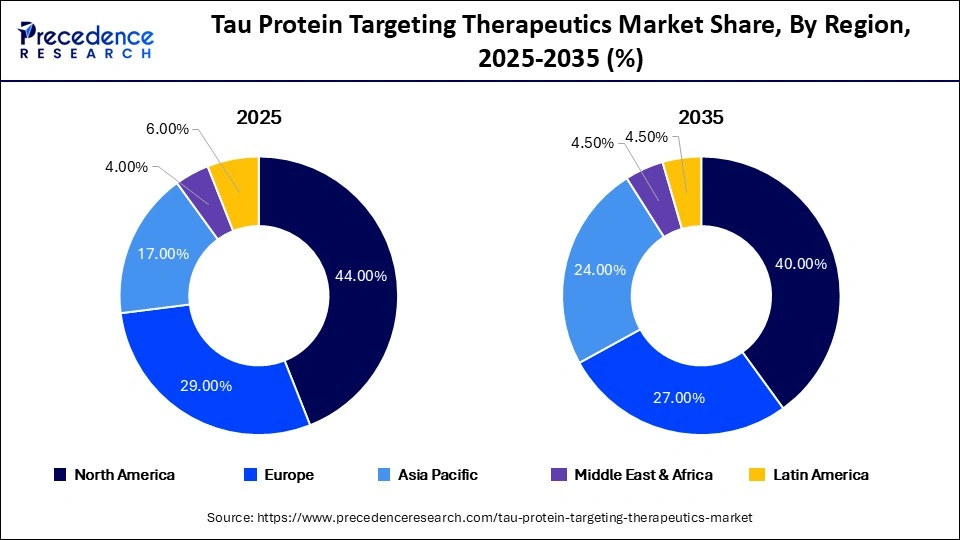
Europe represents a significant market for Tau Protein Targeting Therapeutics due to increasing healthcare investments, rising aging population, and growing focus on neurodegenerative disease management. Countries such as Germany, the United Kingdom, France, and Switzerland are witnessing strong research activity related to Alzheimer’s disease therapeutics and Tau protein biology. The region benefits from supportive regulatory frameworks, academic research partnerships, and expanding biotechnology ecosystems. European pharmaceutical companies are increasingly focusing on monoclonal antibodies, gene therapies, and biomarker-based precision treatments to improve neurological outcomes.
Asia-Pacific is expected to witness the fastest growth during the forecast period due to rising awareness regarding neurodegenerative diseases, increasing healthcare expenditure, and expanding biotechnology research infrastructure. Countries including China, Japan, South Korea, and India are investing heavily in neuroscience innovation, AI-driven drug discovery, and advanced clinical research programs. The growing elderly population and increasing prevalence of dementia-related disorders are creating significant demand for effective Tau-targeted therapeutics across the region. Additionally, rising pharmaceutical manufacturing capabilities and government initiatives supporting healthcare innovation are expected to further accelerate market growth.
The Tau Protein Targeting Therapeutics Market in Latin America is growing steadily due to improving healthcare infrastructure, increasing neurological disease awareness, and gradual expansion of pharmaceutical research activities. Brazil and Mexico are among the leading regional contributors, supported by rising investments in hospital infrastructure and neurological treatment services. Although the market remains in the early stages of development, increasing participation in international clinical trials and improving access to advanced therapeutics are expected to support future growth opportunities.
The Middle East & Africa market is witnessing gradual growth due to increasing healthcare modernization initiatives, rising awareness regarding neurological disorders, and improving access to specialty healthcare services. Countries such as the UAE and Saudi Arabia are investing in advanced healthcare infrastructure and precision medicine programs to strengthen neurological treatment capabilities. In Africa, market growth remains comparatively slower due to limited access to advanced therapeutics and research infrastructure; however, increasing healthcare investments and expanding awareness regarding Alzheimer’s disease and neurodegenerative disorders are expected to create long-term growth opportunities.
Get Free Sample Link: https://www.precedenceresearch.com/sample/8423
Also Read Our Latest Blog : https://healthcareprism.com/hematopoietic-stem-cell-transplantation-market-company/