
The plasmid DNA manufacturing market is experiencing strong growth due to rising demand for gene therapies, DNA vaccines, and cell-based therapies. Advancements in biotechnology, increasing clinical research activities, and the growing adoption of personalized medicine are driving market expansion globally.
What is the Plasmid DNA Manufacturing Market Size in 2026?
The global plasmid DNA manufacturing market size accounted for USD 2.64 billion in 2025 and is expected to exceed around USD 12.45 billion by 2035, growing at a CAGR of 16.78% from 2026 to 2035.
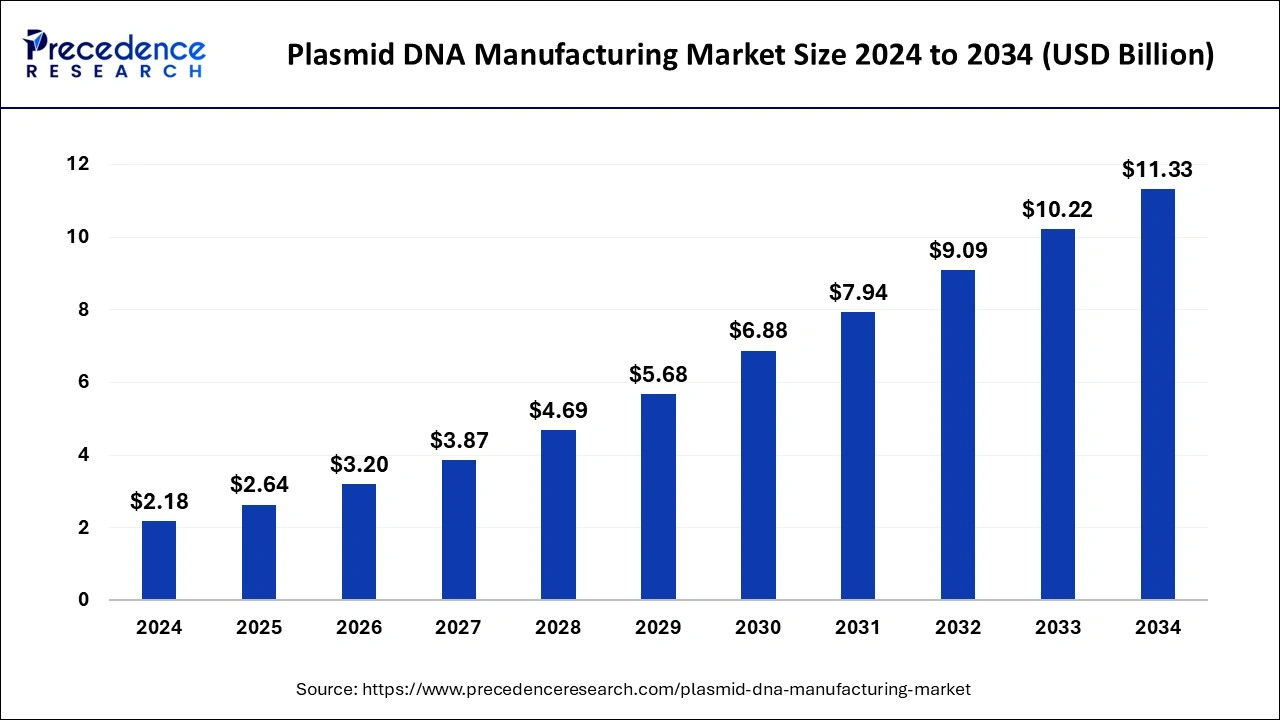
Key Takeaways
- The pre-clinical therapeutics development phase segment is expected to grow at a CAGR of 14.3%.
- The cell & gene therapy application segment held a market share of 59% in 2025.
- The cancer disease segment has captured a market share of 37.5% in 2025.
- The GMP grade segment has reached the highest revenue share of 88.4% in 2025.
- The North America region has dominated the market with a revenue share of 43.50% in 2025.
Market Overview
The plasmid DNA manufacturing market is expanding rapidly as biotechnology and pharmaceutical companies increasingly focus on developing advanced genetic therapies and next-generation vaccines. Plasmid DNA plays a critical role in gene therapy, cell therapy, CRISPR gene editing, and mRNA vaccine production, making it an essential component in modern biopharmaceutical development.
Growing investments in genomic research, rising prevalence of chronic and rare genetic disorders, and increasing regulatory approvals for gene-based therapeutics are accelerating market growth. The demand for high-quality plasmid DNA manufacturing services is also increasing due to the rapid expansion of clinical trials and commercialization of biologic therapies.
Additionally, contract development and manufacturing organizations (CDMOs) are expanding their production capabilities to meet the growing need for scalable and GMP-compliant plasmid DNA manufacturing solutions.
Market Trends
The plasmid DNA manufacturing market is evolving through several emerging trends that are reshaping the biotechnology industry. One major trend is the increasing demand for mRNA vaccines and gene therapies, which require high-purity plasmid DNA for development and production.
Another key trend is the expansion of automated and scalable manufacturing technologies to improve production efficiency and reduce turnaround times. Biotechnology companies are also adopting single-use bioprocessing systems and advanced fermentation technologies to enhance manufacturing flexibility.
Strategic collaborations between pharmaceutical companies, biotechnology firms, and CDMOs are accelerating innovation and manufacturing capacity expansion. Additionally, growing investments in synthetic biology and CRISPR-based therapies are creating new opportunities for plasmid DNA applications across the healthcare sector.
AI Impact on the Plasmid DNA Manufacturing Market
Artificial intelligence is playing an increasingly important role in the plasmid DNA manufacturing market by improving process optimization, quality control, and production efficiency. AI-powered analytics can help manufacturers monitor bioprocessing conditions in real time and identify production bottlenecks more effectively.
Machine learning algorithms are supporting plasmid sequence optimization, predictive maintenance, and automated quality assurance in manufacturing facilities. AI is also helping researchers accelerate gene therapy development by improving data analysis and reducing research timelines.
Furthermore, AI-driven digital biomanufacturing platforms are enabling faster scale-up processes, enhanced process consistency, and improved compliance with regulatory standards. The growing integration of AI into biotechnology manufacturing is expected to significantly enhance operational productivity and innovation.
Segment Insights
By Product Type
Supercoiled plasmid DNA holds a major share of the market due to its high efficiency in gene therapy and vaccine applications. GMP-grade plasmid DNA is also witnessing strong demand driven by clinical and commercial manufacturing requirements.
By Application
Gene therapy represents a leading application segment due to increasing clinical development activities for genetic disorders and cancer therapies. DNA vaccines, cell therapies, and CRISPR-based genome editing applications are also contributing significantly to market growth.
By Manufacturing Type
In-house manufacturing and contract manufacturing organizations (CMOs/CDMOs) are key segments within the market. CDMOs are gaining strong traction as pharmaceutical companies increasingly outsource plasmid DNA production to specialized manufacturers.
By End User
Biotechnology companies, pharmaceutical companies, research institutes, and academic laboratories are major end users in the plasmid DNA manufacturing market. Increasing R&D investments and clinical trial activities are supporting demand across these sectors.
Regional Insights
North America dominates the plasmid DNA manufacturing market due to strong biotechnology infrastructure, high investments in gene therapy research, and the presence of leading pharmaceutical companies. The region also benefits from advanced regulatory frameworks and increasing clinical trial activities.
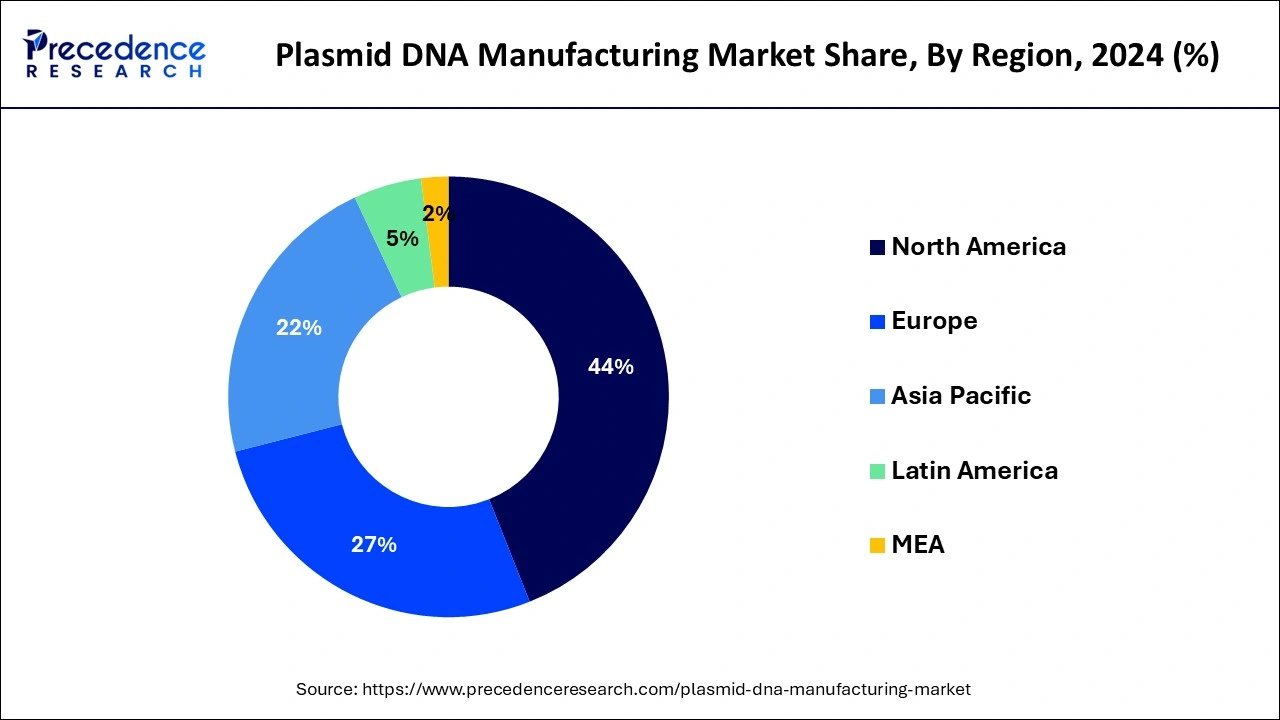
Europe is witnessing steady growth driven by expanding biopharmaceutical research, increasing government funding for genomic medicine, and rising adoption of advanced therapies. Strategic collaborations among biotechnology firms are further supporting market expansion.
Asia Pacific is expected to experience rapid growth due to increasing healthcare investments, expanding biotechnology industries, and growing demand for gene therapies and vaccines. Countries such as China, Japan, and India are becoming major hubs for biopharmaceutical manufacturing and research.
These regions are gradually emerging in the plasmid DNA manufacturing market due to improving healthcare infrastructure, rising biotechnology investments, and growing awareness regarding advanced genetic therapies. Expanding research activities are expected to create future growth opportunities.
Plasmid DNA Manufacturing Market Key Players
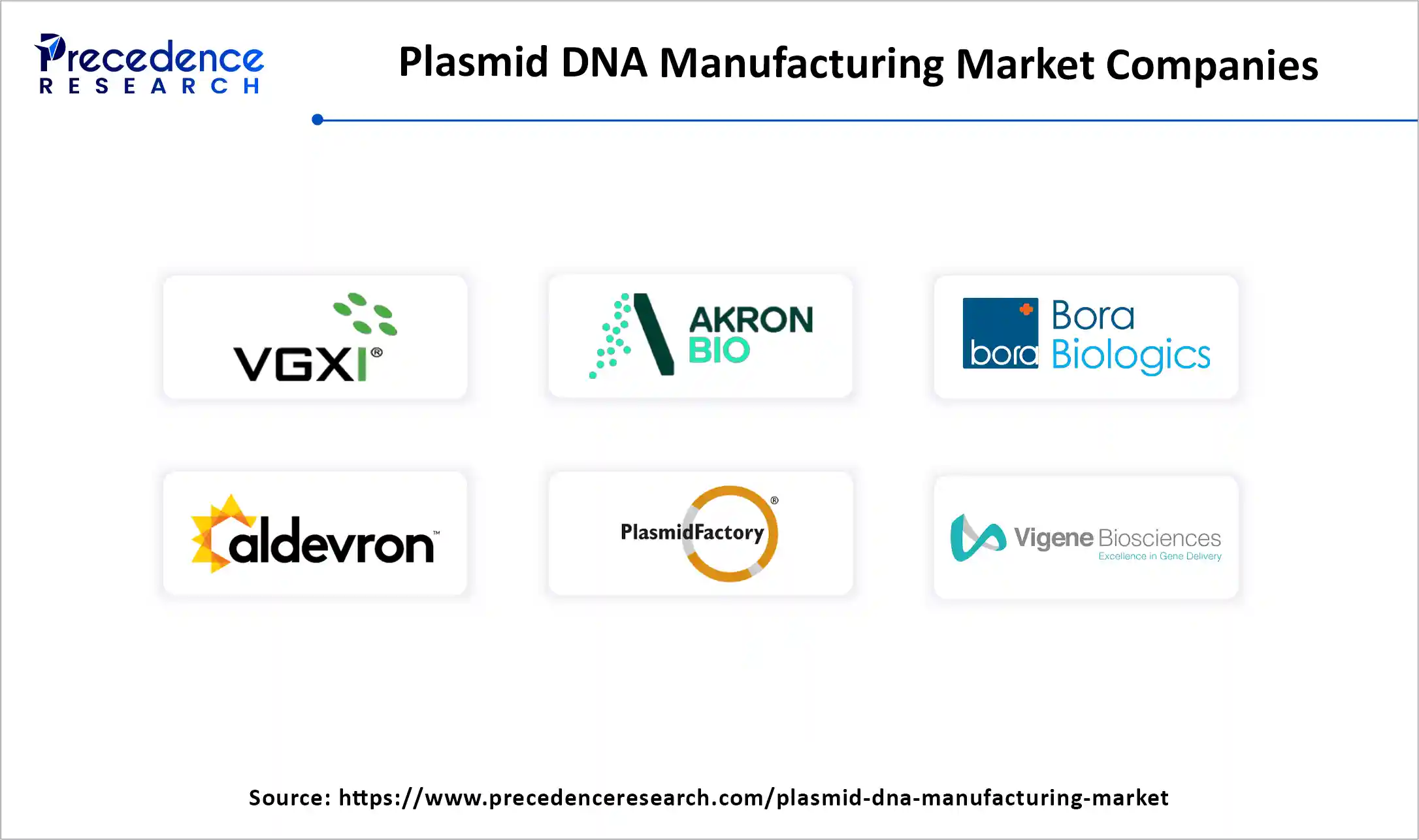
- Aldevron: Aldevron specializes in high-quality, customized, endotoxin-free, as well as supercoiled plasmid production utilizing single-use fermenters, along with proprietary technologies such as the Nanoplasmid platform for gene therapy.
- Plasmidfactory GmbH: PlasmidFactory GmbH mainly specializes in high-purity custom plasmid and minicircle DNA manufacturing, catering to mRNA vaccines, gene therapy, and viral vector production. They provide scalable services from research to GMP grade, using animal-free processes and even specialized quality control, which includes capillary gel electrophoresis.
- Vigene Biosciences: Vigene Biosciences provides end-to-end contract development and manufacturing organization services for plasmid DNA, primarily specializing in both research-grade and cGMP-grade production. Their providing support gene therapies, cell therapies, alongside vaccine development, with an aim on high-quality, purified DNA.
- Luminous Biosciences: Luminous BioSciences provides customized plasmid DNA manufacturing services, thus, ranging from microgram to gram levels for both high- and low-copy plasmids. They fund research and therapeutic development with specialized services which includes lentivirus production, exosome purification, and even protein expression.
Get Sample Link : https://www.precedenceresearch.com/sample/1299
Also Read Our Latest Article : Multiple Sclerosis Therapeutics Market