
The US orthodontics market is experiencing significant growth as consumers increasingly seek advanced solutions to improve dental health and facial aesthetics. Innovations in digital dentistry and growing demand for minimally visible treatment options are transforming the orthodontic landscape.
Increasing adoption of clear aligners, rising spending on cosmetic dentistry, and technological advancements in treatment planning are expected to create substantial growth opportunities over the coming decade.
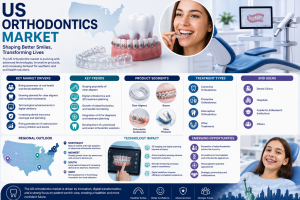
What is the US Orthodontics Market Size?
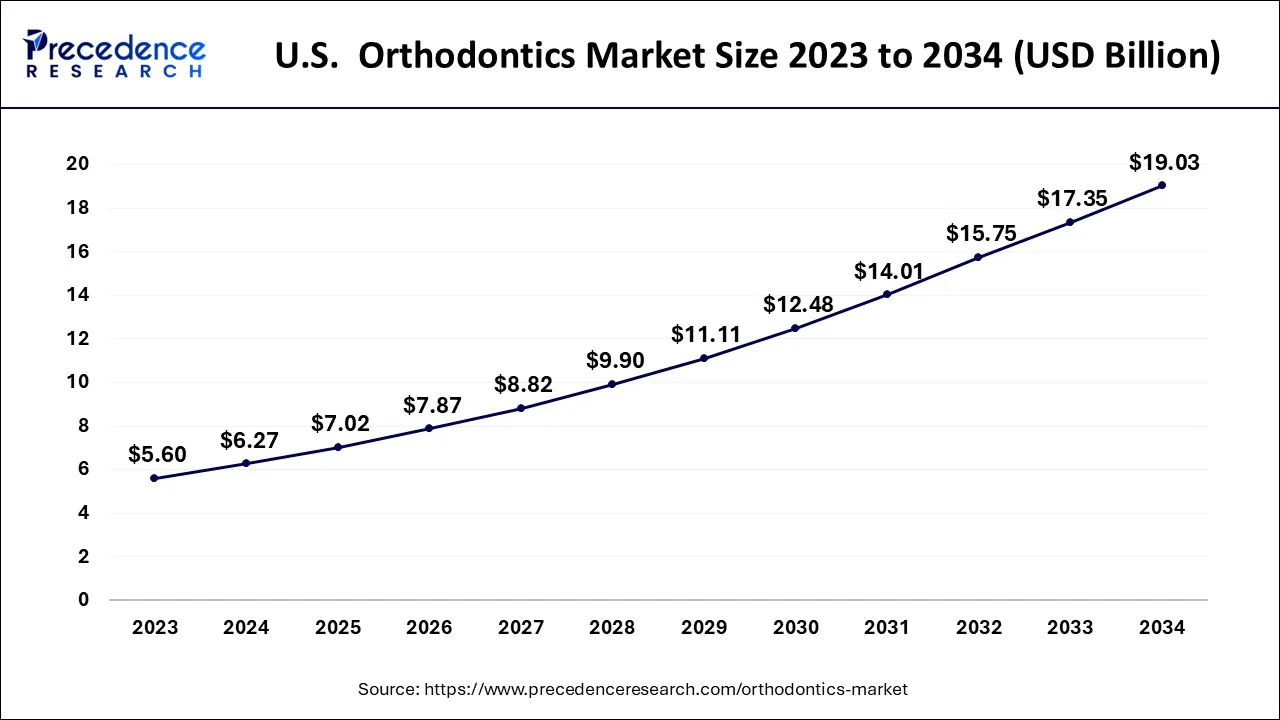
The US orthodontics market size accounted for USD 7.02 billion in 2025 and is predicted to increase from USD 7.87 billion in 2026 to approximately USD 20.63 billion by 2035, expanding at a CAGR of 11.40% from 2026 to 2035. The market is driven by rising demand for clear aligners and cosmetic dental procedures, increasing awareness of oral health, technological advancements in digital orthodontics, and escalating insurance coverage.
Market Highlights
- By product, the supplies segment dominated the market in 2025.
- By product, the instruments segment is expected to grow significantly during the forecast period.
- By end user, the dental clinics segment dominated the market in 2025.
- By end user, the hospitals segment is expected to show lucrative growth during the forecast period.
- By age group, the adults segment held the largest market share in 2025.
- By age group, the children segment is expected to grow at a notable CAGR during the forecast period.
Industry Outlook
The orthodontics industry in the United States has evolved considerably over the past decade, shifting from conventional braces toward more patient-friendly and technologically advanced treatment solutions. Orthodontic care is no longer limited to teenagers, as a growing number of adults are investing in treatments to improve oral health and aesthetics.
The popularity of clear aligners and customized orthodontic devices has changed patient expectations. Consumers are increasingly looking for discreet, comfortable, and convenient treatment options. This shift has encouraged manufacturers and dental service providers to develop innovative products that offer improved precision and shorter treatment durations.
Digital dentistry technologies, including intraoral scanners, 3D printing, and computer-aided treatment planning, are revolutionizing orthodontic procedures. These technologies are enhancing diagnostic accuracy, reducing treatment time, and improving patient outcomes. The integration of digital workflows is also helping dental practices streamline operations and increase efficiency.
Growing awareness regarding oral health, rising disposable income, and expanding access to dental insurance are contributing to market growth. The increasing prevalence of malocclusion and other dental disorders among children and adults is further supporting demand for orthodontic treatment across the country.
Despite favorable growth prospects, treatment costs and limited reimbursement for cosmetic procedures remain challenges. However, ongoing innovation and the expansion of teleorthodontics are expected to make orthodontic care more accessible and affordable.
AI Impact on the US Orthodontics Market
Artificial intelligence is reshaping orthodontics by enabling more accurate diagnosis and personalized treatment planning. AI-powered software can analyze dental images and identify abnormalities with greater precision, helping orthodontists develop customized treatment strategies for individual patients.
Machine learning algorithms are improving the effectiveness of clear aligner therapy by predicting tooth movement and optimizing treatment sequences. These technologies reduce the need for adjustments and improve patient satisfaction.
AI-driven imaging systems and digital treatment platforms are streamlining clinical workflows. Orthodontists can now monitor treatment progress remotely and make real-time modifications, improving efficiency and reducing the number of in-office visits.
The emergence of AI-enabled teleorthodontics and virtual consultations is expanding access to orthodontic services. As digital technologies continue to advance, artificial intelligence is expected to become a critical component of next-generation orthodontic care.
Key Market Trends
- Increasing adoption of clear aligners and invisible orthodontic treatments.
- Growing popularity of cosmetic dentistry among adults.
- Rising use of 3D printing and digital treatment planning technologies.
- Expansion of teleorthodontics and remote patient monitoring.
- Integration of artificial intelligence in diagnosis and treatment planning.
- Increasing demand for customized orthodontic appliances.
- Growing investments in digital dentistry infrastructure.
- Rising awareness regarding preventive oral healthcare.
- Development of smart braces and connected orthodontic devices.
- Increasing collaboration between dental clinics and technology companies.
Market Scope
| Report Coverage | Details |
| Market Size in 2025 | USD 7.02 Billion |
| Market Size in 2026 | USD 7.87 Billion |
| Market Size by 2035 | USD 20.63 Billion |
| Growth Rate from 2026 to 2035 | CAGR of 11.40% |
| Base Year | 2025 |
| Forecast Period | 2026 to 2035 |
| Segments Covered | Product, Age Group, and End User |
Market Dynamics
Drivers
Increased Demand for Aesthetic Dentistry
An increasing awareness of both dental appearance and the aesthetics of the face has driven the high rate of demand for orthodontic treatments. New treatment options such as clear aligners, adult orthodontics, and less visible braces also contribute to the high demand for orthodontic services. Additionally, growing disposable income and social media activity are both contributing factors to the market.
Restraint
High Costs of Treatment and Limited Insurance Reimbursement
Most individuals who require orthodontics will incur significant expenditures for their orthodontics. Advanced aligner system costs and long-term treatment durations result in a majority of patients incurring out-of-pocket expenses. Many dental insurance plans only provide limited orthodontic coverage, resulting in high out-of-pocket costs for most patients. When a patient has no dental insurance or doesn’t have enough income to afford their orthodontics, they will likely not pursue orthodontics.
Opportunity
Expansion of the Digital Orthodontics and use of AI
The use of AI with digital technology, including 3D imaging and remote patient monitoring, provides an excellent growth opportunity for the market. Digital technology enables a more precise treatment plan for the patient and provides added convenience. Additionally, increased investments to further advance digital dental technology will lead to additional advancements in the market.
Segment Insights
By Product
Clear aligners represent one of the fastest-growing segments of the U.S. orthodontics market. Their discreet appearance, improved comfort, and shorter treatment times have made them highly popular among teenagers and adults. Traditional braces continue to maintain a significant share due to their effectiveness in treating complex orthodontic conditions.
By Age Group
Teenagers account for a considerable portion of orthodontic procedures because early treatment helps prevent long-term dental complications. However, the adult segment is witnessing rapid growth, driven by increasing awareness of cosmetic dentistry and greater acceptance of orthodontic treatment among working professionals.
By End User
Dental clinics dominate the market owing to the widespread availability of specialized orthodontic services and advanced treatment technologies. Hospitals and academic institutions also contribute to market growth through research activities and the treatment of complex dental cases.
By Treatment Type
Corrective orthodontics continues to account for a major share of the market due to the high prevalence of malocclusion and alignment issues. Preventive and interceptive orthodontics are gaining importance as patients and healthcare providers focus on early intervention and long-term oral health management.
Competitive Landscape
Competition in the U.S. orthodontics market is characterized by rapid technological innovation and strong focus on patient-centric treatment solutions. Leading companies are investing heavily in digital platforms, advanced materials, and AI-powered treatment planning technologies to strengthen their market positions.
Manufacturers are increasingly introducing customized clear aligners, smart orthodontic devices, and integrated digital solutions. These innovations are helping orthodontists improve treatment accuracy while enhancing patient comfort and convenience.
Strategic acquisitions and partnerships are becoming common as companies seek to expand their product portfolios and strengthen distribution networks. Investments in research and development are also accelerating the commercialization of next-generation orthodontic technologies.
The emergence of teleorthodontics and remote monitoring solutions is intensifying competition. Companies that successfully combine digital technologies with personalized patient care are expected to gain a competitive advantage during the forecast period.
Leading Companies in the Market
- Align Technology, Inc.
- Henry Schein, Inc.
- Dentsply Sirona Inc.
- 3M Company
- Ormco Corporation
- American Orthodontics
- Rocky Mountain Orthodontics
- Envista Holdings Corporation
- Straumann Group
- Institut Straumann AG
- TP Orthodontics, Inc.
- G&H Orthodontics
- SmileDirectClub
- ClearCorrect
- Angelalign Technology Inc.
Get Sample Link : https://www.precedenceresearch.com/sample/8508
Recent Developments
- In May 2026, Medit announced the creation of its global Orthodontic Business Division and acquired Progressive Orthodontics to strengthen its presence in digital orthodontics. The initiative combines Medit’s 3D scanning and AI-powered software capabilities with orthodontic education and training, supporting the adoption of fully digital treatment workflows worldwide.
- In April 2026, LightForce launched LightBracket Metal™, the first patient-specific 3D-printed metal bracket designed from individual treatment plans. The innovation expands personalized orthodontic care by offering customized brackets for each tooth, aiming to improve treatment precision, efficiency, and patient outcomes compared with conventional braces.
Also Read Our Latest Article : mRNA Therapeutics Market