
The global hospital acquired infection control market is experiencing remarkable growth as healthcare systems worldwide intensify efforts to reduce healthcare-associated infections (HAIs). Rising patient awareness, stringent government regulations, and increasing investments in advanced sterilization technologies are significantly accelerating market expansion.
Hospital-acquired infections remain a major challenge for healthcare providers, leading to prolonged hospital stays, increased treatment costs, and higher mortality risks. As hospitals and healthcare facilities prioritize patient safety and hygiene, demand for infection prevention technologies continues to rise globally.
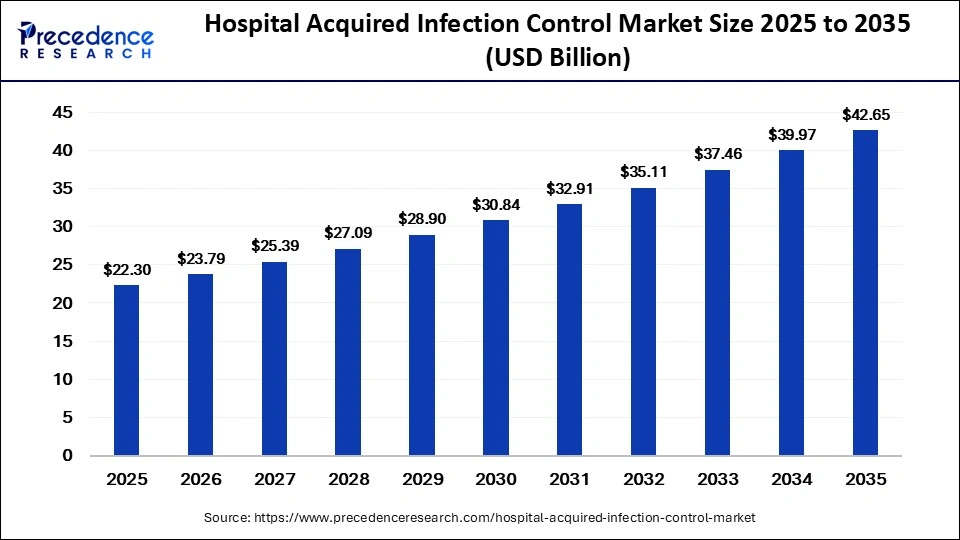
According to industry estimates, the global hospital acquired infection control market size was valued at USD 22.30 billion in 2025 and is expected to increase from USD 23.79 billion in 2026 to approximately USD 42.65 billion by 2035, growing at a CAGR of 6.70% during the forecast period.
Read Also: Breast Lesion Localization Methods Market
Market Overview
Hospital acquired infection control refers to the systems, technologies, products, and services used to prevent infections within healthcare environments. These solutions include sterilization equipment, disinfectants, personal protective equipment (PPE), hand hygiene products, air filtration systems, and infection surveillance technologies.
Healthcare-associated infections such as surgical site infections (SSIs), bloodstream infections, urinary tract infections (UTIs), and ventilator-associated pneumonia (VAP) continue to affect millions of patients globally. Increasing surgical procedures and growing hospital admissions are further fueling the need for advanced infection prevention systems.
The market is also benefiting from technological advancements such as AI-powered infection monitoring systems, UV-C sterilization robots, and automated disinfection equipment.
Key Market Drivers
Rising Incidence of Healthcare-Associated Infections
The growing prevalence of HAIs is one of the primary factors driving market growth. According to healthcare reports, infections acquired during hospitalization significantly increase healthcare costs and patient morbidity worldwide.
Healthcare providers are increasingly adopting stringent infection prevention protocols to reduce contamination risks and improve patient outcomes.
Increasing Number of Surgical Procedures
The rising number of invasive surgeries and medical procedures globally has elevated the risk of infection transmission. Hospitals and ambulatory surgical centers are therefore investing heavily in sterilization and disinfection technologies.
Surgical site infections represented approximately 28.7% of the market share in 2025, making them one of the leading infection categories driving industry demand.
Growing Awareness About Hygiene and Patient Safety
The COVID-19 pandemic transformed global healthcare hygiene standards, significantly increasing awareness regarding hospital sanitation and infection prevention.
Hospitals are now implementing advanced cleaning protocols, antimicrobial surface technologies, and automated disinfection systems to maintain safer healthcare environments.
Technological Advancements Fueling Market Growth
Rapid innovation in sterilization and infection monitoring technologies is creating strong growth opportunities for the industry.
Adoption of UV-C Disinfection Robots
Healthcare facilities are increasingly adopting UV-C light sterilization systems capable of eliminating harmful pathogens from hospital rooms and operating theaters with minimal human intervention.
AI-Based Infection Surveillance Systems
Artificial intelligence is playing a growing role in infection prevention. AI-powered monitoring systems can identify contamination risks, monitor hygiene compliance, and provide predictive analytics to reduce outbreaks.
Automated Sterilization Equipment
Modern washer-disinfectors and sterilization systems are improving workflow efficiency and reducing manual contamination risks in hospitals and laboratories.
In March 2024, Getinge introduced the Aaudis Index washer-disinfector designed to improve sterilization traceability and operational efficiency in healthcare facilities.
Market Restraints
High Cost of Advanced Infection Control Technologies
Despite strong market potential, the high cost associated with sophisticated sterilization systems and automated disinfection equipment remains a significant challenge, particularly for small healthcare facilities and developing economies.
Budget constraints often limit the adoption of advanced infection prevention infrastructure.
Shortage of Skilled Professionals
Effective infection control requires properly trained healthcare workers. The lack of skilled personnel capable of operating advanced sterilization systems and implementing infection prevention protocols may hinder market growth.
Emerging Market Opportunities
Growth in Emerging Economies
Developing countries such as India, China, Brazil, and Southeast Asian nations are witnessing rapid healthcare infrastructure expansion, creating lucrative opportunities for infection control solution providers.
Rising healthcare expenditure and increasing awareness regarding hospital-acquired infections are accelerating adoption rates across these regions.
India is emerging as a high-growth market due to the increasing prevalence of hospital-associated drug-resistant infections and growing government focus on hospital hygiene standards.
Sustainable Infection Control Solutions
Healthcare facilities are increasingly seeking eco-friendly disinfection and sterilization technologies that reduce energy consumption and chemical waste.
Manufacturers are focusing on developing sustainable infection control systems to meet environmental compliance standards.
Market Trends
Increasing Demand for Disposable Medical Products
The demand for single-use medical consumables such as gloves, masks, gowns, syringes, and sterilization wraps is growing rapidly due to their effectiveness in reducing cross-contamination risks.
The consumables segment held approximately 50% market share in 2025, making it the largest component category.
Expansion of Infection Control Services
Healthcare providers are increasingly outsourcing infection control services, including sterilization consulting, equipment maintenance, and compliance management.
The services segment is expected to witness significant growth during the forecast period as hospitals seek specialized expertise.
Focus on Real-Time Monitoring Technologies
Real-time infection monitoring systems are becoming increasingly popular in healthcare settings. These technologies enable hospitals to track contamination levels and improve hygiene compliance more efficiently.
Segment Analysis
By Component
Consumables Segment Dominates
The consumables segment accounted for the largest market share due to continuous demand for disinfectants, PPE kits, sterilization products, and hygiene consumables.
Equipment Segment Shows Strong Growth Potential
Advanced sterilization and disinfection equipment, including automated washer-disinfectors and UV sterilization systems, are witnessing increased adoption across hospitals and healthcare facilities.
By End-Use
Hospitals and ICUs Lead the Market
Hospitals and intensive care units represented nearly 60% of the market share in 2025 due to higher patient volumes and increased infection risks associated with critical care environments.
Ambulatory Surgical Centers Expanding Rapidly
The growing number of outpatient surgical procedures is driving infection control investments in ambulatory surgical centers globally.
Regional Analysis
North America
North America dominated the global hospital acquired infection control market with approximately 36% market share in 2025. Advanced healthcare infrastructure, strict regulatory frameworks, and high healthcare spending are major growth drivers in the region.
The United States remains the largest contributor due to rising HAI cases and rapid adoption of automated infection control technologies.
Europe
Europe is witnessing substantial growth due to increasing investments in healthcare safety, infection prevention regulations, and advanced sterilization technologies.
Countries such as Germany, France, and the United Kingdom are actively implementing stricter hospital hygiene protocols.
Asia Pacific
Asia Pacific is expected to register the fastest CAGR of nearly 7% during the forecast period.
Rapid healthcare infrastructure development, rising hospital admissions, and growing awareness regarding infection prevention are fueling market growth across China, India, Japan, and Southeast Asia.
Competitive Landscape
The hospital acquired infection control market is highly competitive, with companies focusing on technological innovation, strategic acquisitions, partnerships, and product launches to strengthen their market positions.
Key Companies in the Market
Several major players are operating in the industry, including:
- 3M
- STERIS
- Getinge
- Ecolab
- Belimed
- Midmark Corporation
- Cardinal Health
- Becton, Dickinson and Company
- Advanced Sterilization Products
Get Sample Link: https://www.precedenceresearch.com/sample/8400
For inquiries regarding discounts, bulk purchases, or customization requests, please contact us at [email protected]