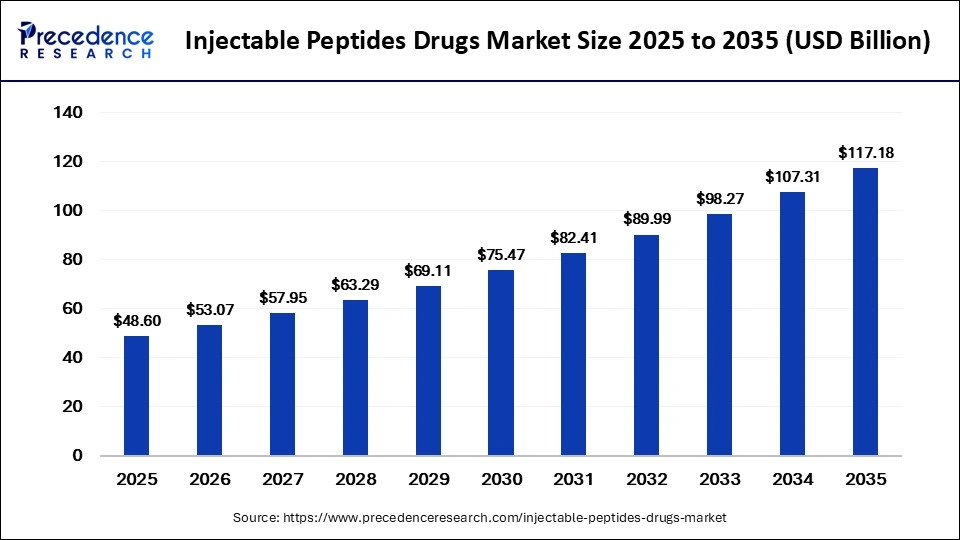
The global injectable peptides drugs market is projected to reach USD 117.18 billion by 2035, growing at a CAGR of 9.2%. Explore key trends, drivers, segmentation, and future opportunities.
Read Also: In Vivo CAR-T Therapy Market
Injectable Peptides Drugs Market: Revolutionizing Chronic Disease Treatment Through Precision Therapeutics
Introduction: The New Era of Peptide-Based Medicine
Injectable peptide drugs are transforming the pharmaceutical industry by offering highly targeted, biologically active therapies for chronic and complex diseases. These drugs, made from short chains of amino acids, are increasingly being used to treat conditions such as diabetes, obesity, cancer, endocrine disorders, and cardiovascular diseases.
Unlike traditional small-molecule drugs, peptide therapeutics are designed to closely mimic natural biological processes, providing improved efficacy and reduced side effects. As healthcare systems worldwide shift toward personalized and precision medicine, injectable peptides are becoming one of the fastest-growing therapeutic categories in the biopharmaceutical sector.
The growing success of GLP-1 receptor agonists in obesity and diabetes management has further accelerated market momentum, positioning peptide-based therapeutics at the center of modern drug innovation.
Market Overview: Strong Growth Driven by Metabolic and Chronic Disease Therapies
The global injectable peptides drugs market was valued at USD 48.60 billion in 2025 and is projected to grow from USD 53.07 billion in 2026 to approximately USD 117.18 billion by 2035, expanding at a CAGR of 9.20% during the forecast period.
The market’s rapid growth is being fueled by:
- Rising prevalence of diabetes and obesity
- Increasing demand for biologics and targeted therapies
- Advancements in peptide synthesis technologies
- Expansion of home-based injectable treatments
- Growing investments in biotechnology and pharmaceutical R&D
The pharmaceutical industry is increasingly focusing on peptide therapeutics because of their strong therapeutic potential and ability to target specific receptors with high precision.
Understanding Injectable Peptide Drugs
Peptides are naturally occurring biological molecules composed of amino acids. Injectable peptide drugs are synthetic or modified peptides administered through subcutaneous or intravenous injections to regulate physiological processes in the body.
These drugs are widely used for:
- Blood glucose regulation
- Weight management
- Hormonal therapies
- Cancer treatment
- Gastrointestinal disease management
- Cardiovascular risk reduction
Injectable peptides offer several advantages compared to conventional pharmaceuticals:
Key Benefits
- High receptor specificity
- Lower toxicity levels
- Reduced risk of off-target effects
- Enhanced biological activity
- Better compatibility with human physiology
These benefits make peptide drugs highly attractive for long-term disease management and personalized medicine applications.
Key Market Trends
1. Rapid Expansion of GLP-1 Receptor Agonists
GLP-1 receptor agonists have become one of the most influential therapeutic classes in the pharmaceutical industry. These drugs are widely used for:
- Type 2 diabetes treatment
- Obesity management
- Appetite suppression
- Cardiovascular risk reduction
The GLP-1 receptor agonists segment accounted for approximately 30% of market share in 2025 and is projected to witness the fastest CAGR of 14.5% during the forecast period.
The global rise in obesity and metabolic disorders has significantly increased demand for peptide-based weight-loss therapies, making this segment one of the strongest growth engines in the market.
2. Rising Prevalence of Diabetes and Obesity
The diabetes & obesity management segment dominated the market with a 45% revenue share in 2025.
Modern lifestyle changes, sedentary behavior, unhealthy diets, and aging populations are contributing to a sharp increase in metabolic disorders worldwide. Injectable peptide drugs have emerged as highly effective treatment options due to their ability to:
- Improve insulin sensitivity
- Regulate blood sugar levels
- Support sustainable weight loss
- Reduce long-term complications
The growing burden of chronic diseases continues to strengthen market demand.
3. Advancements in Peptide Engineering and Drug Delivery
Technological innovations are significantly improving the performance and commercial viability of peptide therapeutics.
Major Advancements Include:
- Long-acting peptide formulations
- Sustained-release injectable systems
- Enhanced peptide stability technologies
- Conjugated and modified peptide structures
- Improved manufacturing and purification methods
These innovations are enabling pharmaceutical companies to develop more patient-friendly therapies with improved treatment adherence.
4. Shift Toward Homecare and Self-Administration
Subcutaneous injections accounted for approximately 70% of market share in 2025, making them the dominant route of administration.
Patients increasingly prefer therapies that can be self-administered at home because they offer:
- Greater convenience
- Reduced hospital dependency
- Improved treatment continuity
- Lower healthcare costs
This trend is accelerating the development of easy-to-use injectable devices and auto-injector systems.
5. Digital Healthcare and Online Pharmacy Expansion
Online pharmacies are expected to register the fastest CAGR of 13.5% during the forecast period.
The growth of:
- Telemedicine
- E-prescriptions
- Digital healthcare ecosystems
is improving patient access to peptide-based therapies worldwide.
Healthcare providers are increasingly integrating digital monitoring tools with peptide treatment plans to improve long-term disease management outcomes.
Market Dynamics
Market Drivers
Growing Demand for Precision Medicine
Precision medicine focuses on delivering highly targeted therapies tailored to individual patient needs. Injectable peptides align perfectly with this trend due to their receptor-specific mechanisms and reduced systemic side effects.
Increasing Investments in Biopharmaceutical Research
Pharmaceutical and biotechnology companies are heavily investing in peptide drug development, particularly in areas such as:
- Obesity therapeutics
- Oncology
- Hormonal disorders
- Metabolic diseases
The success of next-generation peptide therapies is attracting strong investor interest globally.
Expansion of Biologics Manufacturing
Advancements in biologics manufacturing technologies are improving production scalability and reducing development timelines for peptide therapeutics.
Growing Aging Population
The rising elderly population is increasing demand for treatments targeting:
- Diabetes
- Cardiovascular diseases
- Hormonal deficiencies
- Chronic metabolic disorders
This demographic trend is expected to remain a major long-term growth driver.
Market Challenges
High Manufacturing Costs
Peptide synthesis involves complex manufacturing and purification processes, increasing production costs significantly.
Developing stable and commercially viable peptide formulations requires advanced technologies and strict quality control systems.
Storage and Stability Concerns
Many peptide drugs require:
- Refrigerated storage
- Controlled transportation environments
- Strict handling procedures
These requirements can increase supply chain complexity and operational costs.
Regulatory and Approval Challenges
Peptide therapeutics must undergo rigorous regulatory review processes related to:
- Safety
- Efficacy
- Long-term clinical outcomes
Regulatory complexities can increase development timelines and commercialization costs.
Emerging Concerns Around Unregulated Peptide Usage
While clinically approved peptide therapeutics are experiencing strong growth, healthcare experts are also raising concerns about the rise of unregulated peptides sold online and promoted through social media platforms.
Medical professionals warn that many non-approved peptide products may involve:
- Contamination risks
- Incorrect dosing
- Lack of clinical validation
- Potential long-term health complications
This issue is increasing regulatory scrutiny around peptide distribution and consumer safety.
Regional Insights
North America – Dominant Region
North America accounted for approximately 40% of global market share in 2025 due to:
- High obesity prevalence
- Strong healthcare infrastructure
- Advanced pharmaceutical industry presence
- Rapid adoption of biologics
The United States remains the largest contributor to regional growth.
Asia Pacific – Fastest Growing Region
Asia Pacific is projected to grow at the fastest CAGR of 11.5% during the forecast period.
Growth Drivers Include:
- Expanding healthcare access
- Rising chronic disease prevalence
- Growing middle-class population
- Increasing healthcare investments
Countries such as China, India, Japan, and South Korea are witnessing rapid market expansion.
Europe
Europe continues to experience stable growth driven by:
- Strong biotechnology ecosystems
- Advanced healthcare systems
- Growing focus on personalized medicine
Future Outlook: The Next Generation of Peptide Therapeutics
The injectable peptides drugs market is entering a transformative phase fueled by innovation in biotechnology and precision medicine.
Key Future Trends
- Development of ultra-long-acting peptide drugs
- AI-driven peptide discovery platforms
- Advanced biologics manufacturing systems
- Personalized peptide therapeutics
- Expansion of obesity and metabolic disease therapies
The future of peptide therapeutics will likely focus on improving:
- Patient convenience
- Drug stability
- Treatment personalization
- Manufacturing efficiency
Conclusion
The injectable peptides drugs market is becoming one of the most dynamic and strategically important segments of the pharmaceutical industry. Rising chronic disease prevalence, increasing demand for precision therapeutics, and rapid advances in biotechnology are accelerating global market growth.
With the market projected to reach USD 117.18 billion by 2035, injectable peptide therapies are expected to play a critical role in shaping the future of healthcare and personalized medicine.
As innovation continues to accelerate, the industry will increasingly focus on:
- Advanced biologics development
- Long-acting therapies
- Patient-centered treatment models
- Safe and scalable peptide manufacturing
The future of medicine is moving toward targeted therapeutic precision—and injectable peptide drugs are leading that transformation.
Get Sample Copy: https://www.precedenceresearch.com/sample/8384
For inquiries regarding discounts, bulk purchases, or customization requests, please contact us at sales@precedenceresearch.com