
The global inpatient services market size was valued at USD 3.20 trillion in 2025 and is projected to grow from USD 3.39 trillion in 2026 to approximately USD 5.68 trillion by 2035, registering a CAGR of 5.90% from 2026 to 2035. Rising hospitalization rates, the growing prevalence of chronic diseases, and increasing demand for specialized medical care are driving long-term market expansion.
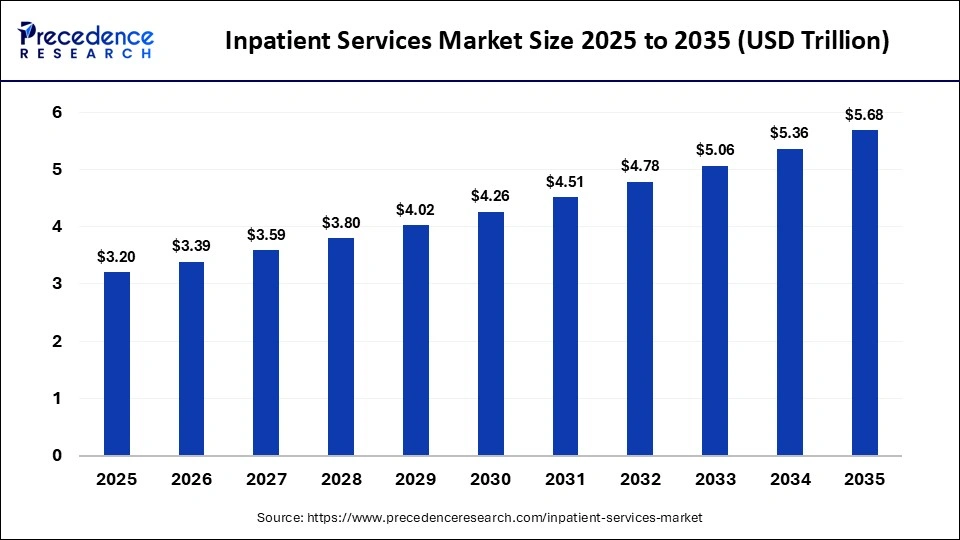
Inpatient services remain a vital component of healthcare systems worldwide, particularly for patients requiring surgery, emergency interventions, childbirth, mental health care, intensive monitoring, and long-term treatment. Hospitals across emerging economies are rapidly expanding capacity, while developed regions continue investing in digital integration, personalized care, and advanced treatment infrastructure.
Read Also: Nursing Homes and Long-Term Care Facilities Market
Quick Insights
- North America led the global inpatient services market with a 38% revenue share in 2025.
- Asia Pacific is projected to expand at the fastest CAGR of 7.5% through 2035.
- Medical treatment services accounted for the largest service share at 30% in 2025.
- General hospitals dominated by facility type with a 55% market share in 2025.
- Emergency admissions accounted for 60% of total admissions in 2025.
- Public insurance remained the largest payer category with a 45% market share in 2025.
- Mental health services are expected to witness the fastest service-type growth at a CAGR of 7.8% during the forecast period.
Market Snapshot
| Metric | Value |
|---|---|
| Market Size 2025 | USD 3.20 Trillion |
| Market Size 2026 | USD 3.39 Trillion |
| Projected Market Size 2035 | USD 5.68 Trillion |
| CAGR (2026-2035) | 5.90% |
| Largest Region | North America |
| Fastest Growing Region | Asia Pacific |
How is AI Reshaping the Inpatient Services Market?
Artificial intelligence is transforming inpatient care delivery by improving clinical workflows, patient management, and hospital efficiency. AI-powered systems are increasingly being used for patient triage, bed allocation, treatment planning, predictive diagnostics, and resource optimization. Hospitals are leveraging AI to automate administrative tasks, reduce documentation burden, and improve care coordination between departments.
AI is also enabling more personalized treatment pathways by analyzing large volumes of patient data in real time. Predictive analytics can identify patients at risk of complications, support earlier intervention, and improve discharge planning. As healthcare providers continue to adopt digital transformation strategies, AI is expected to become a central tool in optimizing inpatient outcomes and reducing operational costs.
What are the Major Growth Drivers in the Inpatient Services Market?
Why is healthcare infrastructure expansion boosting demand?
Rapid development of hospitals, specialty care centers, and advanced diagnostic facilities is improving access to inpatient care globally. Emerging economies are investing heavily in healthcare infrastructure to address rising patient volumes and meet the needs of growing populations.
How are chronic diseases increasing hospitalization rates?
The rising burden of chronic conditions such as cardiovascular disease, diabetes, cancer, respiratory disorders, and kidney disease is significantly increasing the demand for hospital-based care. Patients with complex or long-term illnesses often require inpatient treatment, surgeries, and ongoing monitoring.
Why is the aging population important for the market?
Elderly populations are more susceptible to chronic diseases, mobility issues, and age-related complications that require frequent hospitalization. This demographic trend is creating sustained demand for inpatient services across developed and developing regions.
What Challenges are Limiting Market Growth?
High treatment costs and prolonged hospital stays remain major barriers in the inpatient services market. In many regions, patients face substantial out-of-pocket expenses, especially where insurance penetration is low. Extended hospitalizations can also create emotional and mental strain for both patients and caregivers.
In remote and underserved areas, inadequate healthcare infrastructure and shortages of trained medical professionals continue to limit access to quality inpatient care. These challenges are particularly significant in low-income countries where hospital capacity remains insufficient.
What Opportunities are Emerging in the Inpatient Services Market?
Could mental health inpatient services become a major growth area?
Yes. Mental health services are expected to register the fastest growth among all service categories, with a projected CAGR of 7.8%. Growing awareness of mental health disorders, supportive policies, and increasing demand for inpatient psychiatric care are driving this trend. Patients receiving inpatient mental health treatment often require daily therapy sessions, close supervision, and structured environments for recovery.
Will specialty hospitals continue to gain momentum?
Specialty hospitals are expected to grow at a CAGR of 6.8% through 2035 due to increasing demand for focused care in cardiology, oncology, orthopedics, neurology, and maternity services. These hospitals offer dedicated teams, advanced technology, and specialized treatment programs that improve patient outcomes.
How are elective admissions shaping the future market?
Elective admissions are projected to grow faster than emergency admissions as planned surgeries, chronic disease treatments, and insurance-backed procedures become more common. Better healthcare access and broader insurance coverage are enabling more patients to schedule treatments in advance.
Segment Analysis
Why Did Medical Treatment Services Dominate the Market?
Medical treatment services accounted for 30% of the inpatient services market in 2025. This segment includes hospital-based care for chronic diseases, infections, acute conditions, and general inpatient treatment requiring continuous monitoring and supervision. High patient volumes and the need for comprehensive care continue to support segment dominance.
Surgical services held the second-largest share at 25% in 2025 and are expected to grow steadily due to increasing surgical procedures and advances in medical technology. Meanwhile, mental health services are emerging as the fastest-growing segment due to rising awareness and policy support.
Why Are General Hospitals Leading by Facility Type?
General hospitals held a dominant 55% share of the market in 2025 because they offer a wide range of services across multiple specialties. They remain the primary setting for emergency care, surgeries, maternity services, chronic disease treatment, and intensive care.
Specialty hospitals represented 30% of the market and are expected to expand at the fastest pace as more patients seek specialized treatment in dedicated facilities for oncology, cardiology, orthopedics, and neurological care.
Why Do Emergency Admissions Dominate?
Emergency admissions accounted for 60% of total inpatient admissions in 2025. Accidents, trauma, acute illnesses, cardiac events, and life-threatening conditions continue to drive urgent hospitalization needs. Hospitals are increasingly investing in emergency departments, trauma centers, and rapid-response systems to manage these high-volume cases efficiently.
Regional Outlook
Why Did North America Lead the Market?
North America accounted for 38% of the global inpatient services market in 2025 due to its advanced healthcare infrastructure, high healthcare spending, and strong insurance coverage. The region also benefits from widespread use of advanced technologies, specialist care centers, and highly developed hospital networks.
The United States remains the leading country in the region, supported by growing demand for oncology, cardiology, pediatrics, neurology, and mental health services. The country’s inpatient services market is expected to reach nearly USD 1.65 trillion by 2035.
Why is Asia Pacific Growing the Fastest?
Asia Pacific is projected to witness the fastest growth rate of 7.5% through 2035. Expanding healthcare infrastructure, growing insurance penetration, increasing health awareness, and strong government investments are fueling market growth across countries such as China, India, and Japan.
China remains a major contributor due to ongoing modernization of hospitals, digital healthcare expansion, and government-backed insurance programs that are improving healthcare accessibility.
How is Europe Strengthening its Position?
Europe held a 27% market share in 2025, supported by universal healthcare systems, aging populations, and high demand for specialized care. Countries such as Germany, France, and the UK continue to invest in hospital modernization, chronic disease management, and patient-centered care models.
Leading Companies in the Inpatient Services Market
- HCA Healthcare, Inc.
- Tenet Healthcare Corporation
- Community Health Systems, Inc.
- Universal Health Services, Inc.
- Mayo Clinic
- Cleveland Clinic
- Ascension Health
- Kaiser Permanente
- Fresenius Medical Care AG & Co. KGaA
- Apollo Hospitals Enterprise Ltd.
- Fortis Healthcare Limited
- Ramsay Health Care Limited
- Spire Healthcare Group plc
- Nuffield Health
- IHH Healthcare Berhad
Get Sample Copy: https://www.precedenceresearch.com/sample/8310
For inquiries regarding discounts, bulk purchases, or customization requests, please contact us at sales@precedenceresearch.com