
The global nasal sprays market size was valued at USD 6.50 billion in 2025 and is projected to grow from USD 6.99 billion in 2026 to approximately USD 13.52 billion by 2035, expanding at a CAGR of 7.60% during the forecast period.
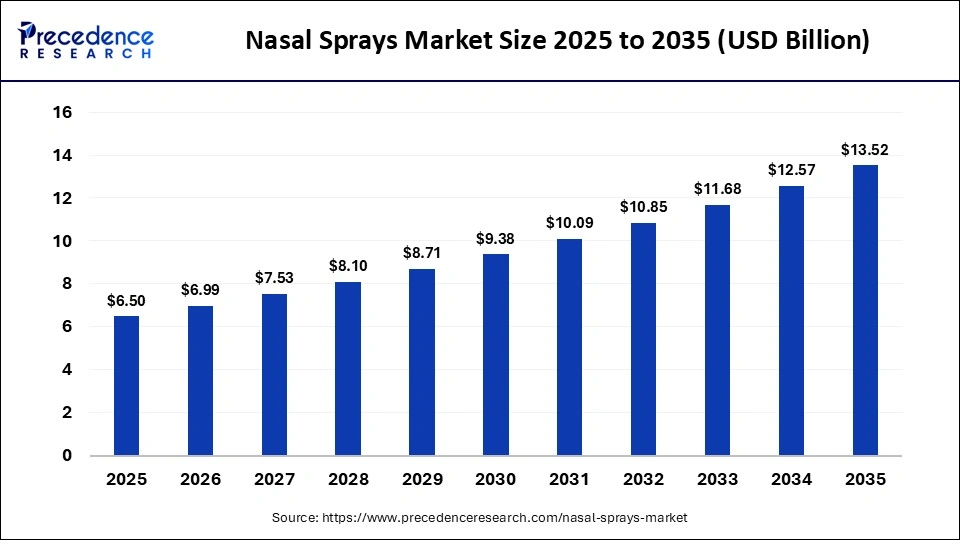
The market is witnessing steady expansion due to the rising prevalence of respiratory conditions such as allergic rhinitis, sinusitis, and common cold. Additionally, the growing preference for non-invasive, fast-acting, and targeted drug delivery systems is significantly boosting demand. The increasing availability of over-the-counter (OTC) nasal sprays and rising pollution levels further accelerate market growth worldwide.
Read Also: Mother and Child Healthcare Market
Quick Insights: What’s Driving the Market?
- The nasal sprays market reached USD 6.50 billion in 2025 and is expected to hit USD 13.52 billion by 2035, reflecting strong global demand.
- North America dominated the market with a 40% share in 2025, supported by advanced healthcare infrastructure.
- Prescription nasal sprays led the product segment with 58% market share.
- Allergic rhinitis accounted for the largest application share at 50%.
- Retail pharmacies dominated distribution channels with 40% share.
- Adults represented the largest end-user group with 65% share.
Market Snapshot: Revenue Overview
| Metric | Value |
|---|---|
| Market Size 2025 | USD 6.50 Billion |
| Market Size 2026 | USD 6.99 Billion |
| Market Size 2035 | USD 13.52 Billion |
| CAGR (2026–2035) | 7.60% |
| Leading Region | North America |
How is Artificial Intelligence Transforming the Nasal Sprays Market?
Artificial intelligence is playing a critical role in optimizing the nasal sprays market by improving drug formulation, manufacturing efficiency, and supply chain operations. AI-enabled systems are increasingly used for quality assurance, ensuring precise dosing and consistency in nasal spray delivery systems. Automation technologies also reduce production errors and enhance product reliability.
Moreover, AI-driven research is accelerating the development of high-bioavailability intranasal therapies, enabling more effective treatment of respiratory and neurological conditions. These advancements are paving the way for innovative drug delivery systems that offer faster therapeutic action and improved patient compliance.
What Are the Key Growth Drivers of the Nasal Sprays Market?
The market is primarily driven by the rising prevalence of respiratory diseases, including allergies, asthma, and chronic sinusitis. Increasing urbanization and pollution levels are significantly contributing to respiratory disorders, thereby boosting demand for nasal sprays.
Additionally, the growing preference for self-medication and OTC products is expanding market reach. Consumers increasingly favor nasal sprays due to their convenience, rapid action, and ease of use compared to oral medications or injections.
Technological advancements in spray pumps and drug delivery mechanisms are also enhancing product effectiveness and user experience, further driving adoption across diverse patient groups.
What Opportunities and Trends Are Shaping the Market?
Why is OTC Nasal Spray Demand Increasing Rapidly?
The availability of OTC nasal sprays allows consumers to manage symptoms without prescriptions, making them highly accessible. This trend is particularly strong in urban areas where consumers seek quick relief solutions.
How is Urbanization Impacting Market Growth?
Rapid urbanization and increasing pollution levels are leading to higher incidences of respiratory conditions, significantly boosting demand for nasal sprays.
What Role Do Advanced Drug Delivery Systems Play?
Innovations in nasal spray technology, including precision dosing and user-friendly designs, are improving treatment outcomes and driving widespread adoption.
Segmental Analysis: Deep Market Breakdown
Why Do Prescription Nasal Sprays Dominate the Market?
The prescription nasal sprays segment held the largest market share of 58% in 2025, driven by the increasing prevalence of chronic respiratory conditions such as sinusitis, allergic rhinitis, and nasal polyps. These sprays, including corticosteroids and antihistamines, offer long-term therapeutic benefits and are widely recommended by healthcare professionals.
Meanwhile, OTC nasal sprays are gaining traction due to their convenience and growing consumer preference for self-treatment solutions.
Why is Allergic Rhinitis the Leading Application Segment?
Allergic rhinitis dominated the application segment with a 50% share in 2025, owing to the rising global burden of allergies and environmental pollution. Nasal sprays provide localized and rapid relief, making them highly effective for treating allergy symptoms.
The common cold segment followed with a 30% share, driven by seasonal infections and widespread availability of OTC products.
How Do Distribution Channels Shape Market Dynamics?
Retail pharmacies led the distribution channel segment with a 40% share, supported by strong consumer footfall and accessibility of OTC products.
Online pharmacies are emerging as the fastest-growing segment due to increasing digital adoption, convenience, and availability of discounts. Hospitals and clinics continue to play a crucial role in prescribing and administering specialized nasal spray treatments.
Why Do Adults Represent the Largest End-User Segment?
The adult segment accounted for 65% of the market share in 2025, driven by higher exposure to environmental pollutants and increased prevalence of respiratory conditions.
Pediatric demand is also rising due to increasing respiratory infections among children, while the geriatric population continues to require long-term treatment solutions.
Regional Analysis: Where is the Market Growing Fastest?
North America dominates the global nasal sprays market with a 40% share, driven by high healthcare spending, advanced medical infrastructure, and strong presence of pharmaceutical companies.
Europe holds the second-largest share, supported by strong regulatory frameworks and high awareness of respiratory treatments.
Asia-Pacific is expected to witness the fastest growth due to increasing pollution levels, rising healthcare awareness, and expanding access to medical facilities in emerging economies.
Competitive Landscape: Leading Companies
The nasal sprays market is highly competitive, with major players focusing on innovation and product development:
- GlaxoSmithKline plc
- Pfizer Inc.
- Johnson & Johnson
- Merck & Co., Inc.
- Novartis AG
- Bayer AG
- Sanofi S.A.
- Teva Pharmaceutical Industries Ltd.
- Mylan N.V.
- Reckitt Benckiser Group plc
- Cipla Limited
- AstraZeneca plc
- Hikma Pharmaceuticals
- Allergan, Inc.
- Abbott Laboratories
Recent Developments
- In March 2026, Glenmark Pharmaceuticals received FDA approval for Fluticasone Propionate Nasal Spray (OTC), expanding access to allergy treatments in the U.S.
- Increasing R&D investments are driving innovation in combination therapies and advanced delivery systems.
Challenges: What Could Restrain Market Growth?
Despite strong growth, the market faces challenges such as overuse of decongestant sprays, potential side effects, and regulatory complexities. Additionally, pricing pressures from generic products may impact profit margins for manufacturers.
Case Study: Intranasal Drug Delivery Innovation
A notable advancement in the market is the development of intranasal therapies for systemic drug delivery, including vaccines and CNS treatments. These innovations eliminate the need for injections, improving patient comfort and compliance while ensuring faster drug absorption.
Conclusion: A Rapidly Evolving Healthcare Segment
The nasal sprays market is poised for sustained growth, driven by increasing respiratory disorders, technological advancements, and rising consumer preference for non-invasive treatments. With strong innovation pipelines and expanding global access, the market is set to play a crucial role in the future of respiratory healthcare.
Get Sample Copy: https://www.precedenceresearch.com/sample/8279
For inquiries regarding discounts, bulk purchases, or customization requests, please contact us at [email protected]