
The global mother and child healthcare market size was valued at USD 62.50 billion in 2025 and is projected to grow from USD 66.75 billion in 2026 to approximately USD 120.67 billion by 2035, expanding at a CAGR of 6.80% during the forecast period. The market is witnessing steady growth, fueled by increasing awareness regarding maternal and infant health, rising adoption of advanced healthcare technologies, and strong government initiatives aimed at reducing maternal and child mortality rates.
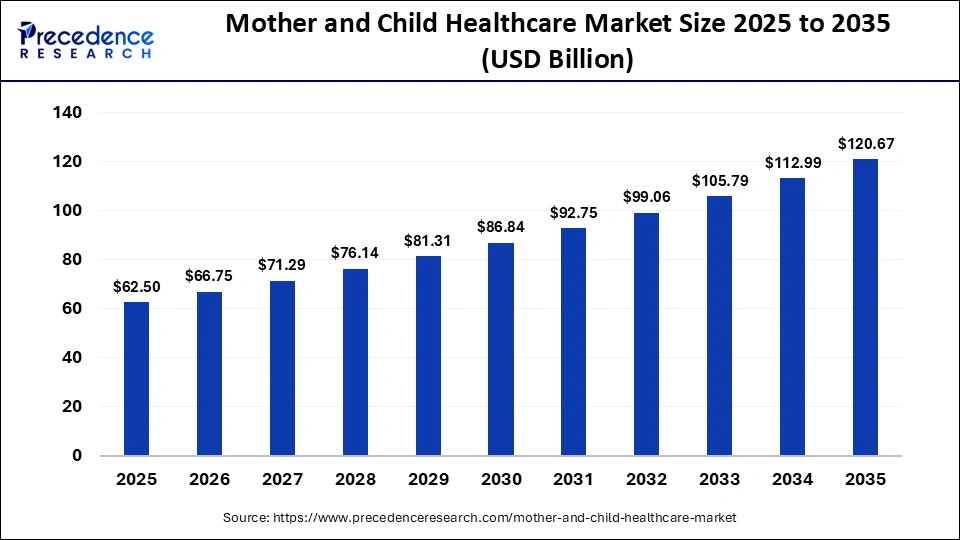
The expansion of specialized maternity services, increasing demand for pediatric healthcare products, and the growing integration of telemedicine and digital monitoring tools are reshaping the healthcare ecosystem. Moreover, rising disposable incomes and consumer spending on premium baby care products are further accelerating the market trajectory.
Read Also: Green Hospitals Market
Quick Insights: What Defines the Market Landscape?
- The mother and child healthcare market reached USD 62.50 billion in 2025 and is expected to surpass USD 120.67 billion by 2035, reflecting steady expansion across global healthcare systems.
- North America dominated the market with a 38% share in 2025, supported by advanced healthcare infrastructure and strong insurance systems.
- Child healthcare products emerged as the leading product segment, contributing 47% of total market revenue in 2025.
- Neonatal care accounted for the largest application share at 30%, highlighting the critical demand for early-life medical interventions.
- Retail distribution channels dominated with 55% market share, driven by accessibility and frequent consumer purchases.
- Hospitals remained the leading end-user segment, holding 40% of the market share, owing to their central role in childbirth and neonatal care.
Market Snapshot: Revenue Overview
| Metric | Value |
|---|---|
| Market Size 2025 | USD 62.50 Billion |
| Market Size 2026 | USD 66.75 Billion |
| Market Size 2035 | USD 120.67 Billion |
| CAGR (2026–2035) | 6.80% |
| Leading Region | North America |
How is Artificial Intelligence Transforming Mother and Child Healthcare?
Artificial intelligence is emerging as a transformative force in maternal and child healthcare by enabling predictive diagnostics and real-time monitoring. AI-powered tools are increasingly being used to analyze patient data, detect pregnancy-related risks, and provide early intervention strategies, especially in high-risk pregnancies. These technologies help reduce complications by offering timely alerts and personalized treatment plans.
Furthermore, AI-driven healthcare ecosystems are improving accessibility in low-resource settings. Advanced machine learning models can assess maternal health conditions using basic medical data, allowing healthcare providers to deliver effective care even in remote areas. Strategic collaborations, such as AI initiatives backed by global health organizations, are accelerating innovation in prenatal and neonatal care, significantly improving health outcomes worldwide.
What Are the Key Growth Drivers of the Market?
The market growth is primarily driven by a combination of demographic, technological, and policy-related factors. Increasing awareness regarding maternal nutrition, prenatal monitoring, and child healthcare is encouraging early adoption of healthcare services. Government initiatives across emerging and developed economies are playing a crucial role in improving access to quality care.
Additionally, the rise in fertility treatments, growing demand for specialized neonatal care, and expansion of private healthcare infrastructure are contributing to sustained market growth. The increasing focus on preventive healthcare and early diagnosis is further enhancing the adoption of advanced maternal and child healthcare solutions.
What Opportunities and Trends Are Shaping the Future of the Market?
Why is Prenatal and Preventive Care Becoming a Priority?
Preventive healthcare is gaining prominence as healthcare providers emphasize early diagnosis and continuous monitoring during pregnancy. The adoption of wearable devices and digital health platforms enables real-time tracking of maternal and fetal health, significantly reducing complications.
How Are Digital Platforms Revolutionizing Care Delivery?
Digital health platforms, including telemedicine and mobile applications, are making healthcare services more accessible. These platforms allow expectant mothers to consult specialists remotely, ensuring continuous care regardless of geographical limitations.
What Role Does Consumer Behavior Play in Market Growth?
Changing consumer preferences toward premium, organic, and toxin-free baby products are driving demand in the child healthcare segment. Parents are increasingly investing in high-quality nutrition and healthcare products for better long-term outcomes.
Segmental Analysis: Where is the Market Heading?
Why Do Child Healthcare Products Lead the Market?
Child healthcare products dominated the market with a 47% share in 2025, driven by consistent demand for infant nutrition, baby food, pediatric devices, and hygiene products. The increasing focus on early childhood development and preventive healthcare has significantly boosted this segment.
Meanwhile, maternal healthcare products accounted for 45% of the market, supported by rising awareness of prenatal care, fertility treatments, and maternal health monitoring devices.
Why is Neonatal Care the Most Critical Application Segment?
Neonatal care emerged as the leading application segment, accounting for 30% of the market share, due to the critical need for specialized care during the early stages of life. Investments in NICU infrastructure and advanced medical equipment are significantly improving survival rates of premature infants.
Prenatal care is expected to witness the fastest growth, driven by increasing adoption of diagnostic tools, nutritional supplements, and monitoring systems.
How Does Retail Dominate Distribution Channels?
Retail channels accounted for 55% of the market share in 2025, driven by easy accessibility and the availability of a wide range of maternal and child healthcare products. E-commerce platforms and pharmacies are becoming increasingly popular for purchasing baby care essentials.
Hospitals and clinics remain essential for specialized care, holding a 35% share, particularly for childbirth and high-risk pregnancy management.
Why Are Hospitals the Leading End Users?
Hospitals dominated the end-user segment with a 40% share, as they provide comprehensive care, including prenatal services, childbirth, and neonatal treatment. Their advanced infrastructure and availability of skilled professionals make them the preferred choice for critical care.
Retailers, pharmacies, and online platforms are also gaining traction due to their convenience and accessibility.
Regional Analysis: Which Regions Are Leading the Market?
North America leads the global market with a 38% share, supported by advanced healthcare infrastructure, high healthcare spending, and strong adoption of digital health technologies.
Europe follows as the second-largest market, driven by structured healthcare systems and government-backed maternal health programs. The region is also witnessing rapid adoption of telemedicine and wearable health technologies.
Asia-Pacific is emerging as a high-growth region due to increasing population, rising disposable incomes, and expanding healthcare infrastructure. Government initiatives in countries like India are significantly improving maternal and child healthcare access.
Competitive Landscape: Leading Companies Driving Innovation
The market is highly competitive, with key players focusing on product innovation, digital healthcare solutions, and strategic partnerships. Major companies include:
- Johnson & Johnson
- Abbott Laboratories
- Procter & Gamble Co.
- Philips Healthcare
- Danone S.A.
- Nestlé Health Science
- Medela AG
- Kimberly-Clark Corporation
- GE Healthcare
- Bayer AG
- Mylan Pharmaceuticals
- Ferring Pharmaceuticals
- Tetra Pak
These companies are actively investing in R&D to develop advanced maternal and pediatric healthcare solutions.
Recent Developments and Innovations
Recent industry developments highlight the growing focus on integrated healthcare services. For instance, Rainbow Children’s Hospital launched comprehensive maternal and child healthcare services in India, enhancing access to specialized care. Additionally, regulatory reviews of infant vaccines and treatments are shaping the future landscape of pediatric healthcare.
Challenges: What Could Restrain Market Growth?
Despite strong growth, the market faces challenges such as gaps in healthcare infrastructure, governance issues, and cultural barriers that limit access to healthcare services in certain regions. Additionally, high costs associated with advanced neonatal care and specialized treatments can hinder market expansion.
Case Study: AI-Powered Maternal Risk Prediction
A notable case involves the development of AI-based maternal health prediction models supported by global health organizations. These models analyze medical data to identify high-risk pregnancies, enabling early intervention and significantly reducing mortality rates. Such innovations demonstrate the transformative potential of AI in improving healthcare outcomes.
Conclusion: A Transformative Future Ahead
The mother and child healthcare market is evolving into a comprehensive, technology-driven ecosystem focused on prevention, personalization, and accessibility. With strong support from governments, advancements in AI, and increasing consumer awareness, the market is set to witness sustained growth over the next decade.
Get Sample Link: https://www.precedenceresearch.com/sample/8280
For inquiries regarding discounts, bulk purchases, or customization requests, please contact us at [email protected]