
The global green hospitals market is undergoing a transformative shift, with its size reaching USD 74.50 billion in 2025 and projected to surge to approximately USD 196.78 billion by 2035, expanding at a CAGR of 10.20%. This robust growth reflects the increasing urgency for sustainable healthcare infrastructure, driven by rising energy consumption, environmental regulations, and the need for cost optimization in hospital operations.
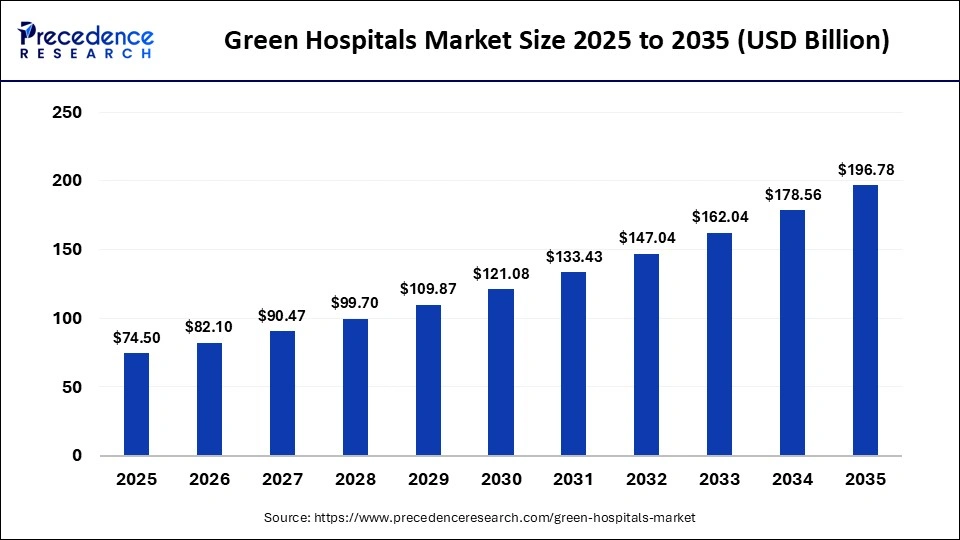
Segment-wise, the market is evolving rapidly across energy-efficient solutions, smart technologies, renewable energy integration, and sustainable infrastructure design, each playing a critical role in redefining healthcare delivery models worldwide.
Read Also: Optogenetics Market
By Product & Service: Why Do Energy-Efficient Solutions Dominate?

Energy-efficient solutions represent the largest and most impactful segment within the green hospitals market. Hospitals operate continuously and require high energy inputs for critical systems such as ventilation, imaging equipment, and patient monitoring devices.
To address these demands, healthcare facilities are adopting advanced HVAC systems, LED lighting, and automated energy management platforms. These solutions significantly reduce electricity consumption while ensuring compliance with strict healthcare standards.
Moreover, the integration of IoT-enabled building management systems (BMS) enables real-time monitoring and predictive analytics, allowing hospitals to optimize energy usage dynamically. This not only lowers operational costs but also aligns with global sustainability targets, making energy efficiency the cornerstone of green hospital development.
By Application: How Do Different Healthcare Facilities Drive Demand?

General Hospitals
General hospitals account for the largest share of the application segment, primarily due to their scale and complexity. These facilities consume vast amounts of energy and resources, making them ideal candidates for green transformation.
They are increasingly implementing integrated sustainability frameworks, including renewable energy systems, water conservation technologies, and advanced waste management solutions. The large-scale adoption of these systems enables substantial cost savings and operational efficiency.
Specialty Clinics and Ambulatory Surgical Centers
Smaller healthcare facilities, such as specialty clinics and ambulatory surgical centers, are adopting modular green solutions. These include compact energy-efficient systems and digital monitoring tools that are easier to deploy and manage.
Their growth is driven by the need to reduce operational expenses, meet regulatory requirements, and appeal to environmentally conscious patients, positioning them as fast adopters of scalable green technologies.
By Technology: What is the Impact of Smart and AI-Driven Systems?

Technology is at the core of the green hospitals market, enabling the transition toward intelligent and sustainable healthcare ecosystems.
AI and IoT technologies are widely used to monitor energy consumption, optimize resource allocation, and predict equipment failures. These capabilities enhance operational efficiency while minimizing waste.
Additionally, digital twin technology is emerging as a game-changer, allowing hospitals to simulate infrastructure performance and optimize sustainability strategies before implementation. Automation systems further enhance efficiency by adjusting lighting, temperature, and ventilation based on real-time occupancy and usage patterns.
By Energy Source: Why is Renewable Energy Integration Accelerating?

Renewable energy is becoming a strategic priority in green hospital development. Hospitals are increasingly adopting solar panels, wind energy systems, and hybrid energy solutions to reduce reliance on conventional power sources.
This transition is driven by rising energy costs, government incentives, and the need for energy resilience. Renewable energy systems not only lower carbon emissions but also ensure continuous power supply, which is critical for life-saving medical operations.
Energy storage solutions, including advanced battery systems, further enhance the reliability and efficiency of renewable energy integration.
By Waste Management: How Are Hospitals Reducing Environmental Impact?

Hospitals are implementing advanced waste segregation, recycling programs, and eco-friendly disposal methods to minimize environmental impact. These initiatives include the use of biodegradable materials and non-toxic products.
Water management systems, such as rainwater harvesting and wastewater recycling, are also being widely adopted to reduce water consumption and improve sustainability.
By Building Design: Why is Green Infrastructure Essential?

Green building design is a fundamental pillar of the green hospitals market. Modern healthcare facilities are being constructed with energy-efficient layouts, natural lighting, and improved ventilation systems to enhance sustainability and patient well-being.
The adoption of biophilic design principles, which integrate natural elements into hospital environments, is gaining momentum. These designs have been shown to improve patient recovery rates and staff productivity.
Furthermore, green certifications such as LEED are becoming industry benchmarks, encouraging hospitals to adopt sustainable construction practices and environmentally responsible operations.
Conclusion: Segmental Innovation Driving Future Healthcare
The segmentation of the green hospitals market clearly reflects a transition toward integrated, technology-driven, and sustainability-focused healthcare systems.
With energy efficiency at its core and supported by advancements in AI, renewable energy, and green infrastructure, the market is poised for strong growth. Each segment contributes to building a healthcare ecosystem that is not only environmentally responsible but also economically viable and patient-centric.
Get Sample Link: https://www.precedenceresearch.com/sample/8281
For inquiries regarding discounts, bulk purchases, or customization requests, please contact us at [email protected]